

Paralysis injury cases are different from many other personal injury cases because the harm may affect nearly every part of a person’s life.
A paralyzing injury can change how a person moves, works, sleeps, travels, communicates, and completes basic daily tasks.
A Colorado Springs paralysis injury lawyer must look beyond the immediate medical bills.
The claim may need to account for emergency care, surgery, rehabilitation, physical therapy, occupational therapy, assistive devices, home modifications, future medical treatment, lost income, reduced earning ability, and the long-term impact on the victim’s independence.
Paralysis victims may need care for years or decades after the accident.
The severity of the claim often depends on the level of injury, whether the paralysis is temporary or permanent, whether the spinal cord injury is complete or incomplete, and how the injury affects the body.
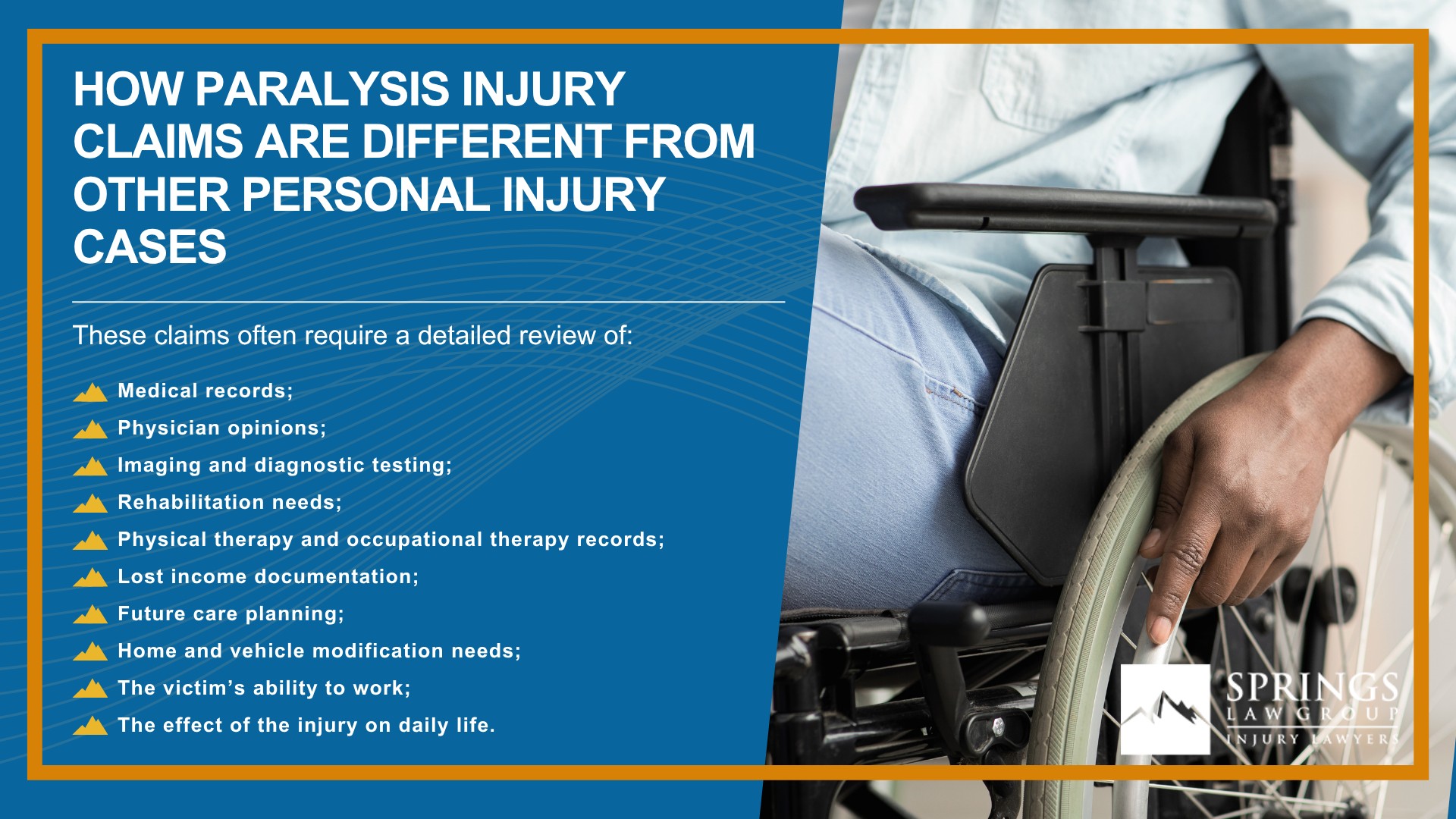
These claims often require a detailed review of:
Springs Law Group builds paralysis injury claims with the full scope of the life altering harm in mind.
When paralysis was caused by someone else’s negligence, our legal team works to help injured clients seek financial compensation under Colorado personal injury law.
Paralysis can result from trauma to the brain, spine, spinal cord, or nervous system.
In many personal injury cases, paralysis caused by an accident may involve sudden force to the neck, back, head, or body.
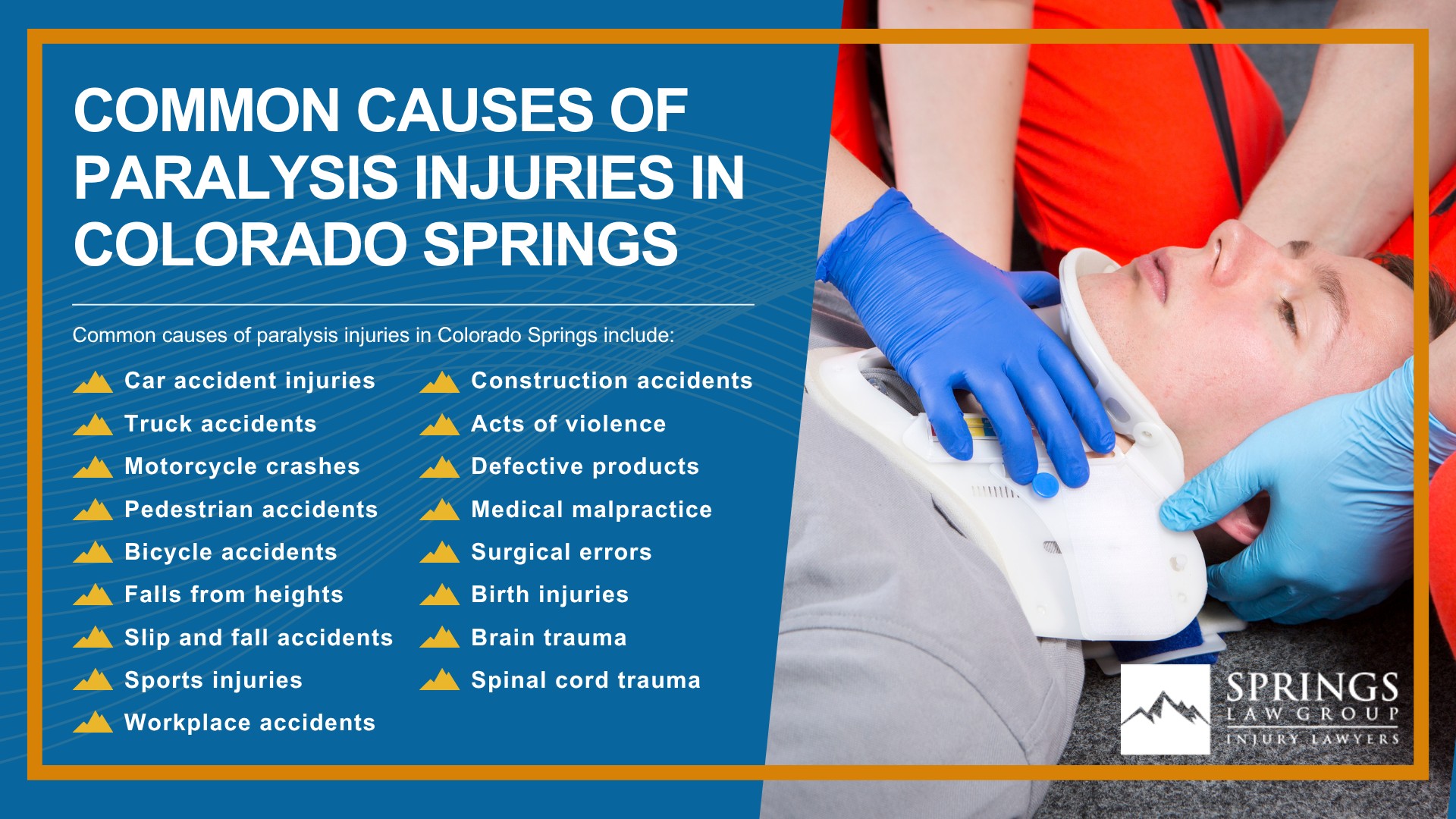
Common causes of paralysis injuries in Colorado Springs include:
Motor vehicle accidents are among the most common causes of severe spinal cord injuries and paralysis injury claims.
A serious car accident can damage the spine, compress the cord, fracture vertebrae, or cause trauma that affects the nervous system.
Paralysis may also be caused by disease, stroke, infection, or medical complications.
When the injury was caused by negligence, medical malpractice, unsafe property conditions, or another preventable event, the injured person may have legal options.
There are several types of paralysis, and the type of paralysis can affect the value and complexity of the claim.
The medical classification depends on what part of the body is affected and how much movement or sensation remains.
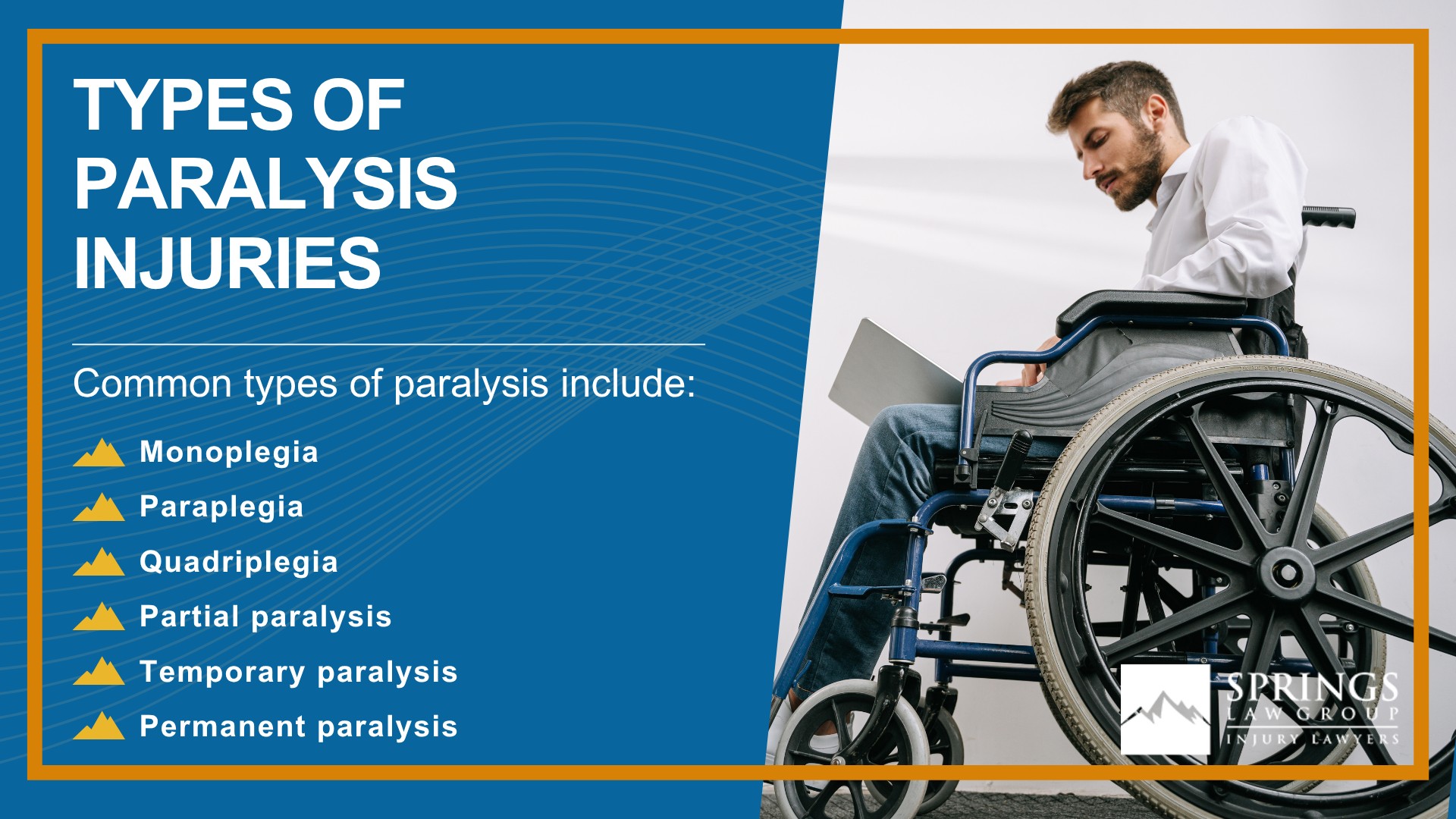
Common types of paralysis include:
The type of paralysis injury depends on the location and severity of damage to the spinal cord, brain, nerves, or other parts of the body.
A higher spinal cord injury may affect the arms, legs, chest, and breathing.
A lower spinal cord injury may primarily affect the hips, legs, bladder, bowel, and sexual function.
Springs Law Group reviews the medical records, physician opinions, and long-term prognosis to understand how the injury affects the client’s physical ability, independence, and future.
A spinal cord injury may be described as complete or incomplete.
This distinction matters because it can affect recovery, treatment needs, and the long-term value of a personal injury lawsuit.
A complete spinal cord injury usually means there is no motor or sensory function below the level of the injury.
A person with a complete injury may be permanently paralyzed below the affected part of the spine.
An incomplete spinal cord injury means some movement or sensation remains below the injury site.
Recovery may be possible in some cases, but the outcome depends on the severity of the trauma, the body’s response, medical treatment, rehabilitation, and other factors.

Complete and incomplete spinal cord injuries can both be severe.
Even partial paralysis can affect a person’s ability to work, walk, use their arms, drive, care for themselves, and live independently.
A personal injury attorney can help document the difference between a temporary limitation and a life altering paralysis injury.
That distinction may affect medical evidence, expert review, future care planning, and compensation.
The spinal cord carries messages between the brain and the rest of the body.
When the cord is damaged, those signals may be interrupted, leading to weakness, loss of sensation, paralysis, or other serious complications.
A spinal cord injury depends on several factors, including the location of the injury, the force of the trauma, whether the cord was compressed or severed, and how quickly the victim received medical care.
Injuries to the neck may affect both arms, both legs, breathing, and upper body function.
Injuries lower in the spine may affect the legs, hips, bladder, bowel, and lower body.
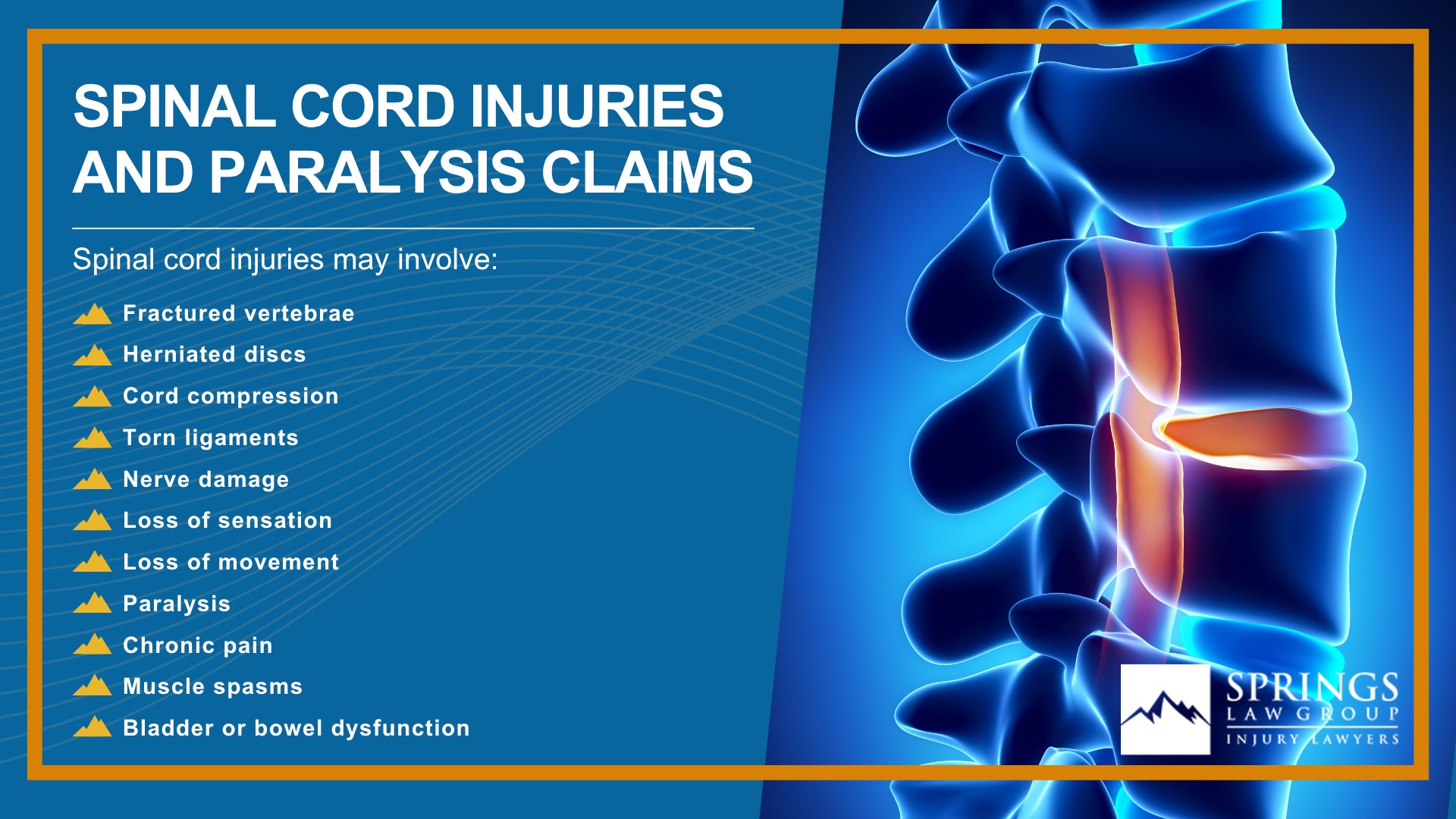
Spinal cord injuries may involve:
Paralysis injury cases often require medical experts, rehabilitation specialists, life care planners, and economists.
Springs Law Group works to build claims that reflect the full impact of the spinal cord injury, not just the first round of medical treatment.
The symptoms of paralysis vary depending on the cause, location, and severity of the injury.
Some accident victims lose movement immediately.
Others experience worsening symptoms as swelling, bleeding, or nerve damage develops.
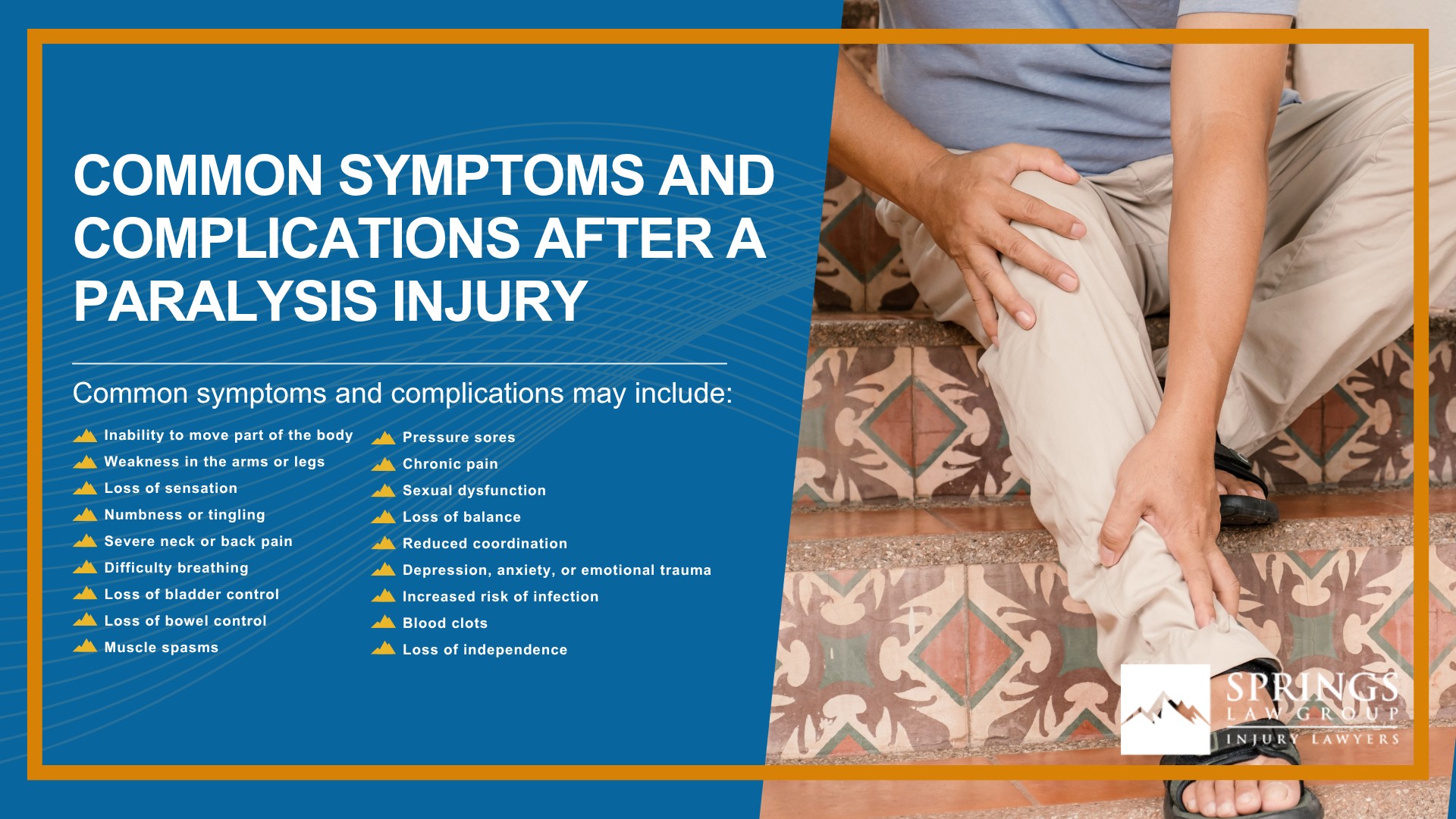
Common symptoms and complications may include:
The physical impact can be severe, but the emotional and financial effects can also be overwhelming.
A person who suffered paralysis may need help with dressing, bathing, cooking, transportation, employment, and mobility.
Medical records are important because they show the injury, treatment, complications, and recovery path.
They also help connect the paralysis injury to the accident or negligence that caused it.
Liability depends on how the paralysis injury occurred.
In many personal injury cases, the responsible party is the person or company whose negligence caused the accident.
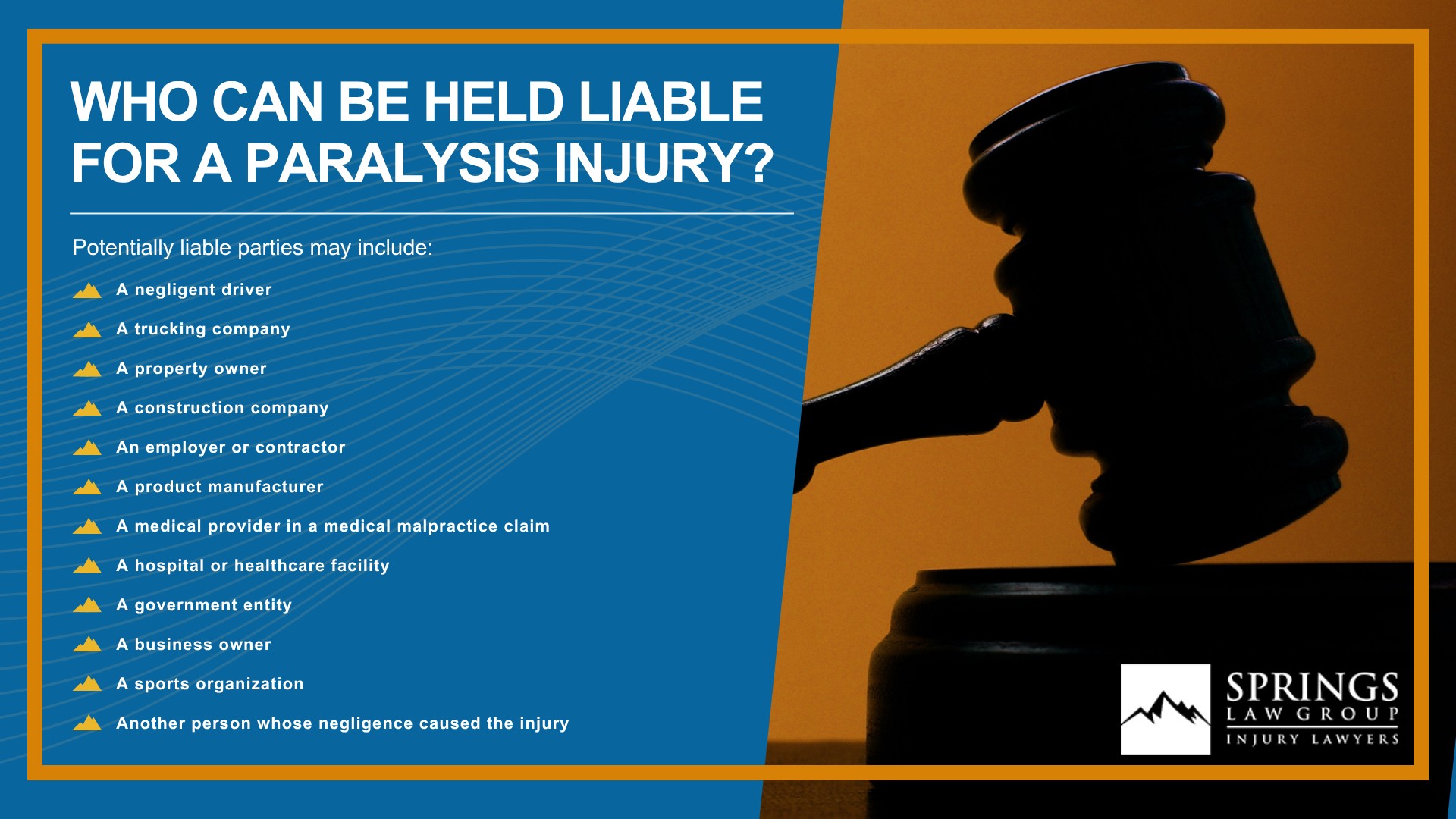
Potentially liable parties may include:
For example, a driver may be liable if a car accident caused a spinal cord injury.
A property owner may be responsible if unsafe conditions caused a fall.
A physician or hospital may be liable if medical malpractice led to paralysis.
A company may be responsible if defective equipment or unsafe work practices caused the trauma.
Springs Law Group investigates who caused the injury, what duty of care applied, how negligence occurred, and what evidence is needed to prove the claim.
A strong paralysis injury claim starts with a thorough investigation.
Springs Law Group reviews the accident, the medical evidence, and the long-term consequences of the injury.
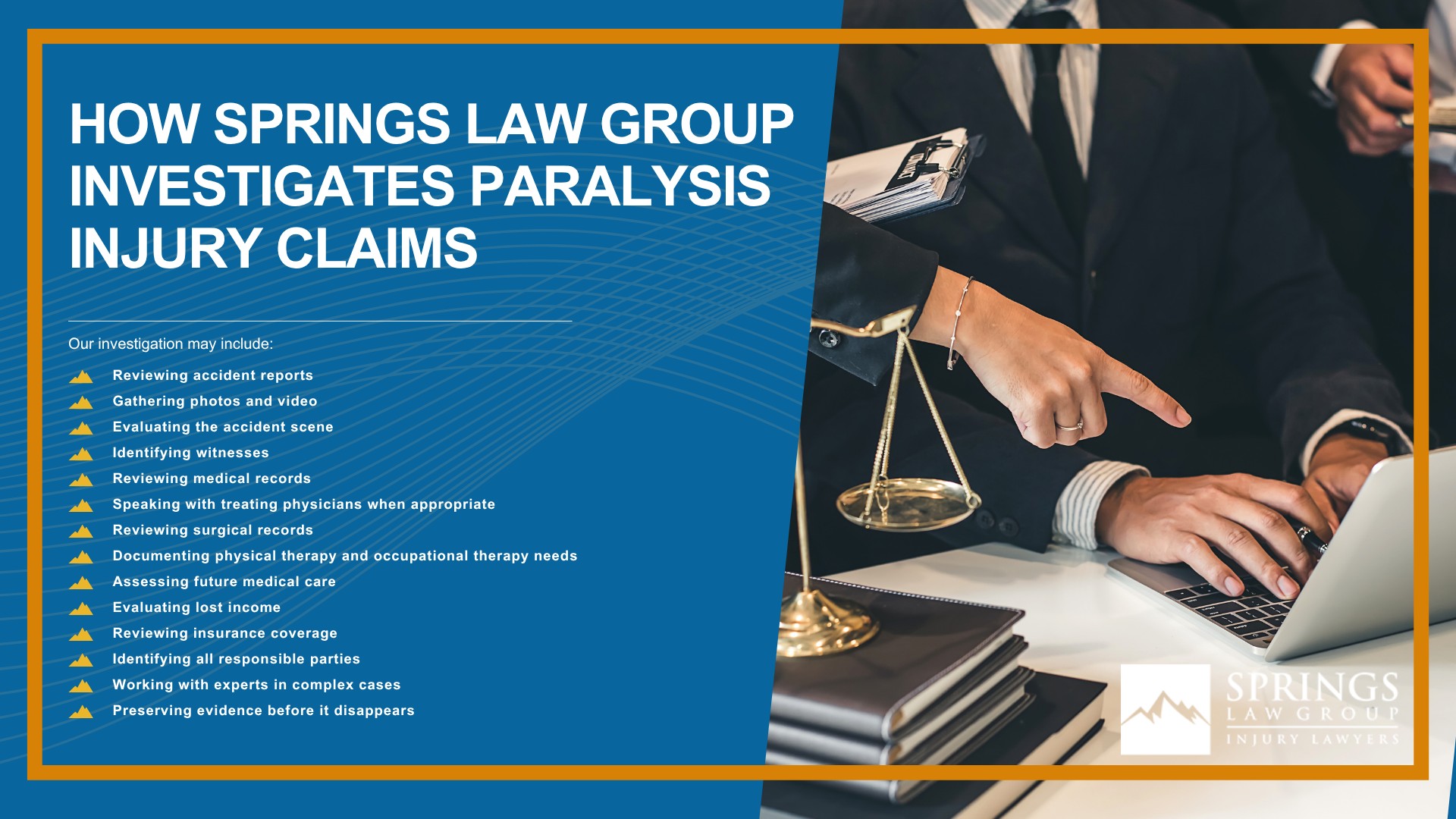
Our investigation may include:
Paralysis injury cases require careful preparation because insurance companies often challenge the severity of the injury, the cause of paralysis, or the cost of future care.
Springs Law Group builds the record so the claim reflects the full physical, emotional, and financial harm suffered by the client.
Evidence is critical in a paralysis injury claim.
The injured person must usually prove how the accident happened, who was responsible, and how the injury affected their life.
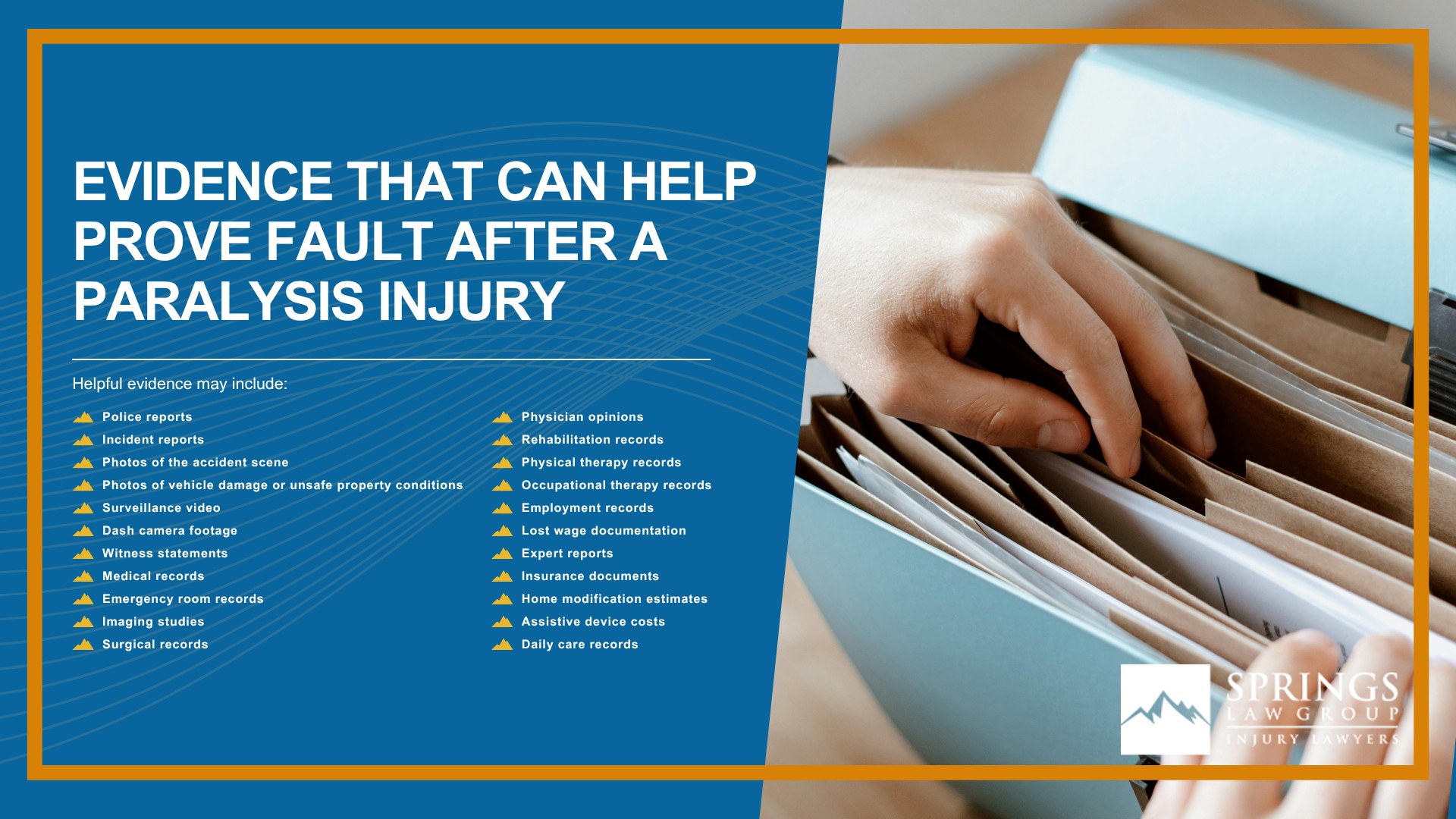
Helpful evidence may include:
In a personal injury lawsuit, evidence may also be used to show future needs.
A person who is paralyzed may need decades of medical care, equipment replacement, mobility support, and help with daily life.
Springs Law Group gathers and organizes this evidence so clients can pursue compensation supported by facts, records, and expert review when needed.
Medical treatment after paralysis may begin with emergency care and continue for the rest of the victim’s life.
The treatment plan depends on the type of paralysis, the severity of the spinal cord injury, and whether the person has other injuries.
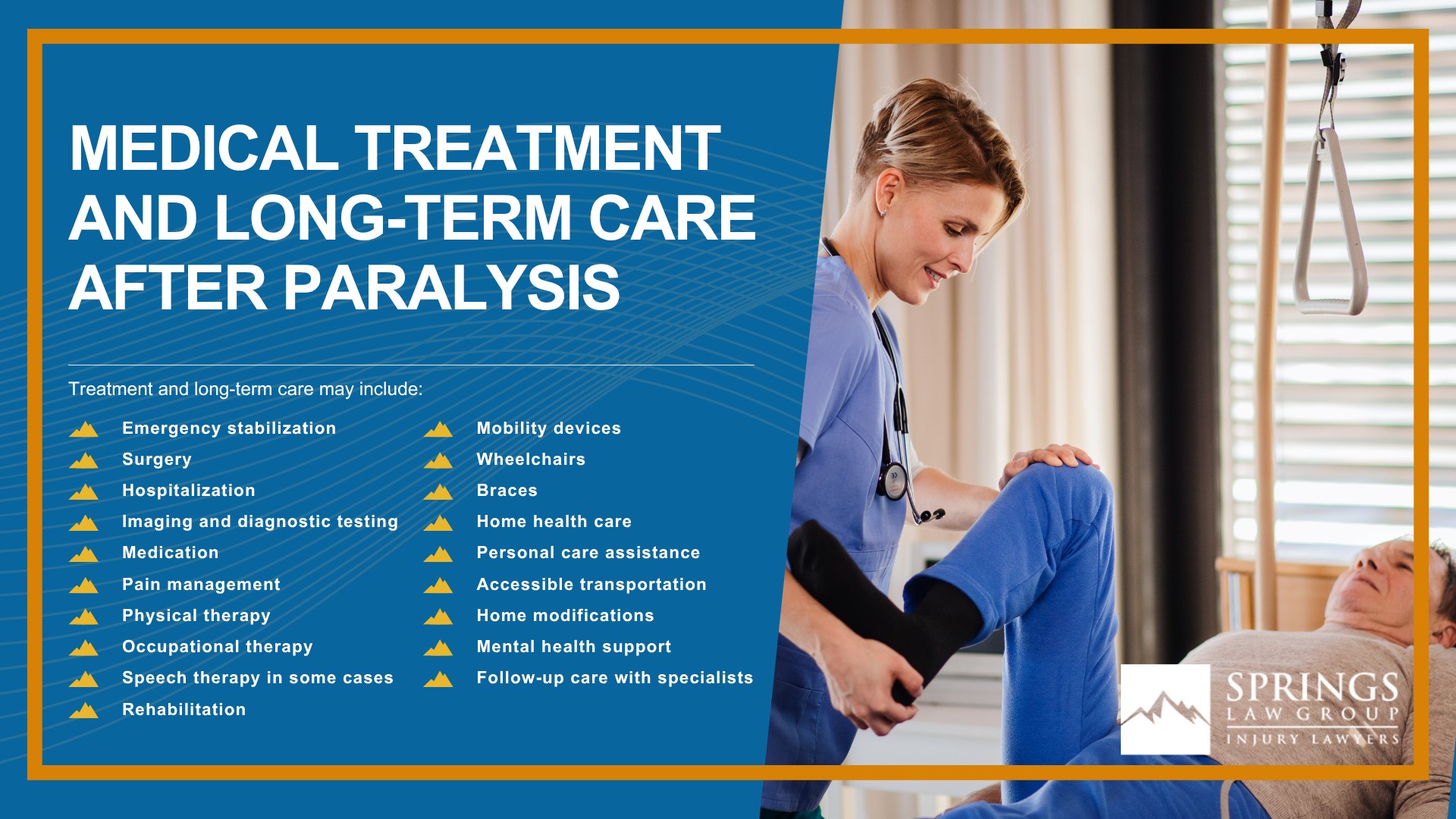
Treatment and long-term care may include:
Recovery may be uncertain.
Some paralysis victims regain partial function, while others remain permanently paralyzed.
The course of recovery can depend on the injury, the nervous system damage, medical care, rehabilitation, age, overall health, and other factors.
A personal injury attorney can help calculate the cost of future care so the claim accounts for more than the immediate hospital bills.
A life-care plan is a detailed assessment of the medical treatment, support services, equipment, and accommodations a paralysis victim may need in the future.
These plans are commonly used in catastrophic injury cases because the effects of paralysis often extend far beyond the initial hospitalization and rehabilitation period.
Rather than focusing only on current medical bills, a life-care plan evaluates the long-term costs associated with living with a spinal cord injury or other condition that causes paralysis.
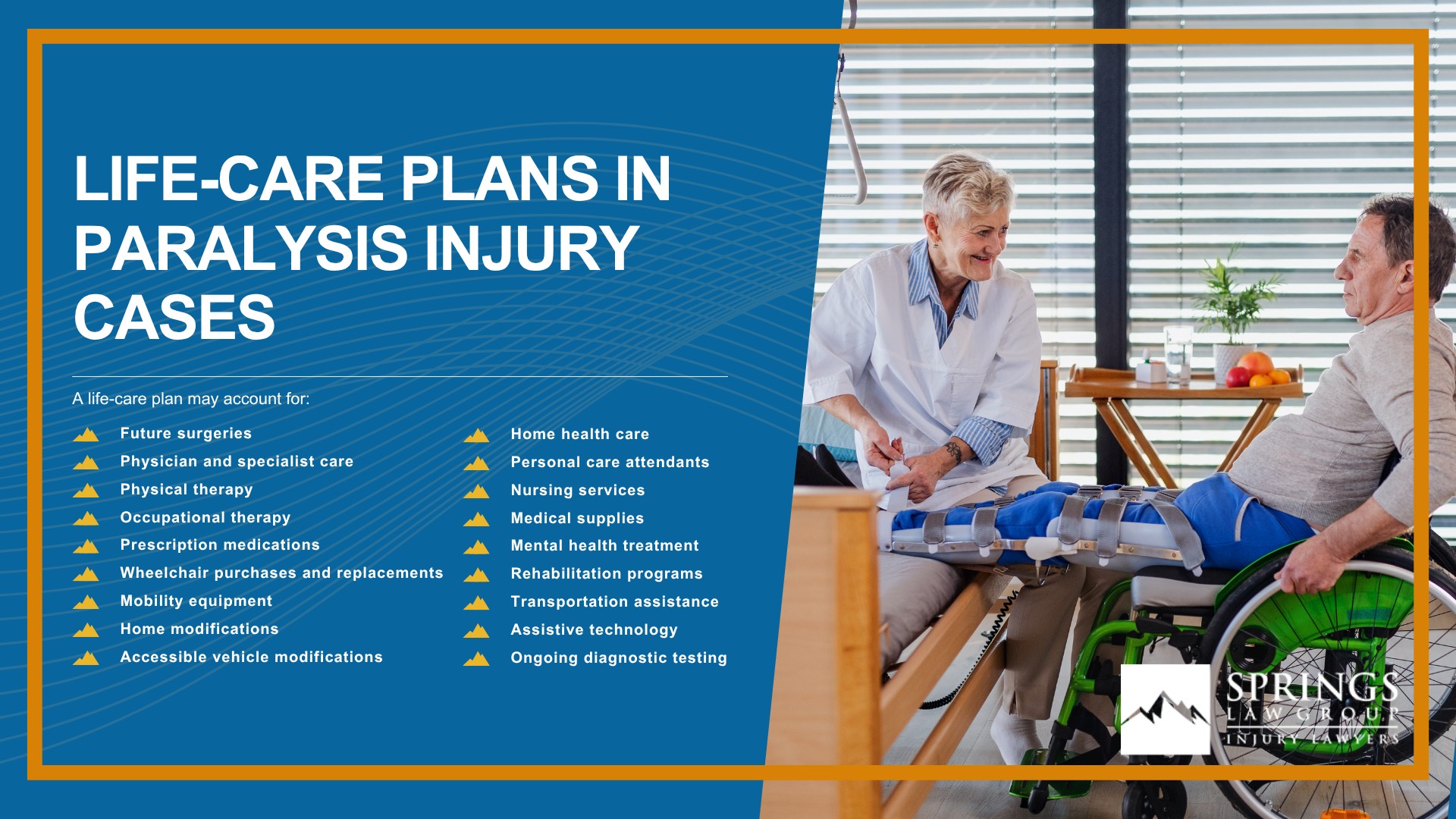
A life-care plan may account for:
Life-care plans are often prepared with input from physicians, rehabilitation specialists, nurses, economists, and other professionals who evaluate the injured person’s future needs.
The goal is to develop a realistic picture of the care and resources that may be required over a lifetime rather than only during the first few years after the injury.
In a paralysis injury claim, a life-care plan can help demonstrate the true financial impact of the injury and provide evidence supporting future damages.
Springs Law Group may work with qualified experts when necessary to document long-term care needs and pursue compensation that reflects the full cost of living with paralysis.
If paralysis was caused by someone else’s negligence, the injured person may be able to recover financial compensation through a personal injury claim.
The value of the claim depends on the severity of the injury, medical needs, fault, insurance coverage, and the long-term impact on the person’s life.
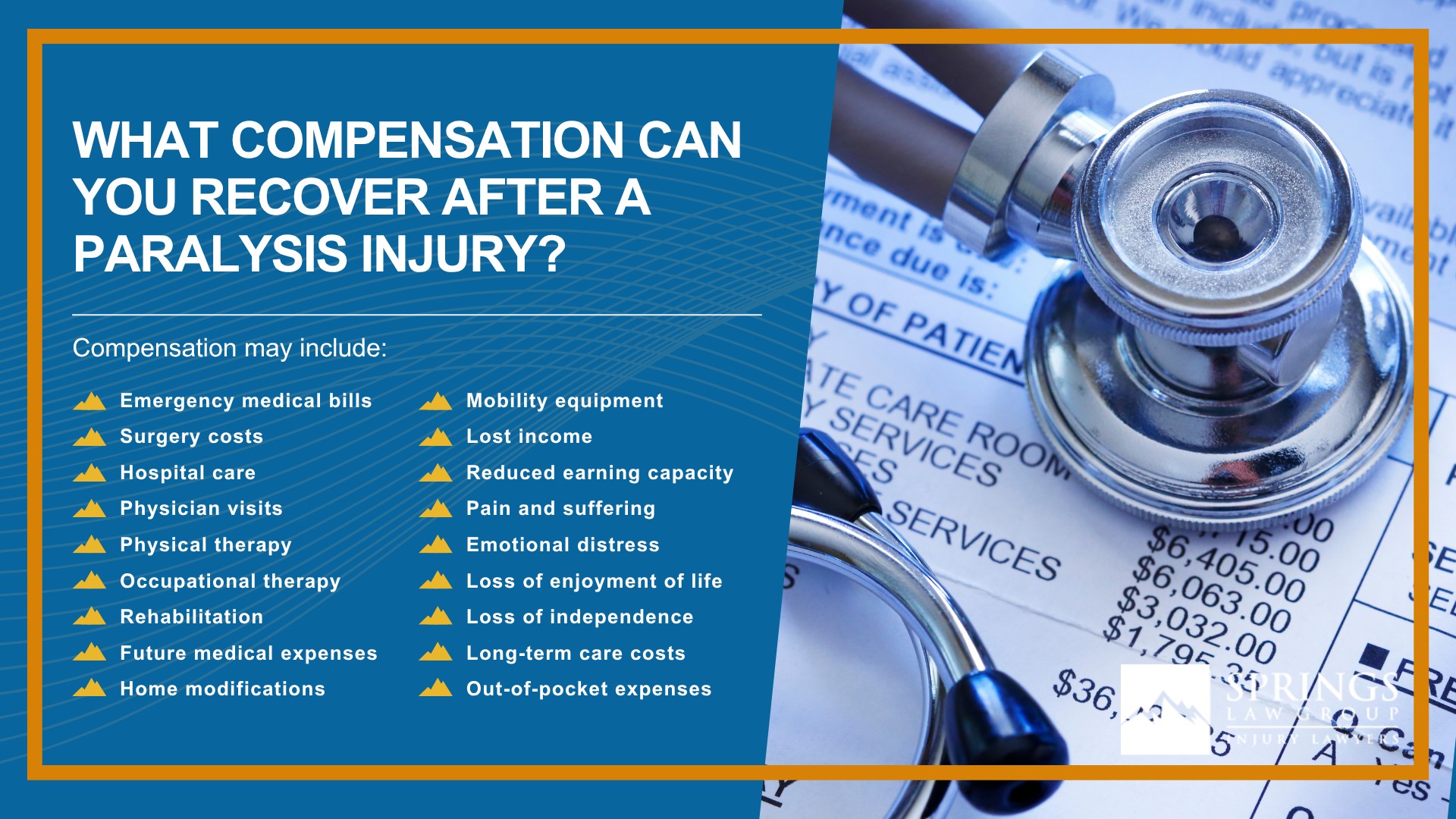
Compensation may include:
Paralysis injury claims are often high-value personal injury cases because the damages may continue for life.
Insurance companies may focus on limiting what they pay.
Springs Law Group works to document the full value of the claim and pursue compensation based on the evidence.
Future medical costs are often one of the most important parts of a paralysis injury claim.
A person who suffered a spinal cord injury may need treatment, equipment, therapy, and support for decades.
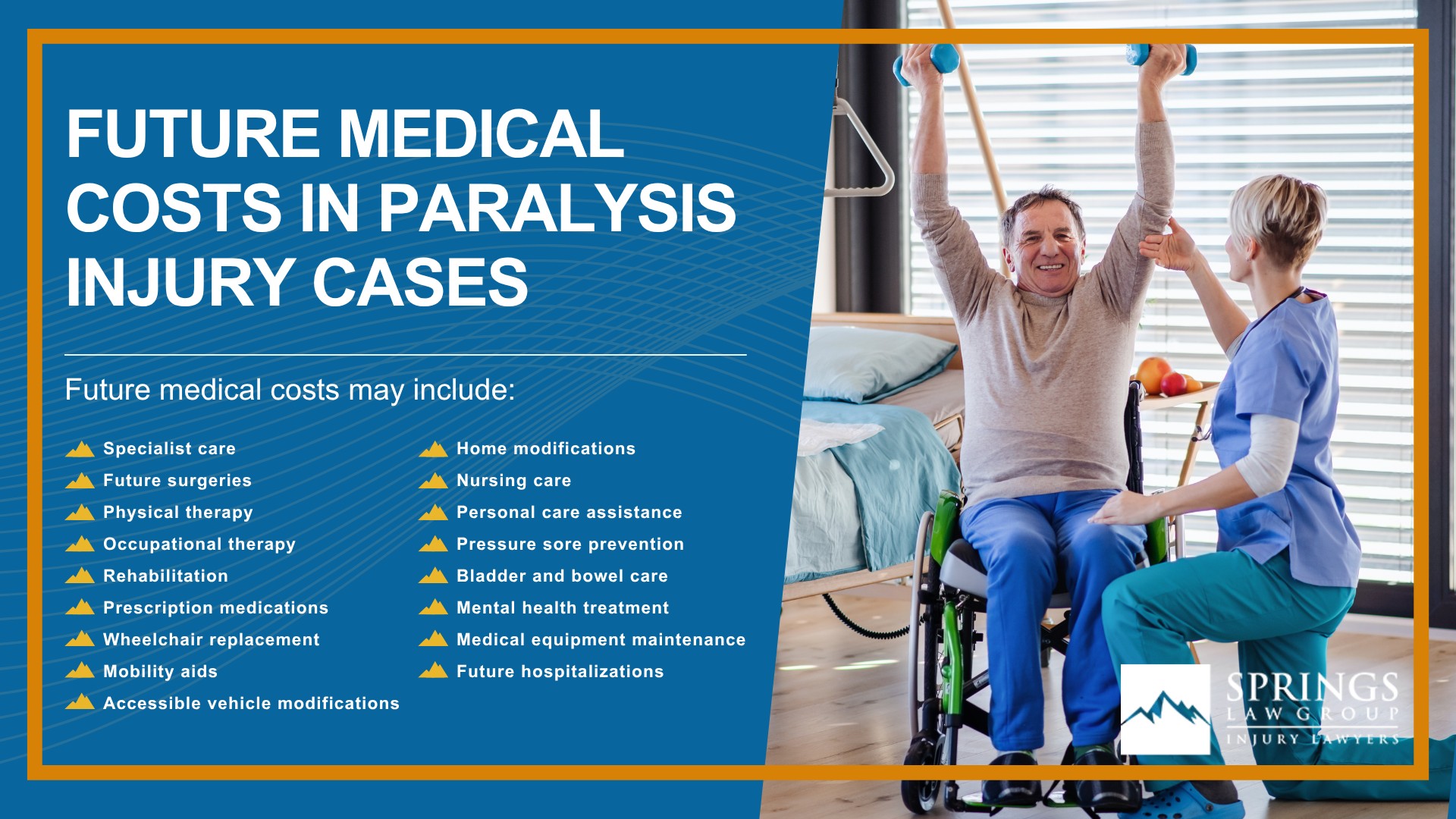
Future medical costs may include:
These costs can be substantial.
A fair claim should consider not only what the victim has already paid, but also what care may be needed in the future.
Springs Law Group may work with medical experts, life care planners, and financial professionals to help estimate future expenses.
The goal is to make sure the claim reflects the actual cost of living with paralysis.
A paralysis injury can affect a person’s ability to work.
Some clients cannot return to the same job.
Others can work only with restrictions, reduced hours, assistive technology, or major accommodations.
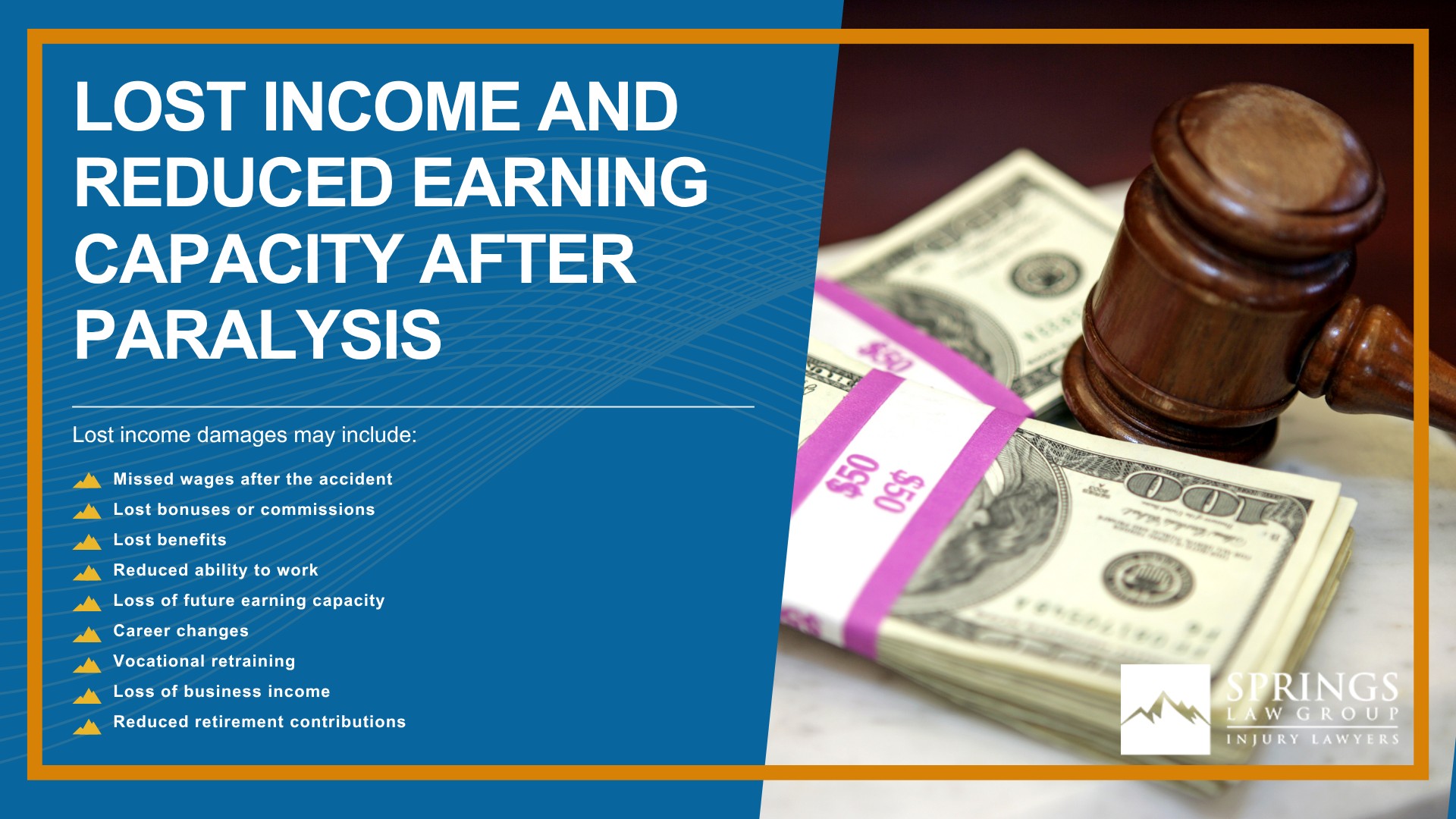
Lost income damages may include:
The impact depends on the person’s job, age, education, training, physical ability, and the severity of paralysis.
A worker who relied on physical labor may face a different loss than someone who can continue working remotely, but both situations require careful review.
Springs Law Group documents lost income and reduced earning capacity with employment records, tax records, medical restrictions, vocational evidence, and expert analysis when needed.
Insurance companies often treat paralysis injury claims as complex, high-exposure cases.
Because the costs can be significant, insurers may look for ways to reduce the value of the claim.

An insurance company may:
A quick settlement can be risky in a paralysis injury case.
The full extent of the injury may not be clear until doctors understand the prognosis, rehabilitation needs, and long-term limitations.
Springs Law Group communicates with insurance companies, builds the medical and financial record, and pushes back when insurers undervalue life altering injuries.
After a paralysis injury, medical care should be the first priority.
A spinal cord injury, brain injury, or severe neck or back trauma requires immediate evaluation by a physician.
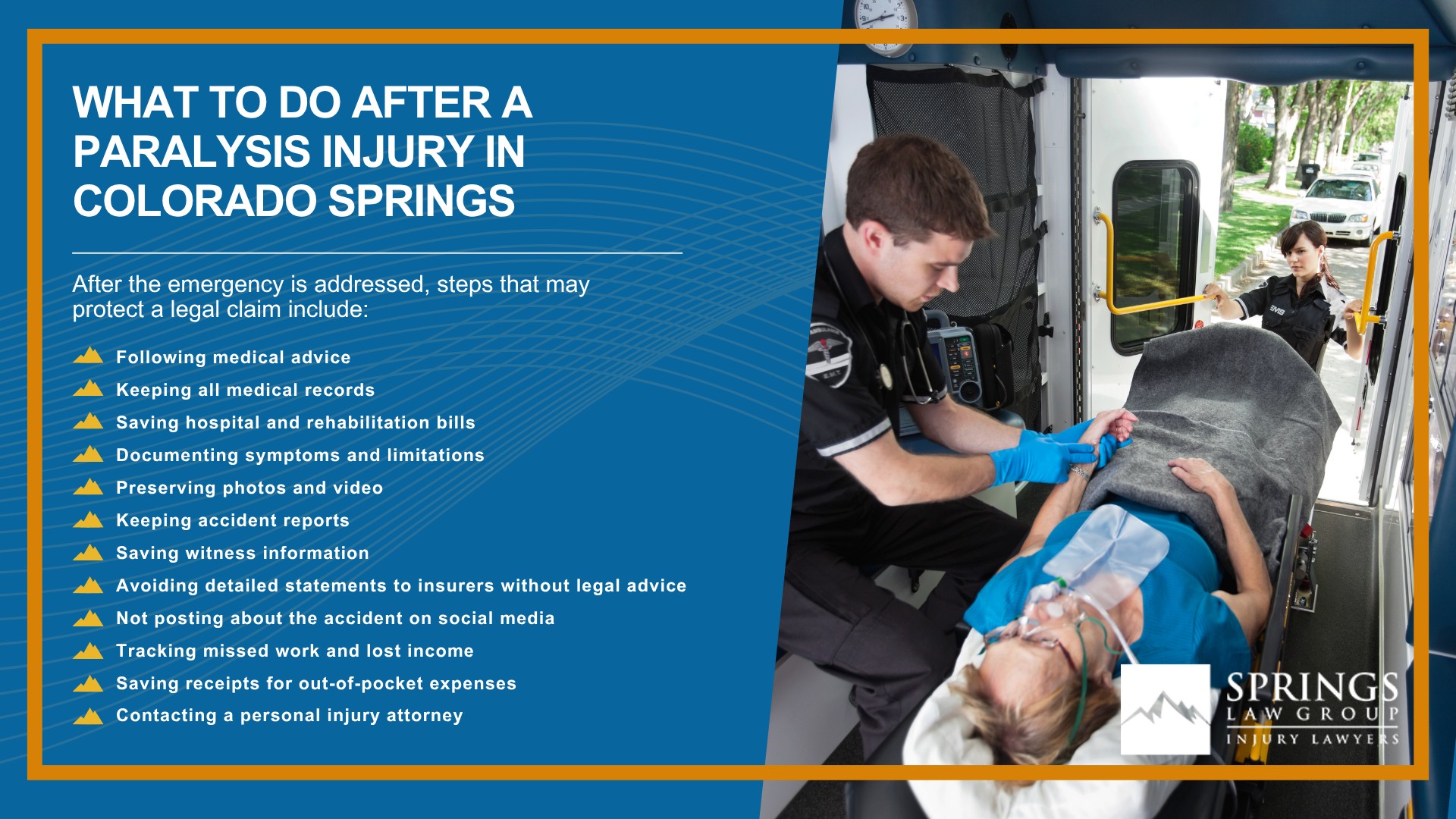
After the emergency is addressed, steps that may protect a legal claim include:
If someone else’s negligence caused the injury, you should discuss your legal options before accepting a settlement.
Paralysis injury cases require careful review because the long-term costs may be far greater than the first medical bills.
Springs Law Group offers a free initial consultation to help injured people and families understand what steps may come next.
Colorado law affects paralysis injury claims in several ways.
A claim may involve negligence, premises liability, product liability, medical malpractice, motor vehicle law, or other areas of personal injury law depending on how the injury occurred.
Colorado also follows modified comparative negligence.
If the injured person is found partly at fault, compensation may be reduced.
If the injured person’s share of fault is too high, they may be barred from recovery.
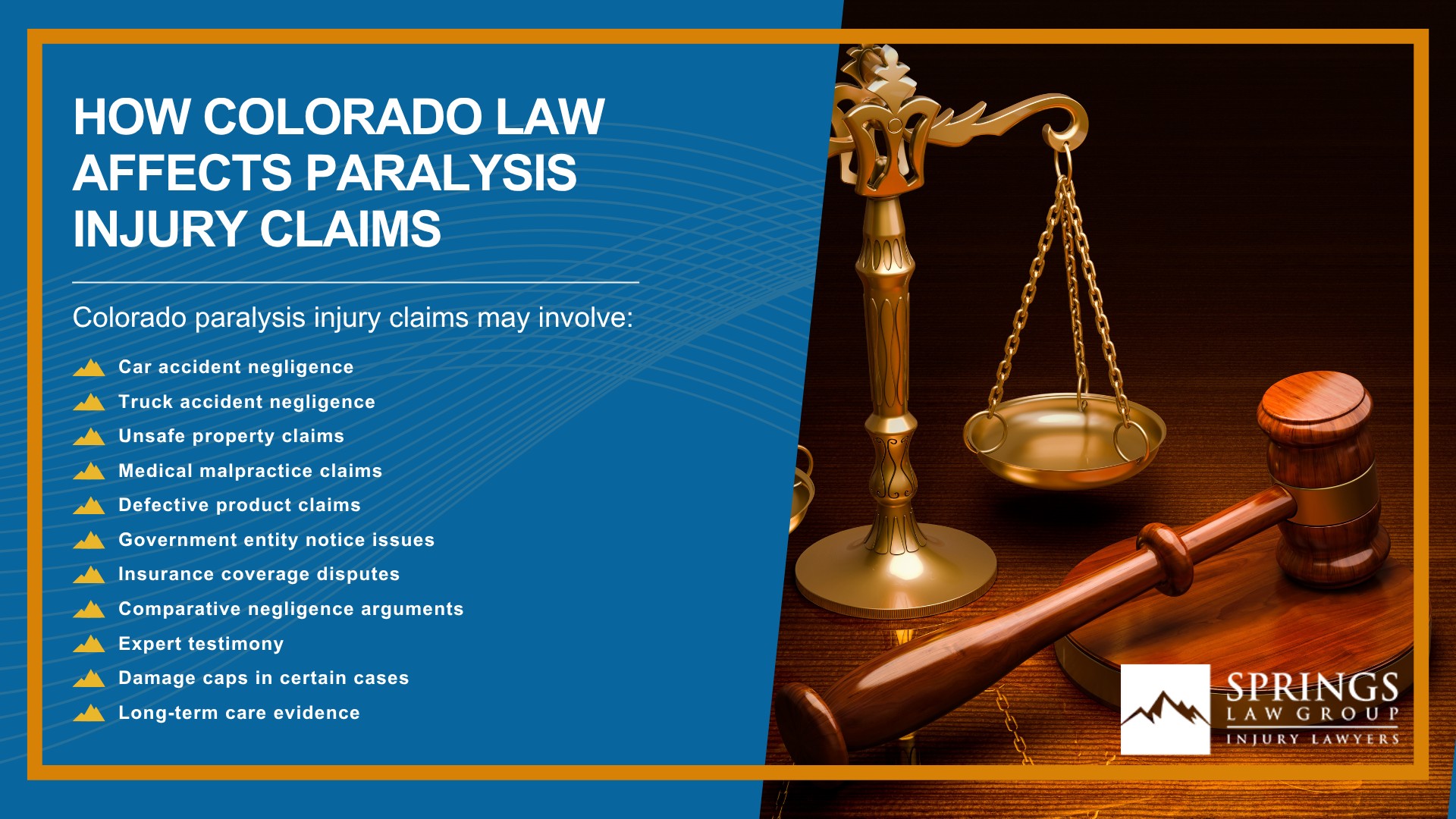
Colorado paralysis injury claims may involve:
Because paralysis injury cases often involve severe damages and complex liability questions, legal representation can be important.
Springs Law Group can explain how Colorado law applies to the specific facts of the claim.
The deadline to file a paralysis injury claim depends on the type of case.
In many Colorado personal injury cases, the statute of limitations is generally two years.
In many motor vehicle accident cases, the deadline is generally three years from the date of the crash.
Some claims may have shorter deadlines.
Cases involving a government entity, medical malpractice, or certain notice requirements can involve additional rules.
Waiting too long can harm the claim even before the legal deadline expires because evidence may disappear and witnesses may become harder to find.
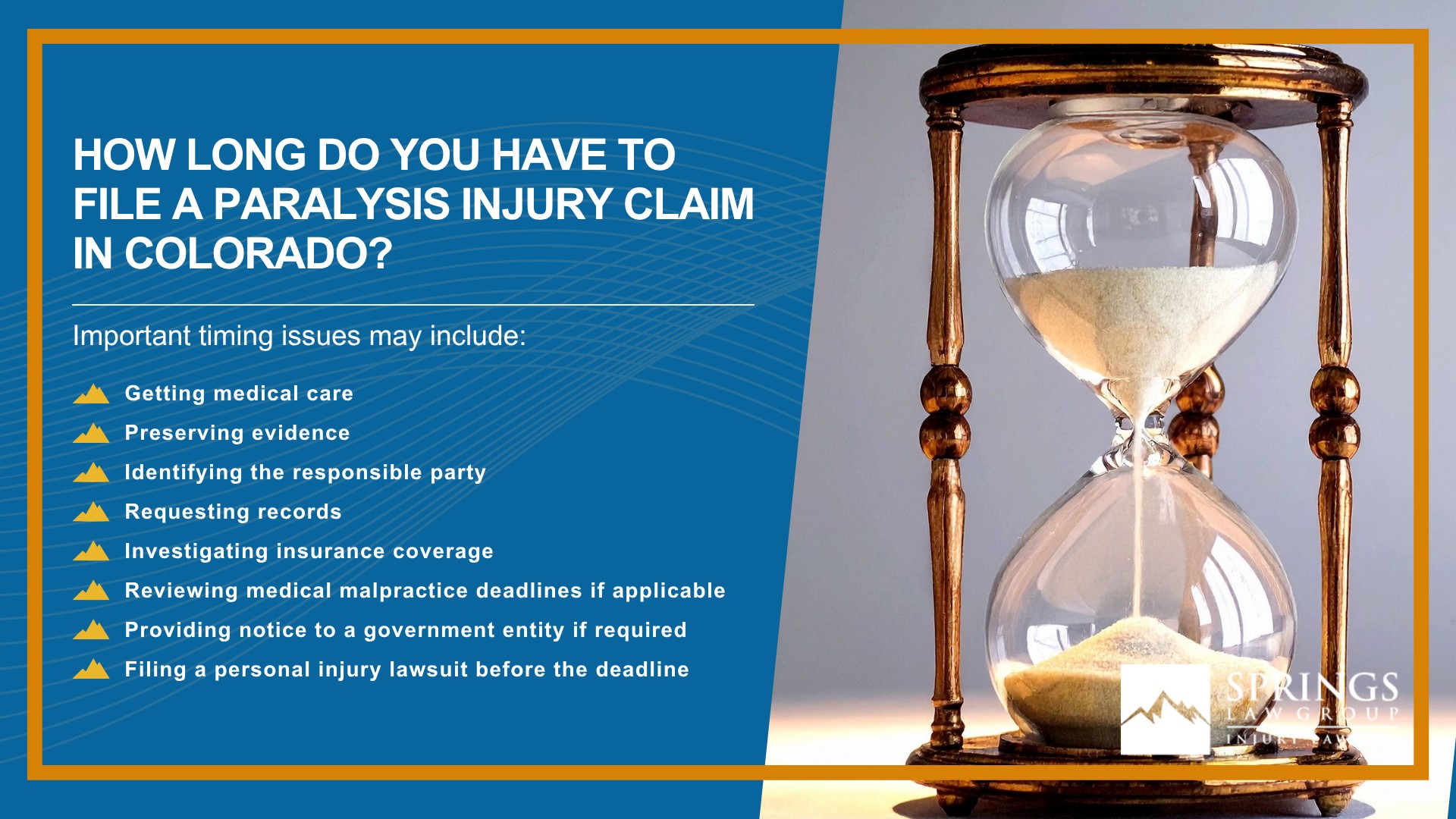
Important timing issues may include:
A Colorado Springs paralysis injury lawyer can review the facts and explain the deadline that may apply.
Acting quickly gives the legal team more time to investigate and protect the claim.
If you or a loved one suffered paralysis after an accident in Colorado Springs, Springs Law Group can help you understand your legal options.
A paralysis injury can affect the body, mobility, work, family life, independence, and long-term financial stability.
Whether the injury was caused by a car accident, fall, medical malpractice, unsafe property condition, defective product, or another act of negligence, our attorneys can review what happened and explain whether you may have a claim.

You may be able to recover compensation for medical bills, future care, physical therapy, occupational therapy, lost income, reduced earning capacity, pain and suffering, and the long-term impact of the injury.
Contact Springs Law Group today for a free consultation with a Colorado Springs paralysis injury lawyer.
You can also use the chat feature on this page for a free case evaluation.