
The #1 Colorado Traumatic Brain Injury Lawyer | Call (719) 300-7554

Were You or A Loved One Injured in an Accident?
Get Free Answers In as Little as 3 Minutes
right-image
600
Written By:
Christopher Nicolaysen

Member of the Colorado Bar Association since 2014. Attorney, Christopher M. Nicolaysen focuses primarily on helping those injured in Colorado car accidents, other auto accidents, and Colorado personal injury incidents.

This article has been written and reviewed for legal accuracy and clarity by the team of writers and attorneys at Springs Law Group and is as accurate as possible. This content should not be taken as legal advice from an attorney. If you would like to learn more about our owner and experienced Colorado personal injury lawyer, Christopher Nicolaysen, you can do so here.

Springs Law Group does everything possible to make sure the information in this article is up to date and accurate. If you need specific legal advice about your case, contact us. This article should not be taken as advice from an attorney.

Have You or a Loved One Suffered a Traumatic Brain Injury? Our Lawyers Can Help

A Colorado Traumatic Brain Injury Lawyer from Springs Law Group can help brain injury victims and their families seek compensation and justice.

Our lawyers handle a variety of brain injury cases for individuals who have suffered trauma through no fault of their own, typically in car accidents, slip-and-falls, and other similar incidents where negligence is involved.

If you or a loved one have suffered a traumatic brain injury through no fault of their own, contact Springs Law Group today for a free consultation to find out if you qualify for a personal injury lawsuit and to get in touch with an experienced brain injury lawyer.

Meet Our Team of Colorado Personal Injury Lawyers; Hiring A Personal Injury Lawyer In Welby, Colorado (CO); How Do Catastrophic Injuries Occur; Common Catastrophic Injuries; The Legal Process for a Catastrophic Injury Lawsuit in Colorado; Can Family Members File on Behalf of an Injured Person; Do You Qualify for a Catastrophic Injury Lawsuit; Gather Evidence for Your Catastrophic Injury Claim; Types of Damages in Catastrophic Injury Claims; Common Causes of Pedestrian Accidents in Colorado; Common Injuries Sustained in Pedestrian Accidents; The Legal Process for a Pedestrian Accident Case in Colorado; Gathering Evidence for a Pedestrian Accident Case; Damages in Pedestrian Accident Cases; Common Causes of Bicycle Accidents in Colorado; Common Injuries Sustained in Colorado Bike Crashes; The Legal Process for a Bicycle Accident Case in Colorado; Gathering Evidence for a Pedestrian Accident Case; Damages in Bicycle Accident Cases; Steps to Take After Being Injured in a Premises Liability Accident; Common Premises Liability Cases; What is the Legal Basis for a Premises Liability Claim; The Legal Process for a Premises Liability Lawsuit in Colorado; Evidence in Premises Liability Cases; Damages in Premises Liability Cases; Do You Qualify for a Premises Liability Lawsuit; How Do Traumatic Brain Injuries Occur; The Types of Traumatic Brain Injuries Explained; Who Qualifies for a Traumatic Brain Injury Lawsuit in Colorado; Springs Law Group Experienced TBI Attorney in Colorado; What is the Legal Process for Uber and Lyft Accidents in Colorado; Do You Qualify to File an Uber Accident Claim; Gathering Evidence for an Uber Accident Case; Damages in Uber Accident Cases; Springs Law Group_ Colorado Uber Accident Lawyer; What is the Legal Process for Lyft Accidents in Colorado; Do You Qualify for a Lyft Accident Case; Gathering Evidence for a Lyft Car Accident Claim; Damages in Lyft Accident Cases; Springs Law Group_ Experienced Rideshare Accident Attorney; Steps to Take After Being Injured in a Rideshare Car Accident; Relevant Colorado Laws for Rideshare Accident Cases; Relevant Colorado Laws for Rideshare Accident Cases (2); Do You Qualify to File a Rideshare Accident Claim; Gathering Evidence for a Rideshare Accident Case; Damages in Rideshare Accident Cases; Springs Law Group_ Colorado Rideshare Accident Lawyer; Understanding Rental Car Accidents in Colorado; Types of Rental Car Accidents and How Liability Is Determined; Determining Fault and Insurance Coverage After a Rental Car Crash; Do You Qualify for a Rental Car Accident Claim; Gathering Evidence for a Rental Car Accident Case; Damages in Rental Car Accident Claims; Springs Law Group_ Rental Car Accident Lawyer; Colorado Winter Driving Laws and Traction Requirements; Vehicle Preparation and Maintenance; Driving Behavior and Techniques; Preparing for Emergencies; Colorado Winter Driving Laws and Legal Responsibilities; The Most Dangerous Areas in Colorado for Winter Driving; Springs Law Group_ Contact Us If You've Been Injured Through No Fault of Your Own

Get in Touch with a Traumatic Brain Injury Attorney Today

Traumatic brain injuries (TBIs) can result from a range of incidents, including auto accidents, falls, sports injuries, and medical malpractice.

When the brain sustains trauma, the consequences can be severe and long-lasting, sometimes resulting in permanent brain damage or death.

Victims may suffer memory loss, emotional distress, cognitive impairments, and other forms of brain damage that significantly alter daily life.

Pursuing a brain injury lawsuit allows victims and their families to seek compensation for medical expenses, lost wages, and long-term care.

These cases often involve complex medical evidence and expert testimony from medical professionals to prove the extent of the injury and its impact.

TBI cases are also aggressively defended by insurance companies who try to reduce payouts or deny responsibility altogether.

An experienced attorney can help you build a strong claim and negotiate with insurers while you focus on healing.

If someone else’s negligence caused your injury, you may have legal grounds to recover damages and hold them accountable.

If you or a loved one has suffered a traumatic brain injury due to someone else’s negligence, you may be entitled to significant compensation for your medical expenses, lost wages, and emotional distress.

Springs Law Group is here to help you pursue justice through a brain injury lawsuit and support your recovery every step of the way.

Contact us today for a free consultation.

Table of Contents

How Do Traumatic Brain Injuries Occur?

A traumatic brain injury (TBI) can result from any forceful blow or jolt to the head that disrupts normal brain function.

These injuries range in severity from a mild traumatic brain injury (often called a concussion) to a penetrating brain injury that causes permanent brain damage.

The cause of a serious brain injury is often sudden and violent, with no warning signs before the injury happened.

Victims may experience cognitive decline, behavioral changes, and long-term physical impairments that impact every aspect of daily life.

When brain trauma is caused by another person’s negligence or misconduct, victims may have grounds for a personal injury claim to recover compensation for medical care, emotional distress, and financial losses.
How Do Traumatic Brain Injuries Occur

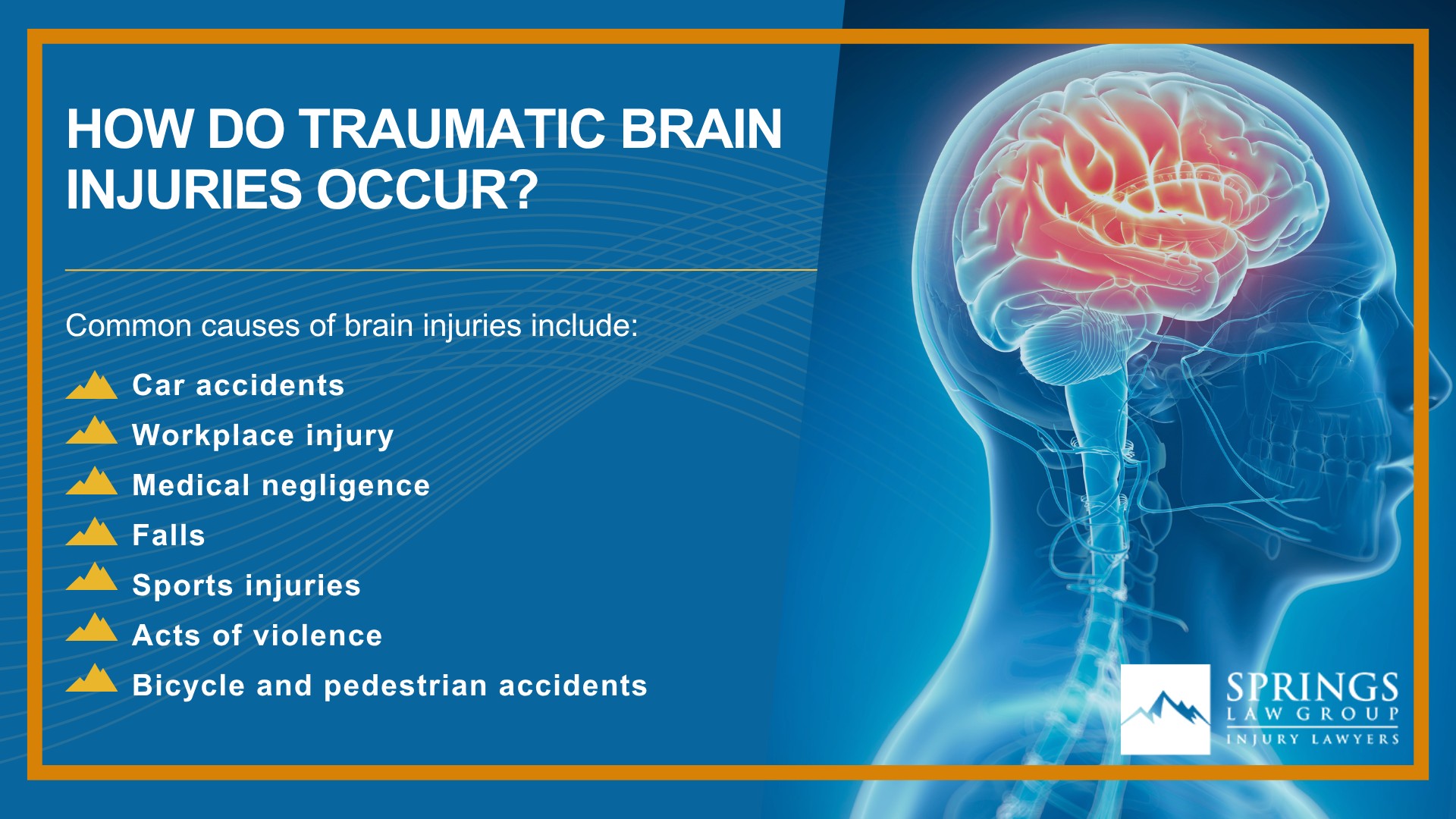
Common causes of brain injuries include:

  • Car accidents, including head-on collisions and rollovers
  • Workplace injury, especially in construction or industrial environments
  • Medical negligence, including surgical errors and anesthesia mistakes
  • Falls, particularly from ladders, stairs, or elevated surfaces
  • Sports injuries, often involving contact sports like football or hockey
  • Acts of violence, including assault and domestic abuse
  • Bicycle and pedestrian accidents, especially in high-traffic areas

In many TBI cases, the initial trauma is compounded by a delay in receiving immediate medical attention.

This can worsen the severity of the brain injury and reduce the chances of a full recovery.

In Colorado, brain injury related deaths are a tragic but real consequence of negligence in both public and private settings.

Identifying the contributing factor and responsible party is a critical step in pursuing justice.

Whether the injury was caused by a distracted driver, an unsafe job site, or a negligent physician, the injured party deserves to have their rights protected.

The Types of Traumatic Brain Injuries Explained

Traumatic brain injuries (TBIs) are commonly categorized by severity (from mild traumatic brain injury to moderate and severe traumatic brain injury) and also by the nature of the damage.

A mild TBI often involves temporary symptoms such as confusion, dizziness, or brief memory loss.

In moderate TBI cases, patients may experience longer periods of unconsciousness, more significant neurological impairment, and visible brain changes on imaging.

Severe TBI involves profound injury to brain tissue, possibly causing permanent brain damage, long-term cognitive deficits, or even vegetative states.

There are also subtypes such as diffuse axonal injury, where widespread tearing of nerve fibers occurs, and anoxic brain injury, which happens when the brain is deprived of oxygen.

Another recognized form is penetrating brain injury, which involves a foreign object breaching the skull and entering the brain substance.

Some TBIs evolve into chronic conditions like chronic traumatic encephalopathy, especially after repeated head trauma.
How Do Traumatic Brain Injuries Occur; The Types of Traumatic Brain Injuries Explained

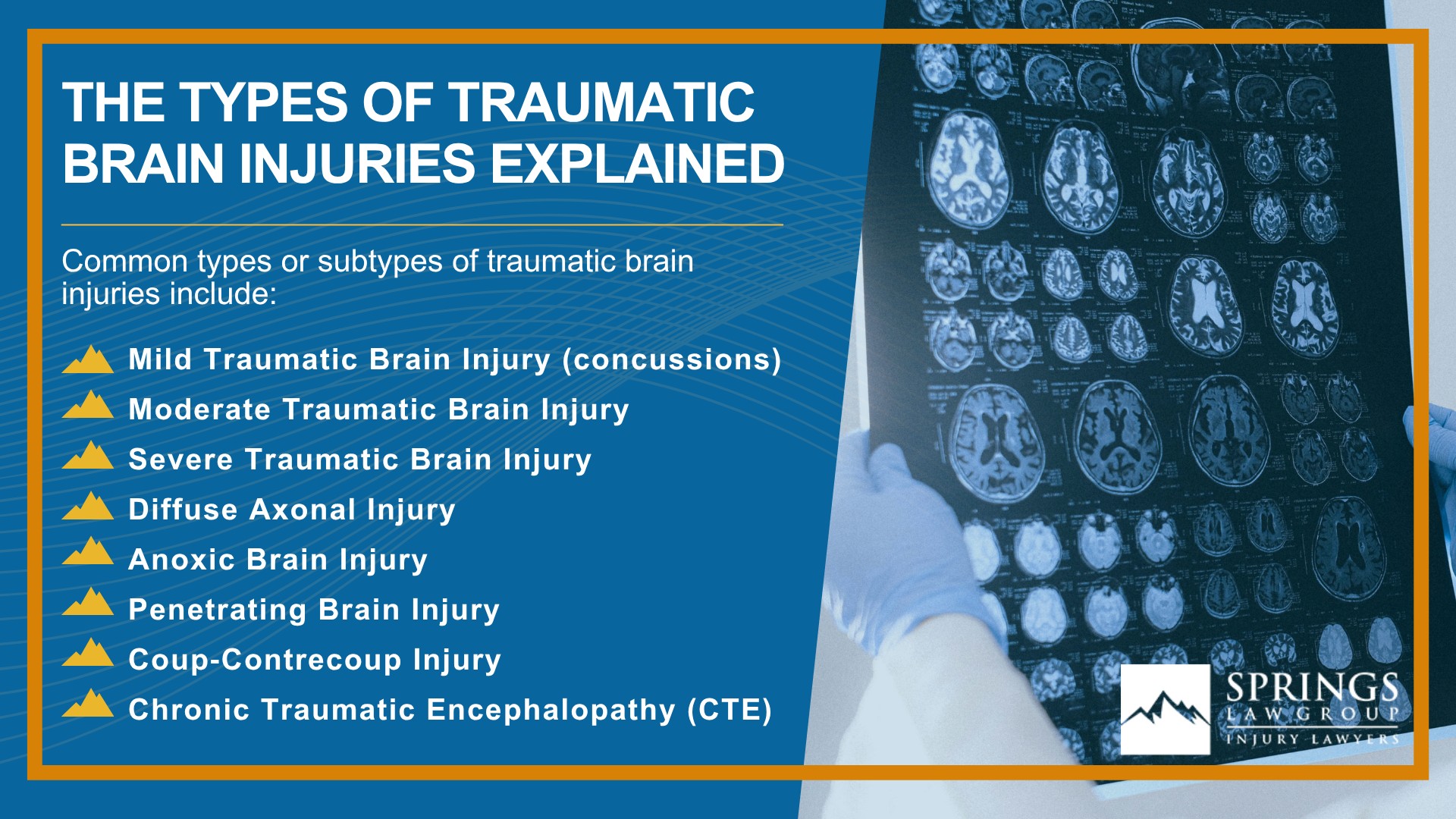
Common types or subtypes of traumatic brain injuries include:

  • Mild Traumatic Brain Injury (concussions)
  • Moderate Traumatic Brain Injury
  • Severe Traumatic Brain Injury
  • Diffuse Axonal Injury
  • Anoxic Brain Injury
  • Penetrating Brain Injury
  • Coup‑Contrecoup Injury
  • Chronic Traumatic Encephalopathy (CTE)

Each of these types poses distinct challenges in diagnosis, treatment, and legal recovery.

Recovery from mild and moderate injuries is often aided by rehabilitation and medical support, while severe injuries may require lifelong care and adaptive living arrangements.

In TBI cases arising from auto accidents, medical malpractice, or other negligent acts, victims may pursue a brain injury lawsuit to secure compensation for medical expenses, lost wages, and emotional distress.

Because the brain is a complex organ and damage is often subtle, proving long-term impact in court frequently requires expert testimony from medical professionals and neuropsychologists.

Who Qualifies for a Traumatic Brain Injury Lawsuit in Colorado?

Individuals who have suffered a traumatic brain injury caused by another party’s negligence may be eligible to file a personal injury lawsuit under Colorado law.

Per Colorado Revised Statutes §13-21-111, injured individuals can pursue financial compensation if they can demonstrate that another person or entity’s wrongful actions were a direct cause of their injury.

This includes auto accidents, medical malpractice, workplace incidents, and other situations in which a party failed to uphold a reasonable standard of care.
How Do Traumatic Brain Injuries Occur; The Types of Traumatic Brain Injuries Explained; Who Qualifies for a Traumatic Brain Injury Lawsuit in Colorado

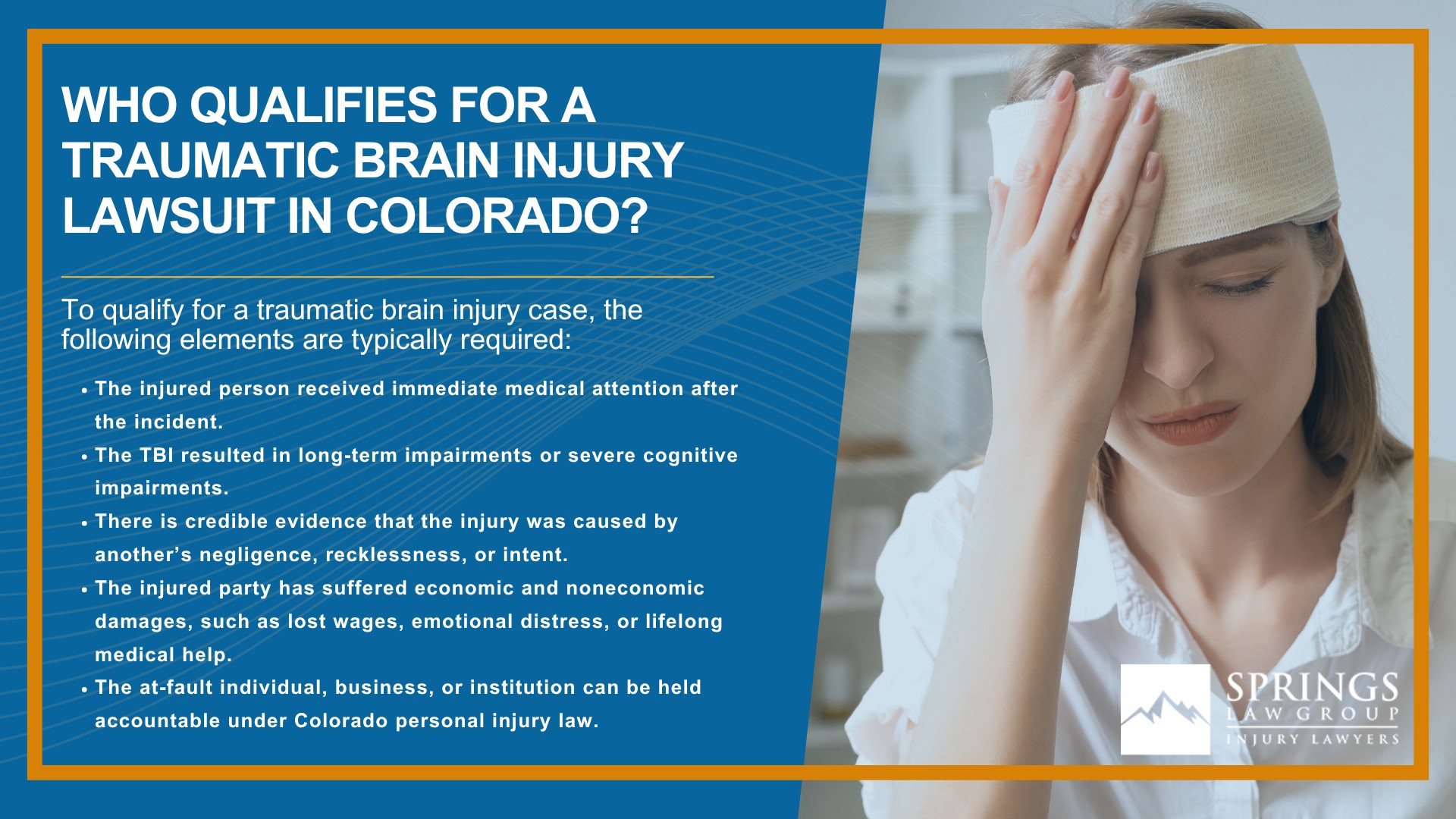
To qualify for a traumatic brain injury case, the following elements are typically required:

  • The injured person received immediate medical attention after the incident.
  • The TBI resulted in long-term impairments or severe cognitive impairments.
  • There is credible evidence that the injury was caused by another’s negligence, recklessness, or intent.
  • The injured party has suffered economic and noneconomic damages, such as lost wages, emotional distress, or lifelong medical help.
  • The at-fault individual, business, or institution can be held accountable under Colorado personal injury law.

These injuries may include widespread brain damage, permanent neurological symptoms, or serious medical conditions that require ongoing support.

Brain injury survivors often require the support of medical professionals, rehabilitative therapies, and life planning services, all of which carry a significant financial burden.

If the injury was so severe that the victim cannot file the claim themselves, a family member may be able to act on their behalf under Colorado law.

A qualified personal injury lawyer from Springs Law Group can evaluate the case, investigate liability, and provide legal representation to pursue the compensation the victim and their family deserve.

How Long Do You Have to File a Personal Injury Lawsuit in Colorado?

In Colorado, most personal injury cases are governed by a statute of limitations that generally gives injured individuals two years from the date of the injury to file a lawsuit.

If the injury was caused by a motor vehicle accident, the time frame extends to three years from the date of the incident.

This deadline applies to most types of claims, including those arising from negligence, premises liability, or medical malpractice.

Missing the statute of limitations can permanently bar you from recovering damages, regardless of the strength of your case.

Because these timelines can be nuanced (especially if the injury wasn’t immediately discovered or involves a government entity) it’s crucial to consult a legal team as soon as possible to preserve your rights.

An experienced personal injury attorney can review your case, determine the applicable deadlines, and guide you through filing on time to protect your right to compensation.

Gathering Evidence for a Brain Injury Claim

Establishing a strong brain injury claim requires clear and thorough documentation of the physical trauma, how the injury occurred, and the medical treatment received immediately after the incident.

Whether the case involves a mild concussion or a severe acquired brain injury, timely action can make a substantial difference in proving liability and recovering compensation.

Courts and insurance companies often look for consistency in the injured person’s medical history, behavior changes, and documentation of symptoms.

Seeking prompt medical treatment also strengthens the connection between the injury and the accident, which is especially important in brain injury cases where symptoms may be delayed or misinterpreted.

Evidence for a brain injury claim may include:

  • Emergency room records and hospital discharge summaries
  • Imaging results (CT scans, MRIs) showing brain damage or swelling
  • Testimony from neurologists or other medical professionals
  • Documentation of cognitive or behavioral changes after the accident
  • Eyewitness statements and police reports from the scene
  • Photographs of physical trauma or injuries to the head and neck
  • Employer documentation of missed work and lost wages
  • Proof of ongoing or future medical treatment such as therapy or rehab plans
  • Notes or evaluations from neuropsychologists regarding memory loss or impairments

This evidence builds a timeline of the injury and its impact on the victim’s life, making it easier for a personal injury lawyer to argue for maximum compensation.

If the brain injury was caused by someone else’s negligence (such as a vehicle crash, unsafe premises, or medical error) strong documentation can help establish both fault and damages.

Springs Law Group works closely with brain injury survivors to preserve and present this evidence as part of a comprehensive legal strategy.

Damages in Brain Injury Claims

A brain injury (especially a severe brain injury) can lead to permanent life changes that impact a person’s ability to work, care for themselves, or live without assistance.

Victims often face a combination of physical, cognitive, and emotional challenges that require extensive care and support.

These challenges create both immediate and long-term financial burdens, especially as medical bills pile up and families lose income during recovery.

In brain injury cases, compensation may help cover medical costs, reduce financial stress, and provide a sense of justice when another party’s negligence caused the harm.

Common damages awarded in brain injury claims may include:

  • Current and future medical bills, including surgeries, hospitalization, and medications
  • Ongoing rehabilitation costs, such as physical therapy and occupational therapy
  • Lost wages and diminished earning capacity due to cognitive impairments
  • Pain and suffering, emotional distress, and loss of enjoyment of life
  • Assistive devices, home modifications, and long-term care costs
  • Loss of consortium or companionship for spouses or partners
  • Punitive damages in cases involving egregious negligence or intentional harm

For individuals living with the long-term effects of a head injury, every aspect of daily life may be altered.

Emotional instability, memory loss, and communication difficulties can limit relationships and independence.

Seeking legal representation can help survivors and their families pursue the financial compensation they need to rebuild their lives.

Springs Law Group fights to recover full and fair compensation that reflects the true extent of these life-altering injuries.

Springs Law Group: Experienced TBI Attorney in Colorado

If you or a loved one is living with the effects of a traumatic brain injury, you deserve a legal team that understands the stakes and knows how to fight for meaningful results.

At Springs Law Group, our attorneys bring years of experience handling complex brain injury cases involving auto accidents, falls, medical negligence, and more.

We understand the medical, emotional, and financial toll that TBI can take, and we work relentlessly to pursue the full compensation our clients need to recover and rebuild.

How Do Traumatic Brain Injuries Occur; The Types of Traumatic Brain Injuries Explained; Who Qualifies for a Traumatic Brain Injury Lawsuit in Colorado; Springs Law Group Experienced TBI Attorney in Colorado

Our firm offers every client a free consultation to help determine their legal options without pressure or upfront costs.

We’ll take the time to understand how your injury happened, consult with medical experts, and build a claim tailored to your future needs.

Whether you’re facing mounting medical bills, cognitive impairments, or a permanent lifestyle change, we are prepared to help.

Contact Springs Law Group today to schedule your free consultation with a compassionate, experienced TBI attorney.

Let us help you take the next step toward justice and recovery.

Frequently Asked Questions

  • What types of accidents most often result in traumatic brain injuries (TBI)?

    Traumatic brain injuries can result from a wide range of incidents, many of which involve a sudden blow or jolt to the head.

    In TBI cases, the severity of the injury can vary from a mild concussion to permanent brain damage that impacts cognitive and physical function.

    Understanding how these injuries occur can help victims and families determine whether someone else’s negligence played a role, and whether legal action may be appropriate.

    Common accidents that often cause brain injuries include:

    • Motor vehicle collisions (car, motorcycle, truck, or pedestrian accidents)
    • Falls (including slip and falls, falls from heights, or workplace falls)
    • Sports-related accidents (especially contact sports like football or boxing)
    • Acts of violence (such as gunshot wounds or assault)
    • Medical malpractice (including oxygen deprivation or surgical errors)
    • Construction or workplace accidents involving falling objects or unsafe conditions

    If you or a loved one sustained a TBI in one of these situations, you may be eligible to pursue a brain injury lawsuit and seek compensation for medical bills, lost income, and long-term care.

  • Can I file a lawsuit even if brain injury or concussion symptoms appeared weeks after the accident?

    Yes, you may still be eligible to file a brain injury lawsuit even if your symptoms were delayed.

    Traumatic brain injuries, especially mild TBIs or concussions, can sometimes take days or weeks to fully present themselves.

    Colorado law does not require immediate symptoms in order to establish legal grounds for a claim.

    What matters is that medical documentation and expert testimony can connect the delayed symptoms to the initial incident.

    It’s important to speak with a personal injury attorney as soon as you begin experiencing signs of brain trauma, regardless of when they began, to protect your right to compensation.

  • What if the insurance company denies my brain injury claim?

    If an insurance company denies your brain injury claim, that does not mean you are out of legal options.

    Insurance companies often reject valid claims in traumatic brain injury (TBI) cases, especially when the symptoms are delayed, subjective, or not visible on imaging scans.

    An experienced TBI attorney can help you challenge the denial by gathering expert medical opinions, establishing liability through investigation, and filing a personal injury lawsuit if necessary.

    Springs Law Group can evaluate your case and advocate on your behalf to pursue the compensation you may be owed.

  • What long-term challenges do brain injury survivors often face?

    Survivors of TBIs frequently deal with long-term complications that affect their health, independence, and overall quality of life.

    Even a moderate injury can disrupt physical, emotional, and cognitive functioning.

    Common long-term challenges include:

    • Memory loss and difficulty concentrating
    • Chronic headaches and persistent fatigue
    • Emotional regulation issues, including depression or irritability
    • Speech or communication difficulties
    • Seizures or increased sensitivity to light and noise
    • Changes in personality or behavior
    • Reduced mobility or coordination problems

    These ongoing effects can make it difficult to return to work or maintain relationships, adding financial and emotional strain to survivors and their families.

    A legal claim may help secure resources for long-term care, therapy, and support.

Written By:

Attorney, Christopher M. Nicolaysen focuses primarily on helping those injured in car accidents due to no fault of their own.

The personal injury matters include auto accidents, bicycle accidents, pedestrian accidents, and trucking accidents.

Chris truly enjoys helping clients through a difficult time and helping them get the compensation they deserve.

Do You
Have A Case?
No out of pocket costs.
We only collect a fee AFTER you win your case and receive full compensation.
Contact our team today to discuss your case for free & Get answers in as little as 3 minutes.
Would you like our help?
right-image
600
About Springs Law Group
The lawyers at Springs Law Group have experience handling diverse personal injury cases with empathy and understanding.
We recognize the delicate nature of these claims and tailor strategies to meet your unique requirements, focusing on smart — not emotional — strategies.
Our team is committed to building long-lasting, trust-based client relationships.
We believe this approach helps ensure that choosing us means partnering with a firm that genuinely values you as a person — not just another client.
Recent Posts
Do You
Have A Case?
No out of pocket costs.
We only collect a fee AFTER you win your case and receive full compensation.
Contact our team today to discuss your case for free & Get answers in as little as 3 minutes.
Would you like our help?
right-image
600

The #1 Personal Injury Lawyers in Colorado Springs, Colorado

Local Colorado Springs Resources

Education
Emergency Services
Courthouses
Department of Motor Vehicles
Community & History

Leave Us A Review

We use reviews to help show more people like you why we do what we do!

Top-Rated Personal Injury Firm Serving Colorado Springs & Beyond

Personal injury victims represented by a lawyer recover up to 3x more.

Our Process

Play Video
1
Investigation
Gather evidence. Get police reports. Obtain insurance policies.
2
Treatment
You focus on healing. We help guide you through the process.
3
Medical Records
Get the records we need to make sure you have a strong case.
4
Demand Prep
Prepare and send our demands to the insurance company.
5
Negotiation
Negotiate with the insurance company for max compensation.
6
Settlement
Reach a settlement offer you agree with or we file a lawsuit.
7
Litigation
If we have to go to court, our trial lawyers get ready to win.

Videos

Our Team

The #1 Personal Injury Lawyers in Colorado Springs, CO