Colorado law requires drivers to carry a minimum amount of auto insurance before operating a motor vehicle on public roads.
The minimum auto insurance requirements in Colorado include liability coverage for bodily injury and property damage.
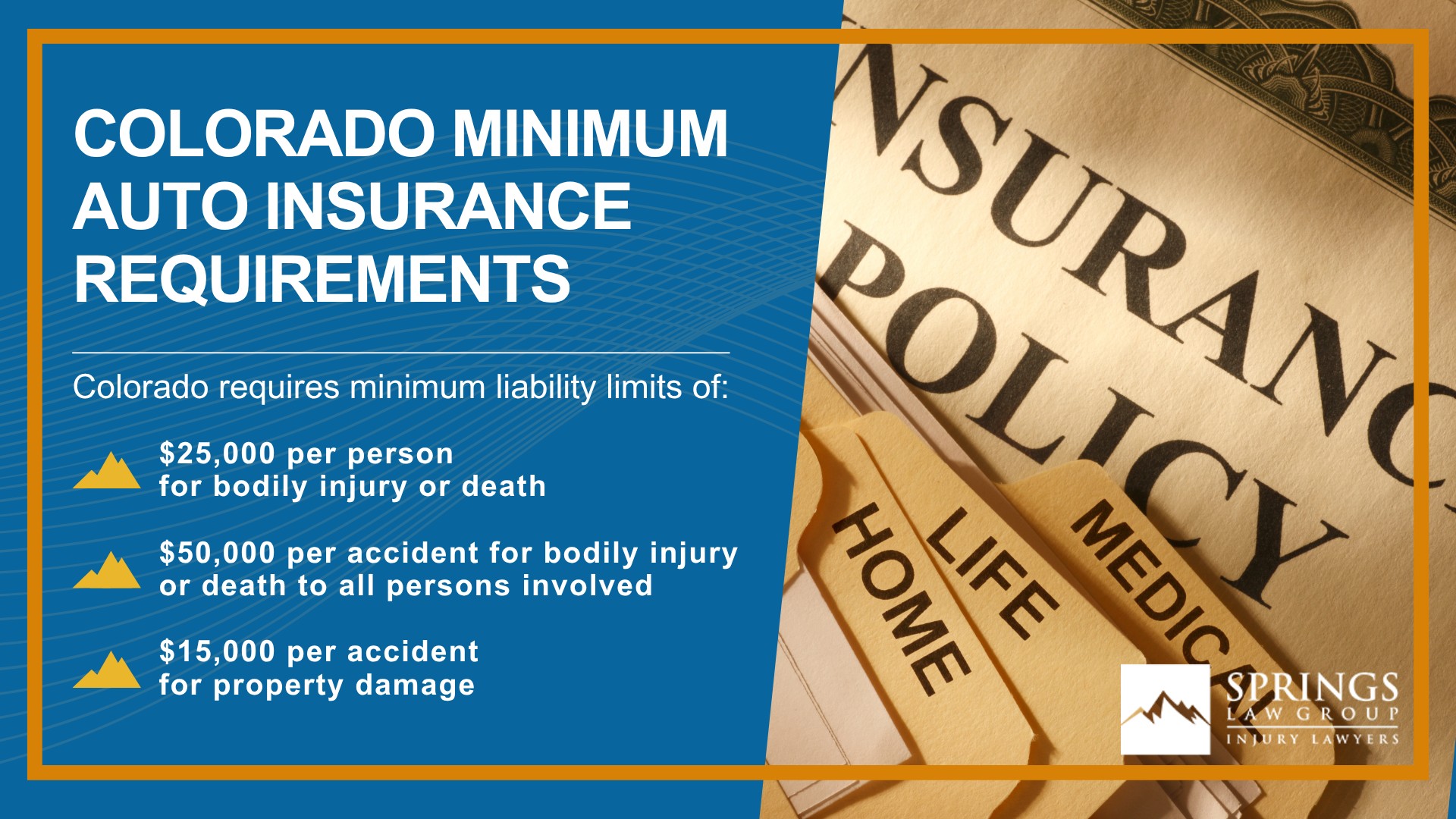
Colorado requires minimum liability limits of:
This coverage is sometimes called 25/50/15 coverage.
It is the minimum required by Colorado law, but it may not be enough after a serious accident involving medical expenses, lost wages, vehicle damage, or long-term injuries.
Bodily injury liability coverage helps pay for injuries you cause to another person when you are at fault for a car accident.
This may include medical expenses, medical treatment, lost wages, pain and suffering, and other damages caused by bodily harm.
Colorado car insurance requirements include at least $25,000 per person and $50,000 per accident in bodily injury liability coverage.
These limits may satisfy Colorado law, but a serious crash can cost far more than the minimum amount.
If the damages exceed your policy limits, you may be personally responsible for the difference.
That means you could have to pay out of pocket if you do not have enough insurance coverage.
Property damage liability coverage helps pay for damage you cause to someone else’s property in an accident.
This may include another car, a fence, garage doors, utility poles, buildings, signs, landscaping, or other physical property.
Colorado law requires at least $15,000 in property damage liability coverage.
That may sound like enough, but vehicle repairs, totaled cars, and damage to someone else’s property can exceed the minimum quickly.
Property damage liability does not usually pay for damage to your own vehicle.
To protect your own car, you may need collision coverage or comprehensive coverage depending on what happened.
Colorado is a fault-based state for car accident claims.
This means the driver who caused the accident is generally responsible for the injuries and property damage caused by the crash.
If another driver is at fault, you may be able to file a claim with that driver’s insurance company.
If you caused the accident, your liability insurance may help pay for the other person’s bodily injury or property damage up to your policy limits.
Because Colorado is not a no-fault state, fault matters.
Police reports, witness statements, photos, medical records, vehicle damage, and insurance documents can all affect how the claim is handled.
Minimum auto insurance may satisfy Colorado auto insurance requirements, but it may not fully protect you after a serious crash.
Medical bills, vehicle repairs, lost wages, and other expenses can exceed minimum liability limits quickly.
Minimum coverage may fall short when an accident involves:
If your coverage is too low, the insurance company may only pay up to the policy limits.
After that, injured parties may look for other available insurance coverage or pursue additional legal options.
Colorado’s minimum liability requirements establish a baseline, but they do not address every financial risk a driver may face after an accident.
Depending on the policy, additional protection may include higher liability limits, uninsured and underinsured motorist coverage, medical payments coverage, collision coverage, comprehensive coverage, gap insurance, rental reimbursement, and roadside assistance.
The appropriate combination of coverage depends on factors such as vehicle value, financial circumstances, driving habits, deductibles, and the amount of risk a driver is prepared to assume.
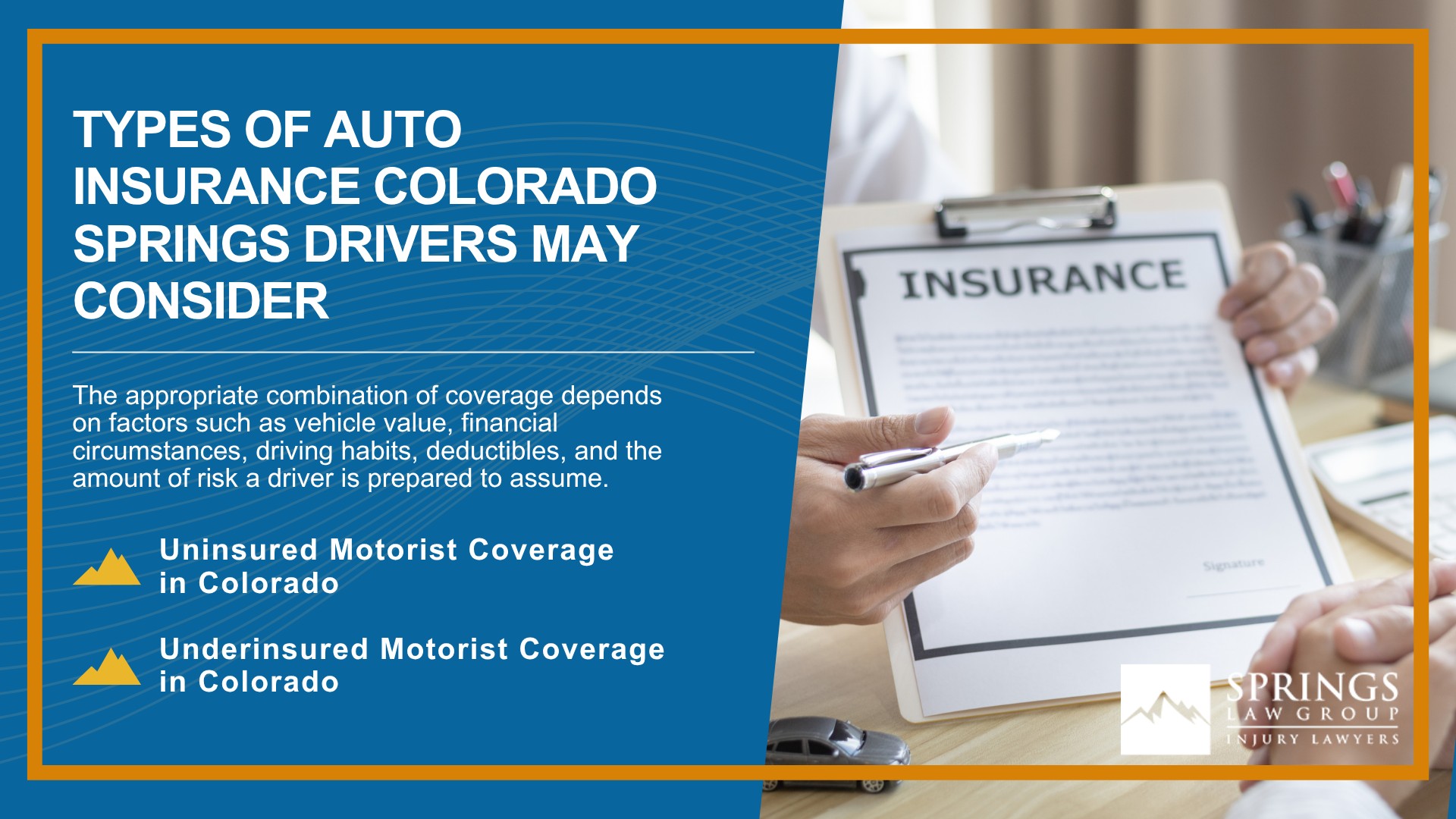
Uninsured motorist coverage may protect you if you are injured by a driver who has no insurance.
Colorado auto policies generally include UM/UIM coverage unless the named insured rejects it in writing.
UM/UIM coverage can also become important after a hit-and-run accident if the at-fault driver cannot be identified.
Uninsured motorist coverage may help pay for:
Even though Colorado drivers are required to carry liability insurance, not every driver follows the law.
If an uninsured driver causes a crash, your own insurance coverage may be one of the most important sources of recovery.
Underinsured motorist coverage applies when the at-fault driver has insurance, but not enough insurance to cover the full value of your damages.
This can happen when a serious injury claim exceeds the at-fault driver’s liability limits.
For example, if the at-fault driver has only minimum bodily injury liability coverage, that policy may not cover major medical bills, lost wages, future treatment, or long-term harm.
Underinsured motorist coverage can help fill the gap, depending on your policy and the facts of the claim.
Underinsured motorist coverage is often one of the most important types of optional coverage for Colorado drivers.
It can protect you from being limited by another driver’s poor insurance choices.
Medical payments coverage, commonly called MedPay, can help pay reasonable medical expenses after a Colorado car accident regardless of who caused the crash.
Colorado auto policies generally include at least $5,000 in MedPay benefits unless the named insured rejects the coverage in writing or through the same medium used to apply for the policy.
If an insurer cannot establish a valid rejection, the policy is generally presumed to include $5,000 in MedPay coverage.
MedPay can apply to covered accident-related medical expenses such as ambulance transportation, emergency treatment, physician visits, diagnostic imaging, physical therapy, and other qualifying care, subject to the policy terms and limits.
The coverage can be particularly useful because medical bills may become due before liability is resolved or a personal injury claim is settled.
Colorado law also provides that MedPay coverage is primary to an injured person’s health insurance for covered accident-related expenses.
MedPay does not replace a personal injury claim against an at-fault driver.
Instead, it may provide an additional source of payment for medical expenses while the broader claim is pending.
Drivers should review their declarations page and policy documents to determine whether MedPay was accepted or rejected, the available limit, and the expenses covered under the policy.
Collision coverage helps pay for damage to your own vehicle after a crash, regardless of who caused the accident.
It may apply when your car hits another vehicle, a guardrail, a wall, a pole, or another object.
Collision coverage is usually optional unless required by a lender or lease agreement.
If you have an auto loan or lease, your finance company may require collision coverage to protect the vehicle.
Collision coverage usually has a deductible.
A higher deductible may lower your premium, but it also means you may pay more out of pocket after a crash.
Comprehensive coverage helps pay for damage to your vehicle from events other than a collision.
This optional coverage can be important in Colorado because vehicles may be damaged by weather, theft, fire, falling objects, vandalism, animals, or other non-crash events.
Comprehensive coverage may apply to:
Like collision coverage, comprehensive coverage usually has a deductible.
Drivers should review their policy to understand what is covered, what is excluded, and what they would need to pay out of pocket after a claim.
Gap insurance may help if your vehicle is totaled and you owe more on your auto loan or lease than the car is worth.
This can happen when a newer vehicle loses value faster than the loan balance decreases.
For example, if your car is totaled and the insurance company determines the vehicle is worth less than your loan balance, gap insurance may help cover the difference.
Without gap coverage, you may still owe money on a vehicle you can no longer drive.
Gap insurance may be especially helpful for drivers with newer vehicles, small down payments, long loan terms, or leased vehicles.
It is not required by Colorado law, but lenders or leasing companies may require it.
If the at-fault driver has no insurance, your options may depend on your own policy.
Uninsured motorist coverage may help pay for medical expenses, lost wages, pain and suffering, and other damages caused by the uninsured driver.
You may also need to review medical payments coverage, health insurance, collision coverage, and other available insurance coverage.
If the uninsured driver caused property damage, collision coverage may help pay for your own vehicle damage depending on your policy.
A driver who operates without required insurance may face legal consequences, including possible license suspension.
But those penalties do not automatically pay your medical bills or other losses, which is why uninsured motorist coverage can be important.
If the at-fault driver does not have enough liability insurance, underinsured motorist coverage may apply.
This coverage can help when the at-fault driver’s policy limits are too low to cover the full value of your claim.
This issue often arises after serious accidents involving:
If the at-fault driver only has minimum liability limits, the available coverage may be far less than the harm caused.
Springs Law Group can review all available policies and help determine whether underinsured motorist coverage may apply.
A hit-and-run accident can create immediate insurance problems because the at-fault driver may not be identified.
If the driver leaves the scene, you should report the accident to police, seek medical attention, and notify your insurance company.
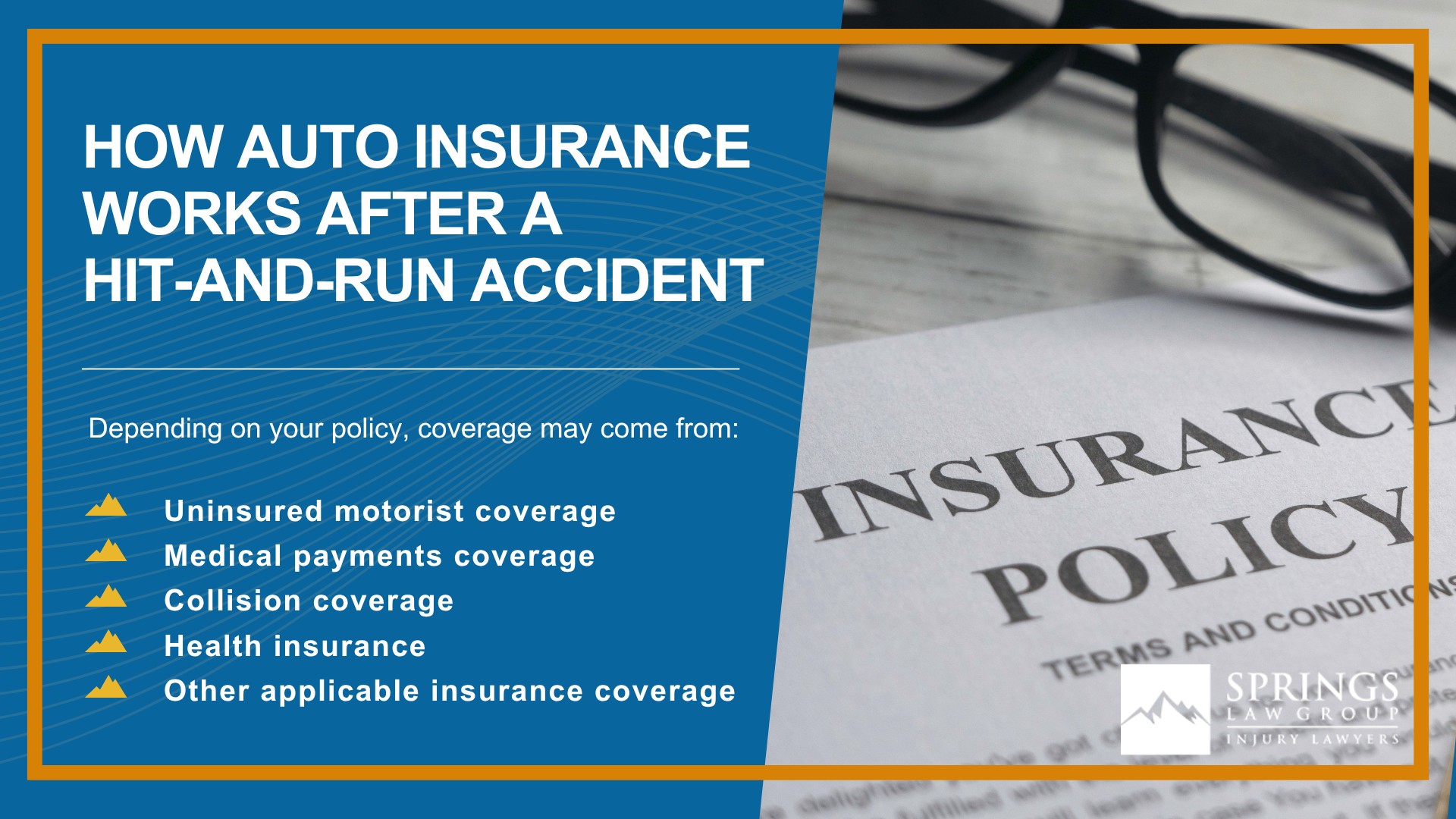
Depending on your policy, coverage may come from:
Evidence can be especially important after a hit-and-run.
Camera footage, witness statements, debris, license plate information, police reports, and nearby business or traffic cameras may help identify the driver.
Auto insurance can be confusing, and mistakes often become clear only after a crash.
Colorado drivers should review their policies before an accident happens, not after the insurance company denies coverage or limits payment.
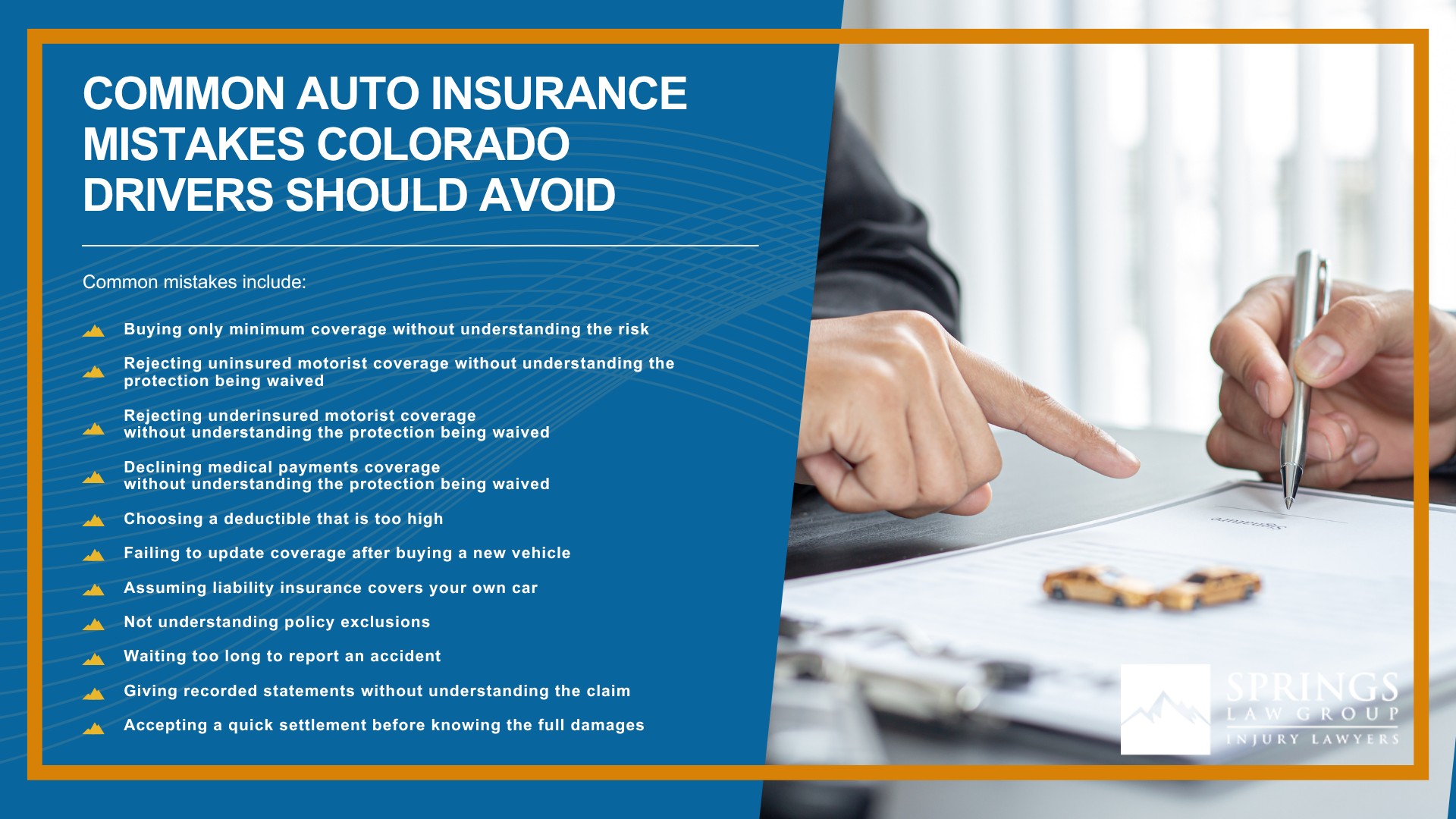
Common mistakes include:
The right coverage depends on the person, vehicle, driving record, driving habits, finances, and risk level.
A cheaper premium may save money monthly but cost more after a serious accident.
The amount of auto insurance you should carry depends on several factors, including your assets, income, vehicle value, driving habits, and ability to pay out of pocket after a crash.
Many Colorado Springs residents choose to purchase liability limits above the state minimum to reduce their financial exposure after a serious motor vehicle accident.
Drivers may also consider whether they need more insurance through uninsured and underinsured motorist coverage, MedPay, collision coverage, or comprehensive coverage.
Car insurance rates can vary based on the limits and protections selected, along with factors such as driving history, deductible, vehicle type, and location.
Some insurers may offer discounts when policyholders bundle home and auto coverage, although pricing and eligibility vary by company.
A licensed insurance professional can help you compare available options and determine which limits and coverage types fit your financial circumstances and risk tolerance.
Colorado auto insurance laws affect how personal injury claims are paid after a car accident.
Because Colorado is a fault-based state, the at-fault driver’s liability insurance is often the first source of recovery.
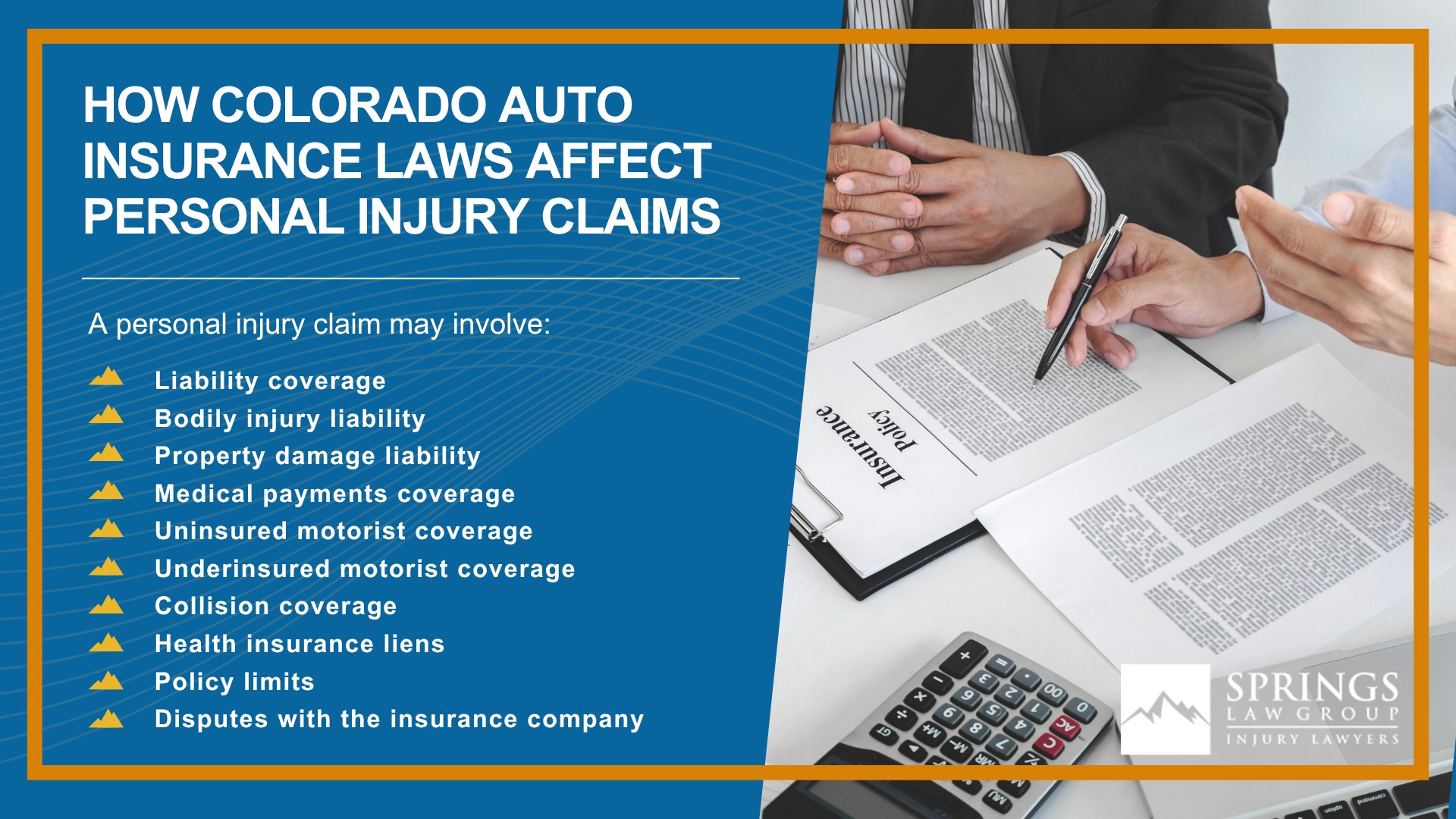
A personal injury claim may involve:
The insurance company may dispute fault, question medical expenses, challenge lost wages, or argue that the injuries were not caused by the accident.
Springs Law Group can review the claim, gather evidence, and pursue compensation under Colorado law.
Evidence is important after any Colorado Springs car accident.
The right evidence can help prove fault, document injuries, support property damage, and show why the insurance company should pay the claim.
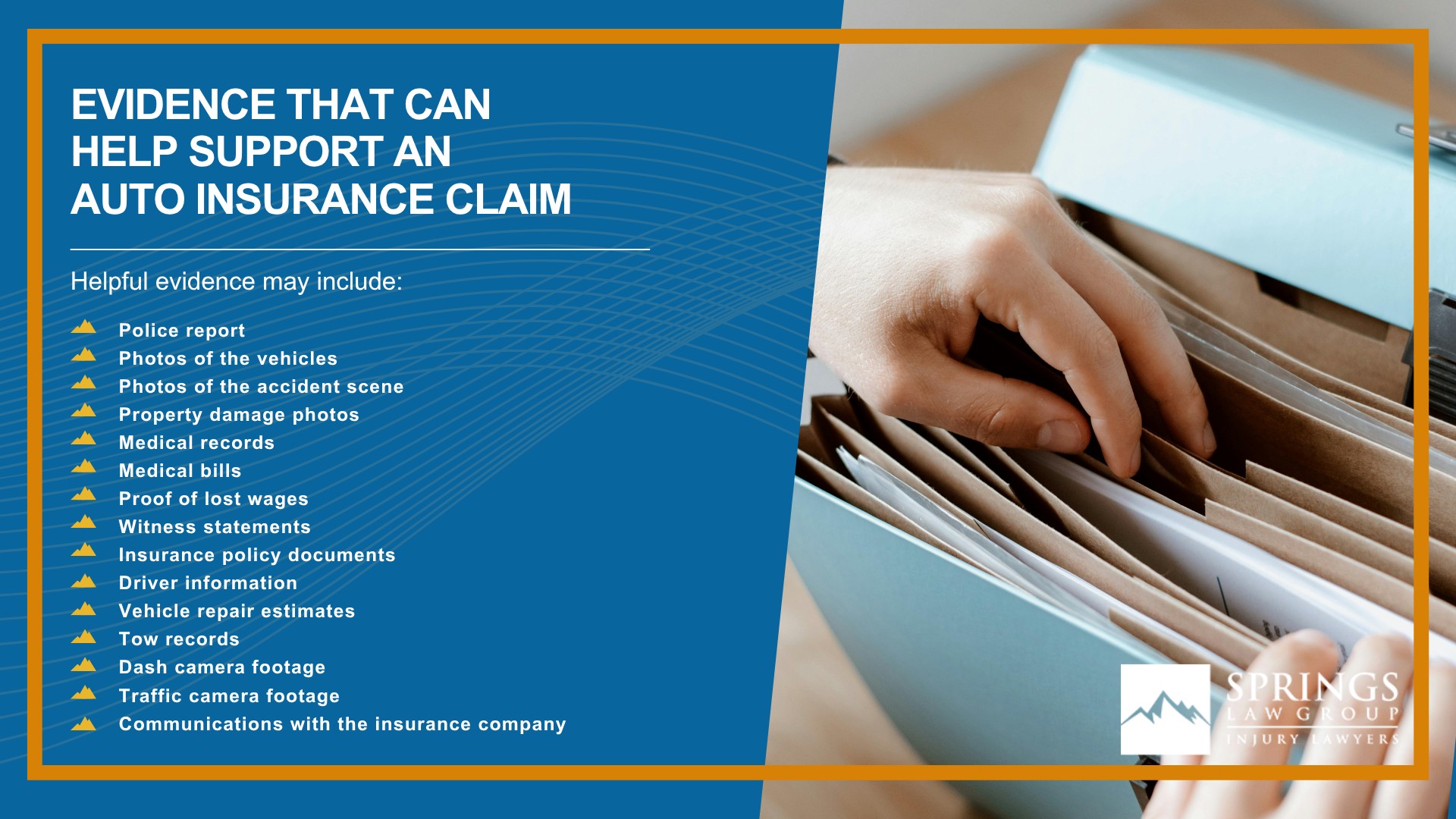
Helpful evidence may include:
You should keep copies of everything related to the accident and the claim.
If the insurance company disputes coverage or undervalues the case, these records can become important evidence.
Damages in an auto insurance claim depend on the facts of the accident, the available insurance coverage, the severity of the injuries, and the financial losses caused by the crash.
After a serious Colorado Springs car accident, damages may involve more than vehicle repairs or the first medical bill.
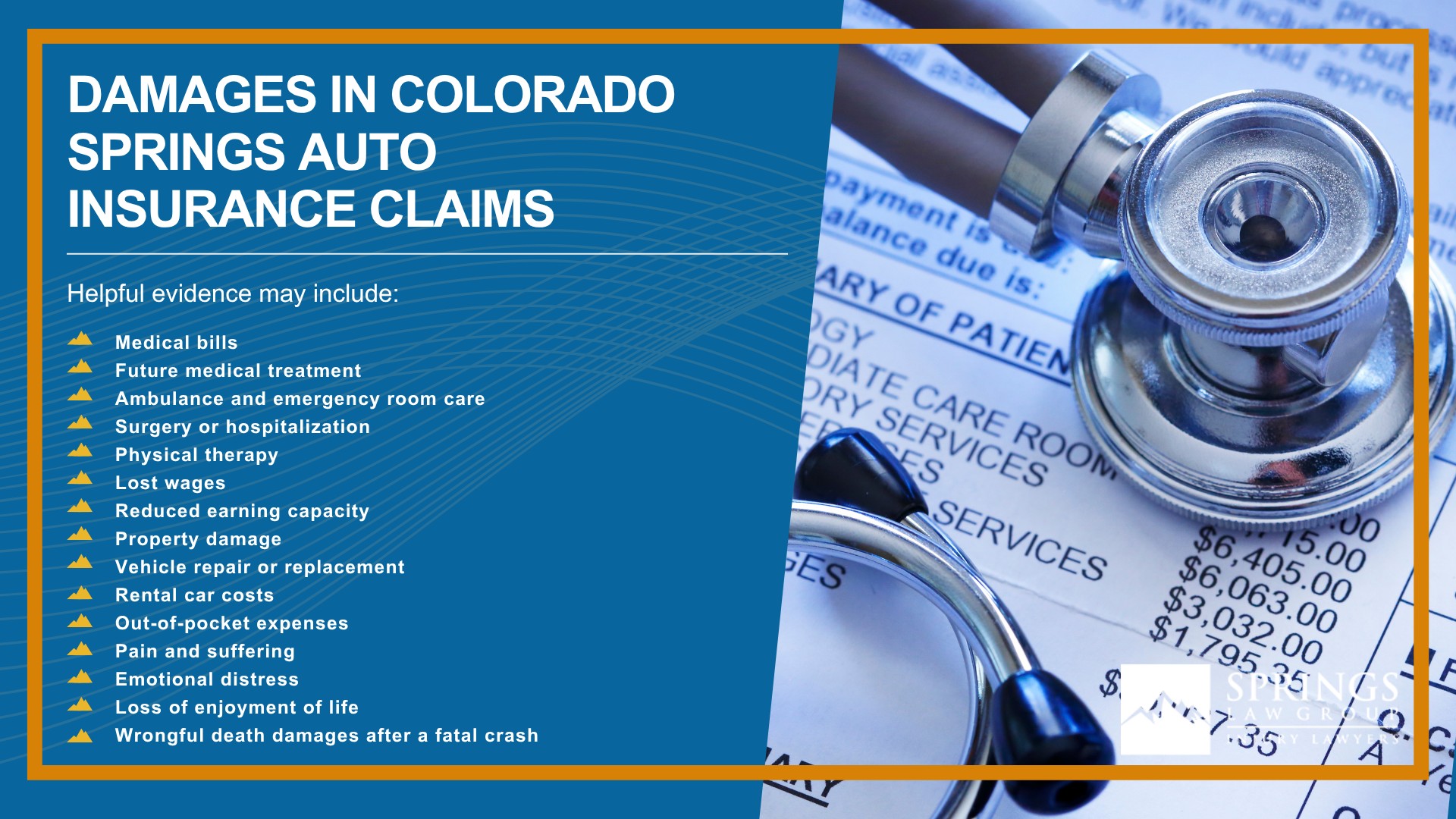
Recoverable damages may include:
The insurance company may not include all of these losses in its first settlement offer.
Springs Law Group can review the accident, medical records, insurance coverage, and financial impact of the crash to help determine what compensation may be available under Colorado law.
You should consider contacting a Colorado Springs car accident lawyer if you were injured, the insurance company disputes fault, the at-fault driver is uninsured, the at-fault driver does not have enough insurance, or the settlement offer does not cover your losses.
A lawyer may be especially helpful when the claim involves:
Legal help can also be important if the insurance company asks for a recorded statement, pushes for a quick settlement, or refuses to explain coverage.
Springs Law Group can help you understand your legal options before you make decisions that could affect your claim.
Springs Law Group helps people in Colorado Springs after car accidents and auto insurance disputes.
The firm reviews what happened, identifies available insurance coverage, gathers evidence, and handles communication with the insurance company.
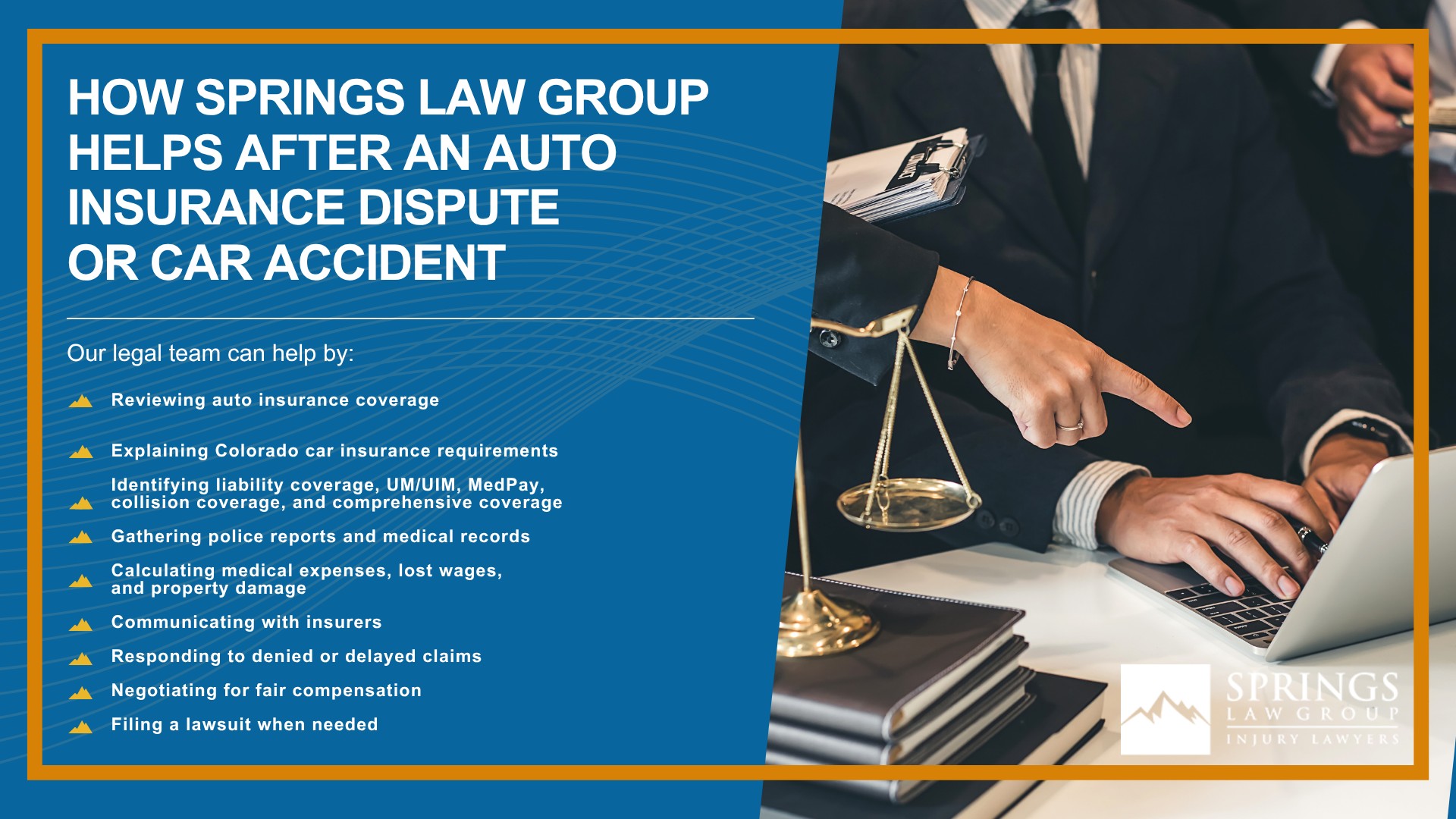
Our legal team can help by:
The goal is to help injured people understand the claim process and pursue the compensation available under Colorado law.
Auto insurance coverage can affect nearly every part of a Colorado Springs car accident claim, from payment of medical expenses and vehicle damage to the amount of compensation available when another driver is uninsured or underinsured.
Our attorneys can review the applicable policies, identify available liability, UM/UIM, MedPay, and other coverage, and address disputes involving fault, policy limits, denied claims, or settlement value.
We can also gather medical, financial, and accident evidence and communicate with the insurance companies while pursuing compensation supported by the facts of the case.
If you were injured in a Colorado Springs auto accident or are dealing with an insurance coverage dispute, contact Springs Law Group.
Call Springs Law Group today for a free consultation with a Colorado Springs auto accident lawyer.
You can also use the chat feature to find out whether you may qualify for a case.