A Colorado spinal cord injury lawyer from Springs Law Group helps clients and their families pursue justice after life-changing injuries caused by someone else’s negligence.
Whether the result of car accidents, medical malpractice, or another preventable accident, a serious spinal cord injury can permanently alter how a person moves, communicates, and lives.
Springs Law Group is here to support victims facing total paralysis, loss of motor function, and long-term complications affecting the brain, neck, and muscles.
In Colorado, spinal cord injury cases often form the basis of a personal injury claim or personal injury lawsuit, especially when a property owner, driver, or provider failed in their duty of care.
A complete spinal cord injury can require lifelong rehabilitation and round-the-clock care, placing immense financial and emotional strain on victims and their families.
These are catastrophic injury claims, and they deserve legal representation that understands their scale and complexity.
Our firm fights to recover damages that reflect not just immediate losses but the full, ongoing cost of permanent disability and loss of independence.
Insurance companies may resist paying what is owed, but an experienced spinal cord injury lawyer can challenge their tactics and fight for fair compensation.
Victims may also experience complications with organ function, mobility, and secondary injuries: all of which must be accounted for in legal recovery.
At Springs Law Group, we build each case with compassion, strategy, and the understanding that no two injuries are the same.
If you or a loved one suffered a serious spinal cord injury due to someone else’s negligence, the attorneys at Springs Law Group are here to help you seek the compensation you deserve.
Contact us for a free legal consultation.
Use the chat feature on this page to find out if you qualify for a personal injury lawsuit.
Spinal cord injuries can occur suddenly and change a person’s life in an instant.
These devastating injuries often result from high-impact trauma or preventable incidents that damage the vertebrae, nerves, or surrounding structures of the spine.
A spinal cord injury caused by someone else’s negligence may leave the injured person facing long-term disability, chronic pain, and loss of function in various parts of the body.
These cases typically involve extensive treatment, long recovery timelines, and an uncertain future for the victim and their family.
In many instances, spine injuries stem from primarily gunshot wounds, car accidents, medical malpractice, and other types of incidents that could have been avoided with proper care and responsibility.
When the spinal cord is injured, it can affect the brain’s ability to communicate with the body, leading to partial or total paralysis.
Legal action is often the only viable path for victims to recover damages that support their care, mobility, and dignity.
Identifying how the injury occurred is a critical first step in building a successful case.
Common causes of spinal injuries:
These events are not only traumatic, but often entirely preventable.
In many cases, a spinal cord injury is the result of a failure to act with appropriate caution, proper training, or medical care.
When someone else’s actions or inaction lead to such catastrophic harm, the law allows injured individuals to pursue accountability.
A qualified spinal cord injury lawyer can help identify liable parties, secure expert evaluations, and present strong evidence that supports your claim.
Spinal cord injuries (SCIs) are classified based on the location and severity of damage to the spinal cord and surrounding structures.
Understanding the type of injury is essential in determining treatment plans, prognosis, and eligibility for a personal injury claim.
These injuries often involve serious damage to nerve cells, fractured vertebrae, and the body’s ability to send or receive signals below the site of trauma.
Victims may experience loss of movement, bowel and bladder control, sexual dysfunction, or the inability to maintain the same position for extended periods without pain or discomfort.
There are two main classifications of spinal cord injuries: complete spinal cord injury and incomplete injury.
A complete spinal cord injury results in total loss of sensory and motor function below the point of injury, often leading to total paralysis.
In contrast, an incomplete spinal cord injury means the injured person retains some degree of movement or sensation below the affected area.
These distinctions are critical in both treatment planning and in determining eligibility for a personal injury lawsuit or catastrophic injury claim.
Below are the most commonly recognized subtypes of spinal cord injuries:
Every spinal cord injury is unique, and even seemingly minor trauma can lead to a serious injury with permanent consequences.
Whether the injury was caused by car accidents, medical malpractice, or a preventable accident, victims deserve the chance to recover damages from responsible parties.
Springs Law Group helps individuals and families navigate these life-altering injuries with experience and legal clarity.
Individuals who suffer a serious spinal cord injury due to another party’s negligence may qualify to file a personal injury lawsuit under Colorado law.
According to Colorado Revised Statutes §13-21-111, injured individuals can pursue damages if they can demonstrate that another party’s negligence or wrongdoing was a direct cause of their injuries.
Liability can stem from car accidents, medical malpractice, workplace incidents, or any preventable accident where another party failed to exercise reasonable care.
To qualify for a spinal cord injury lawsuit, the following elements generally need to be met:
Victims may also qualify if they can prove that a business, property owner, or healthcare provider breached their legal duty of care and caused the spinal injury.
In cases of catastrophic injury, like total paralysis or permanent neurological impairment, the claim may also involve future medical costs, loss of consortium, or diminished earning potential.
Family members may have legal standing to file on behalf of an incapacitated victim if that person is unable to initiate the claim themselves.
Springs Law Group can assist injured individuals and families in securing compensation for both economic losses and human suffering caused by these life-altering injuries.
In Colorado, you generally have two years from the date of the injury to file a personal injury lawsuit, under Colorado Revised Statutes § 13-80-102.
This statute of limitations applies to most personal injury claims, including those arising from negligence, slips and falls, and other non-automobile-related incidents.
However, if the injury resulted from a motor vehicle accident, the time limit to file a lawsuit is extended to three years under § 13-80-101(1)(n).
Missing the deadline can result in your case being dismissed, regardless of its merits.
To protect your right to recover damages, it’s critical to speak with a personal injury lawyer as soon as possible after your injury.
Building a strong spinal cord injury claim in Colorado requires timely, organized, and comprehensive documentation of the accident and its consequences.
One of the most critical components of this process is collecting medical records that confirm the diagnosis, extent of damage, and treatment plan.
These documents help link the spinal cord injury directly to the negligent or wrongful act and demonstrate the long-term impact on the victim’s life.
An experienced spinal cord injury attorney can help secure, preserve, and present the right forms of evidence to support your claim.
Evidence for a spinal cord injury claim may include:
This evidence helps your legal team establish how the injury occurred, the severity of the damage, and the financial and physical toll it has taken on your life.
A detailed and persuasive evidentiary record is often essential to recovering full compensation in a catastrophic injury claim.
Spinal cord injury claims often result in some of the most substantial damage awards due to the permanent impact on a person’s physical and financial life.
Victims may be unable to return to work, require constant care, or experience lifelong pain and medical complications.
A successful claim can provide financial compensation for both immediate and long-term economic damages and emotional suffering.
Common damages in spinal cord injury cases include:
Every case is unique, but the goal is to recover enough compensation to cover the total cost of the injury (both financially and emotionally) for the remainder of the victim’s life.
Your legal team will work to calculate the full scope of losses, using expert witnesses if necessary.
Even in cases where some damages seem harder to quantify, such as future care needs or psychological distress, an experienced attorney can help build a compelling claim.
If you or a loved one suffered a spinal cord injury due to someone else’s negligence, the experienced attorneys at Springs Law Group are here to help.
We understand the profound impact these injuries can have and are committed to fighting for the financial recovery you deserve.
From your free initial consultation through every step of the legal process, we work to secure the maximum compensation possible to cover medical care, lost wages, and long-term support.
Call today for a free consultation with a Colorado spinal cord injury lawyer at Springs Law Group.
Let us help you hold the responsible parties accountable and get your life back on track.
Spinal cord injuries are often caused by sudden, forceful trauma to the spine.
These injuries can result from a wide range of incidents, many of which are preventable and caused by another person or entity’s negligence.
Whether the injury was sustained in a public space, on the job, or behind the wheel, understanding the source is critical to building a strong legal case.
Common accidents that lead to spinal cord injuries include:
If your spinal cord injury was caused by another party’s reckless or careless behavior, you may have grounds for a personal injury lawsuit to seek compensation for your medical bills, lost wages, and long-term care needs.
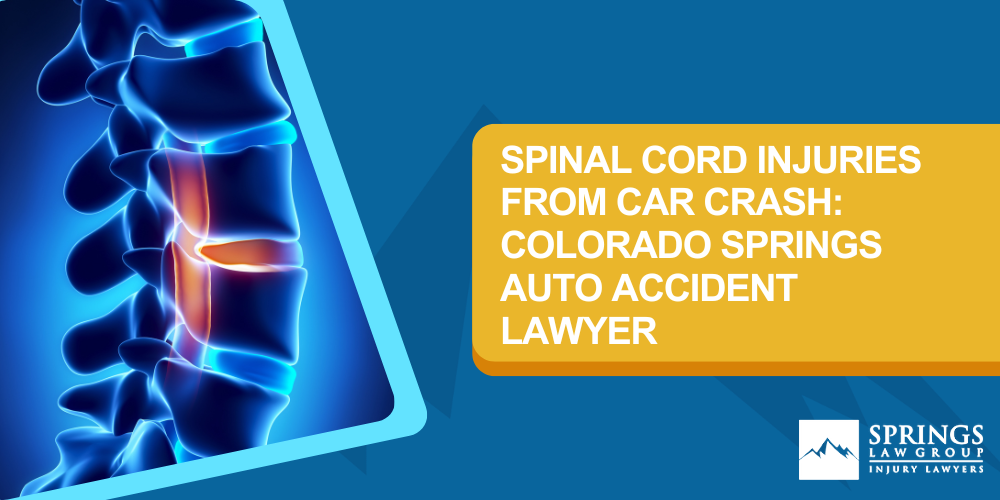
The spine is made up of a series of small bones called vertebrae, which protect the spinal cord and allow flexibility in the back and neck.
When someone experiences a spinal cord injury, the vertebrae may fracture, dislocate, or compress, leading to damage to the nerves within the spinal cord itself.
The severity of the injury depends on where along the spinal column the trauma occurs: cervical injuries near the neck often result in more widespread paralysis than injuries in the lower back.
Damage to these vertebrae can interrupt communication between the brain and the rest of the body, causing loss of movement, sensation, and autonomic functions.
Immediate diagnosis and treatment are crucial to prevent further complications and preserve as much function as possible.
Recovery timelines for spinal cord injuries vary widely depending on the severity of the injury and the part of the spine affected.
Some individuals may regain partial function within weeks or months, especially with early intervention, physical therapy, and consistent medical care.
However, others (particularly those with complete spinal cord injuries) may face permanent impairments and require long-term or lifelong support.
Each case is unique, and recovery often involves a combination of physical, emotional, and financial challenges.
A legal claim can help alleviate the burden by securing resources for treatment, rehabilitation, and necessary accommodations.
Spinal cord injuries often lead to serious complications that affect multiple systems of the body.
Even with proper treatment, many individuals experience long-term or permanent health issues that require ongoing care and monitoring.
Some of the most common complications include:
These complications not only affect quality of life but also factor heavily into the damages sought in a spinal cord injury claim.

Member of the Colorado Bar Association since 2014. Attorney, Christopher M. Nicolaysen focuses primarily on helping those injured in Colorado car accidents, other auto accidents, and Colorado personal injury incidents.
This article has been written and reviewed for legal accuracy and clarity by the team of writers and attorneys at Springs Law Group and is as accurate as possible. This content should not be taken as legal advice from an attorney. If you would like to learn more about our owner and experienced Colorado personal injury lawyer, Christopher Nicolaysen, you can do so here.
Springs Law Group does everything possible to make sure the information in this article is up to date and accurate. If you need specific legal advice about your case, contact us. This article should not be taken as advice from an attorney.
We use reviews to help show more people like you why we do what we do!

I was uneasy about reaching out to a law firm after being in an accident that left me injured and my vehicle totaled. I don’t care for the idea of suing for what was very clearly an accident. However, after learning more about the overall process of working with a professional team to navigate the murky waters of the insurance world, I was pleasantly surprised to find that the experience wasn’t as gross as I’d originally felt about it.

Springs Law is very friendly and professional. I always felt that they were on my side and cared about my injury and what I was going through. I highly recommend them.

Springs Law Group is an amazing group to work with! I got into a rough accident, and they never ceased to let me know they were there working hard to help me in my hour of need. It was always very easy to reach out to someone if I had any questions, and they were always happy to answer any questions I had.
I never have a problem with getting a response when I need them – which is not the case with most other firms. They really truly care about each client. As a plus, they always have positive attitudes, which matters tremendously when you are in a stressful legal situation.

Big thanks to Mr. Jake Kimbell and his team for their assistance with my case. He helped me through an incredibly challenging part of my life, and most importantly helped navigate through the convoluted legal channels of my case. I cannot thank him and his team enough for their support.

The entire team at Springs Law group has been nothing but amazing. Jake and the rest of the staff were great to work with and extremely professional. They were very attentive and answered any questions and concerns I had. I was always able to contact them and they were very responsive and communicated with me.

Springs Law Group is an amazing group to work with! I got into a rough accident, and they never ceased to let me know they were there working hard to help me in my hour of need. It was always very easy to reach out to someone if I had any questions, and they were always happy to answer any questions I had.