

Driving in Colorado during the winter months demands more than ordinary caution.
It requires preparation, awareness, and respect for rapidly changing conditions.
The state’s high elevations, freezing temperatures, and winding mountain roads can turn an easy drive into a serious hazard within minutes.
Snow and ice reduce tire traction, while visibility can vanish in whiteout conditions, making it difficult to maintain full control even for experienced drivers.
Colorado’s winter driving safety isn’t just about good habits; it’s also tied to specific state laws.
The Passenger Vehicle Traction Law and Chain Law apply during snowstorms and on certain stretches of highway, particularly the I-70 Mountain Corridor, where traction requirements are strictly enforced.
Understanding these regulations and preparing your vehicle to meet them helps keep you compliant and safe.
Proper vehicle preparation can make the difference between a safe trip and getting stuck in dangerous winter conditions.
Before driving in Colorado’s freezing temperatures, make sure your car’s critical systems are ready for snowy or icy roads.
Check your anti-lock brakes, battery power, and tire pressure regularly to prevent failures that could make it harder to stop or regain traction on slick surfaces.
Keeping your gas tank at least half full helps prevent fuel line freeze-ups, and a working dome light ensures visibility if you need to inspect your vehicle during an emergency.
Having the right tools and supplies in your car can make roadside issues far less stressful.
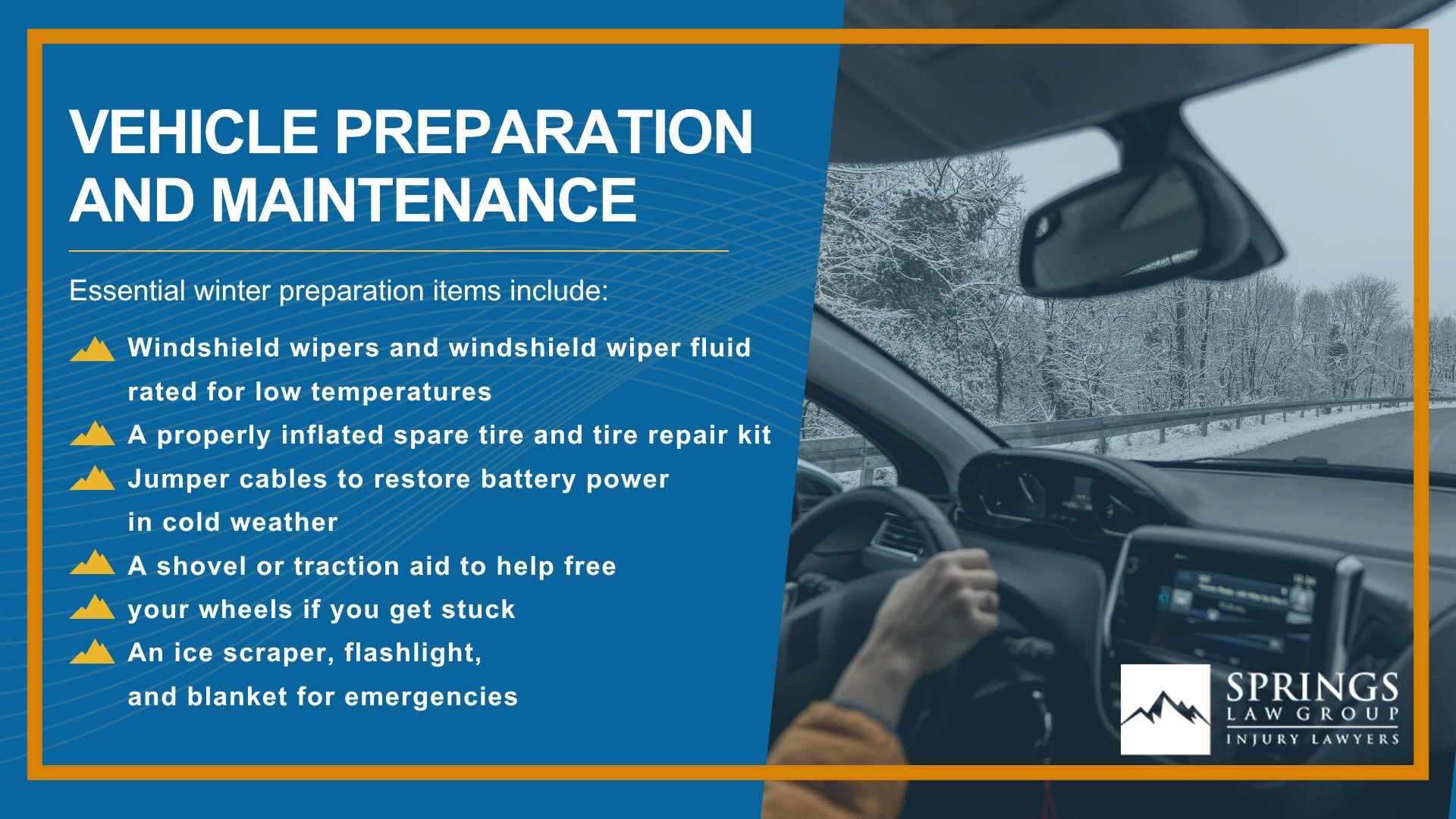
Essential winter preparation items include:
A well-maintained vehicle not only meets Colorado’s traction and safety expectations but also gives drivers a far better chance of staying in control when winter weather strikes unexpectedly.
Colorado’s Traction and Chain Laws are designed to keep roads clear and safe during heavy snow and ice conditions, especially in the mountains where steep grades and low visibility make driving more dangerous.
When the Passenger Vehicle Traction Law is in effect, all drivers must have one of the following: all-wheel or four-wheel drive with adequate tires, winter or all-weather tires marked with the mountain-snowflake symbol, or traction devices such as tire chains or auto socks.
Tires must have a minimum tread depth of 3/16 of an inch, which helps vehicles regain traction and maintain control on snow-packed or icy pavement.
The law becomes stricter when the Passenger Vehicle Chain Law is activated, requiring every vehicle on the road to use chains or an approved traction device, regardless of drive type.
These laws are most frequently enforced along the I-70 Mountain Corridor between Morrison and Dotsero, where conditions can shift rapidly from wet pavement to deep snow in a matter of miles.
Failure to comply can result in fines exceeding $130, and blocking the highway due to inadequate traction can raise penalties to over $650.
Even the most prepared vehicle can lose control if the driver doesn’t adapt their habits to severe weather and bad weather conditions.
The most effective winter driving tips focus on patience, awareness, and gentle movements behind the steering wheel.
Always drive slowly, increase your following distance, and avoid sudden acceleration or braking when temperature drops turn wet pavement into ice.
If your vehicle has antilock brakes, apply steady pressure to the brake pedal (never pump it) to allow the system to work properly.
For vehicles without ABS, apply firm pressure to the brakes while keeping the wheels straight and avoiding overcorrection.
During longer drives, avoid using cruise control in icy or snowy conditions; staying alert helps you react faster if traction changes unexpectedly.
Keep your seat-belt fastened at all times, and make sure your exhaust pipe stays clear of snow or ice if you’re idling to stay warm.
Carrying essentials such as a phone car charger can help you call for help in case of an emergency.
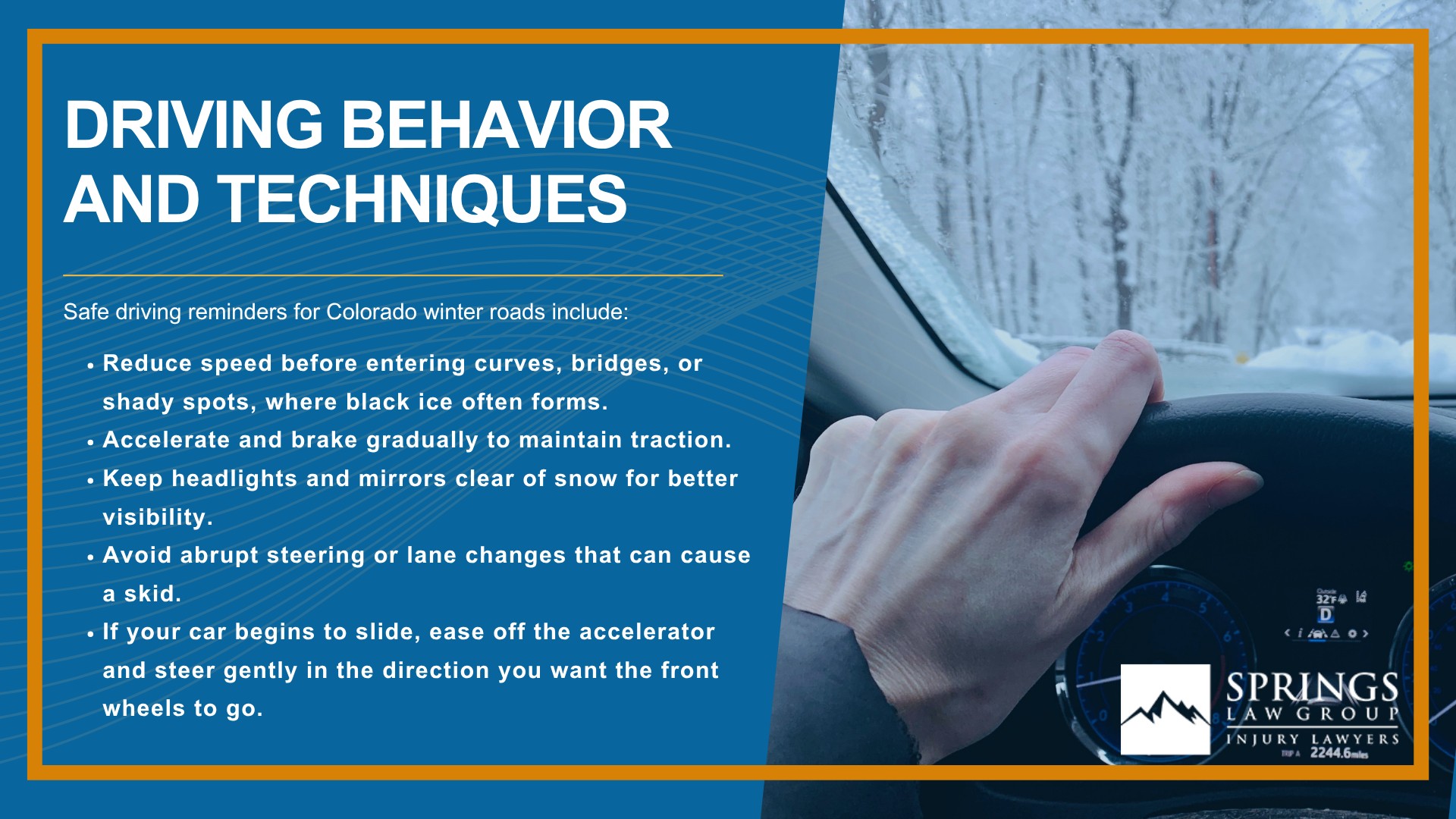
Safe driving reminders for Colorado winter roads include:
Small adjustments in driving behavior can dramatically improve control and stability, giving you the best chance of arriving safely even in Colorado’s harshest winter storms.
Even with the best preparation, wintry conditions can leave drivers stranded for hours due to closures, accidents, or impassable roads.
Staying safe while waiting for help means having the right supplies to stay warm, visible, and nourished.
Drivers should keep an emergency kit in their vehicle all winter, especially when traveling through remote mountain areas or during heavy snowstorms.
Proper preparation provides warmth, added insulation, and essential tools to stay comfortable and visible until assistance arrives.
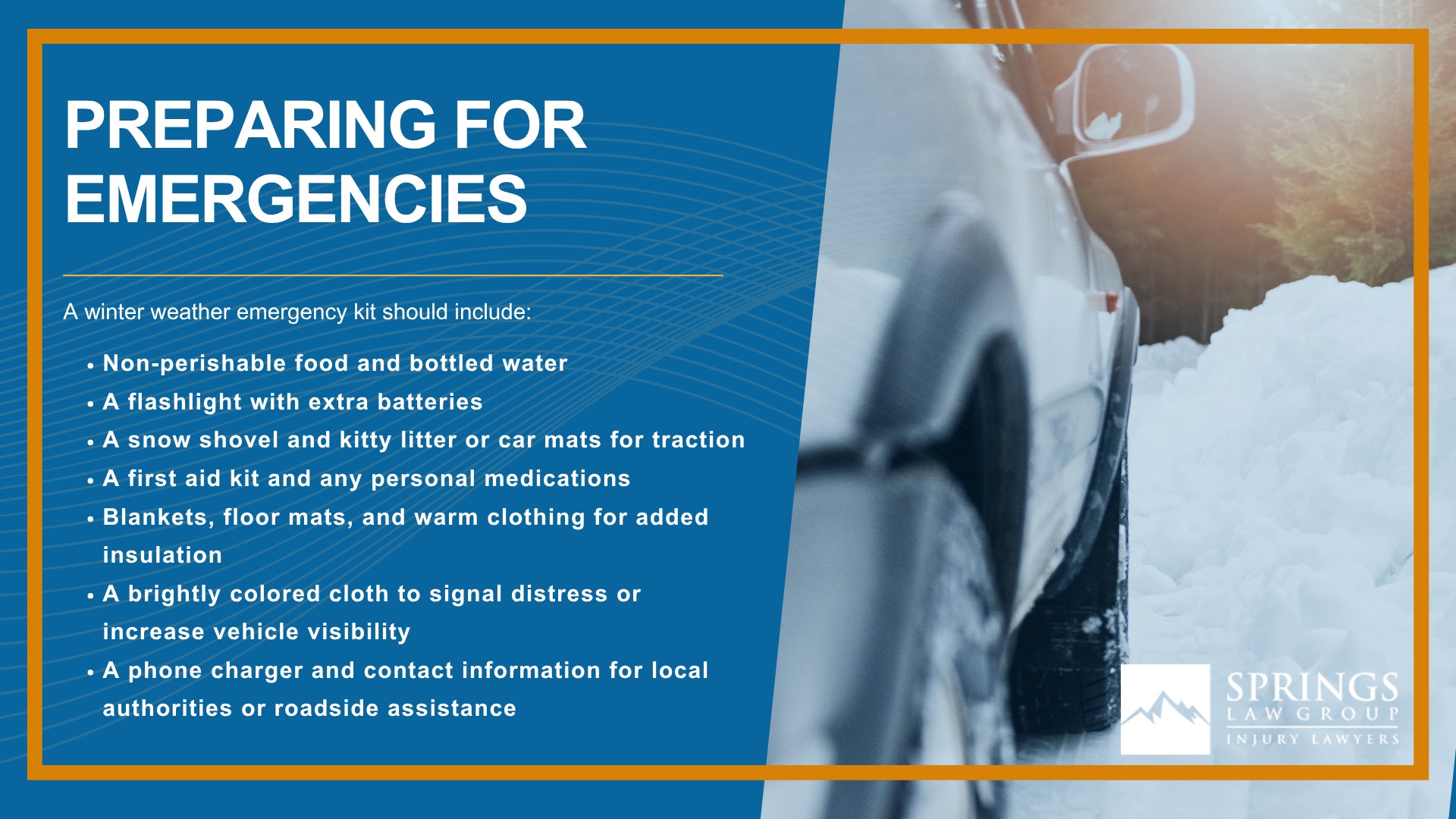
A winter weather emergency kit should include:
Safe winter driving in Colorado isn’t just common sense.
It’s required by law.
When wintry conditions make roads slick or visibility poor, state laws mandate that all drivers take appropriate measures to maintain control of their vehicles and prevent collisions.
The Passenger Vehicle Traction Law and Chain Law are among the most important rules, requiring drivers to use proper equipment such as snow tires, traction devices, or chains when conditions warrant.
Violating these laws can result in fines of over $130, and blocking a highway due to inadequate traction can raise penalties to more than $650.
Drivers are also bound by Colorado’s basic speed law, which states that you must always drive at a speed that is reasonable and safe for existing conditions, even if that means traveling well below the posted speed limit.
Failure to adjust to snowy or icy roads may be considered negligent if a crash occurs.
Similarly, under the Move Over Law, motorists must slow down or change lanes for stopped vehicles with flashing lights, including plows and emergency responders, to reduce the risk of secondary accidents.
Legal responsibility extends beyond equipment and speed.
Drivers are expected to maintain full control of their vehicles at all times, clear snow from windshields and lights, and ensure exhaust pipes remain unobstructed to prevent carbon monoxide buildup during long stops.
Those who ignore traction laws or operate a poorly maintained vehicle in freezing temperatures may face civil liability if their negligence causes an accident.
Understanding these laws helps protect both your safety and your rights on Colorado’s winter roads.
If you’ve been injured in a collision through no fault of your own, Springs Law Group can review your case, determine liability, and help you pursue compensation for your injuries and damages.
Colorado natives know that some roads demand extra respect once winter hits. High-altitude corridors and open plains experience drifting snow, sudden whiteouts, and slippery surfaces that catch even experienced drivers off guard.
The I-70 Mountain Corridor between Golden and Vail is notorious for spinouts and pileups, especially near Georgetown Hill and the Eisenhower Tunnel, where steep grades and wind exposure combine with blowing snow to make traction nearly impossible.
Monarch Pass, Wolf Creek Pass, and Berthoud Pass often see chain restrictions and closures during heavy storms, while Loveland Pass challenges truckers and skiers alike with switchbacks and ice build-up.
On the Front Range, commuters face a different set of hazards: ice storm dangers and flash freezing that turn slippery surfaces along I-25, U.S. 36, and E-470 into accident zones within minutes.
Eastern Colorado’s flat, exposed highways like U.S. 34 and U.S. 385 are equally treacherous, where high winds cause drifting snow and near-zero visibility.
Even locals plan routes around known storm zones, especially when snow drifts and temperature swings are forecasted.
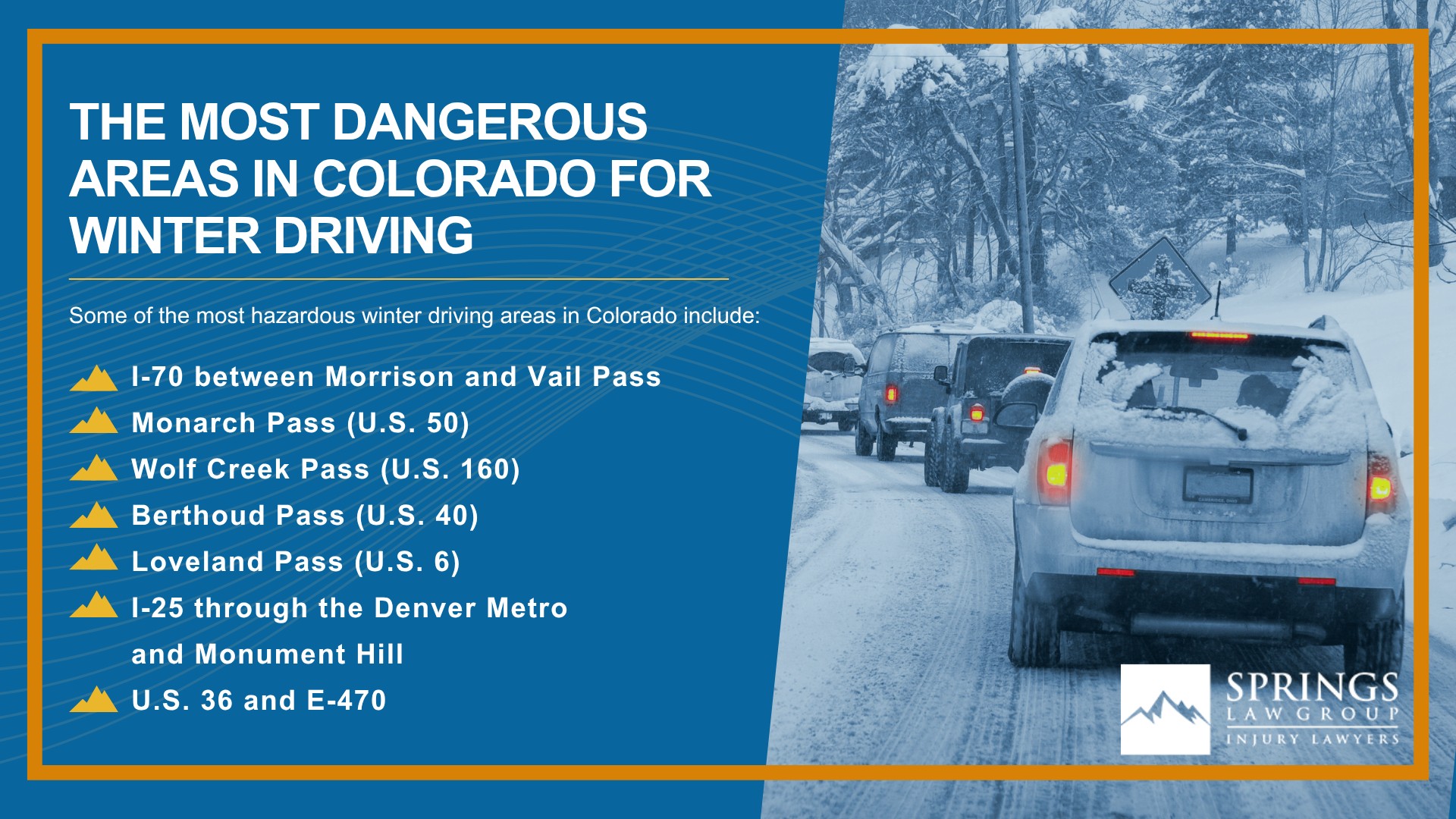
Some of the most hazardous winter driving areas in Colorado include:
Locals know that surviving winter travel in Colorado isn’t just about equipment.
It’s about understanding the terrain, the weather, and how fast conditions can change from clear skies to total whiteout.
Colorado sees multi-vehicle pileups every winter as storms slam high-altitude corridors and visibility drops to near zero.
The I-70 Mountain Corridor is a frequent hotspot, but serious crashes also occur on passes and state highways across Summit, Eagle, and Garfield counties.
These examples show how quickly snowy pavement, whiteouts, and spin-outs can cascade into major incidents.
Use them as cautionary case studies when planning winter trips and watching traction alerts.
Notable accidents and pile-ups include:
Colorado’s winter roads can be unpredictable, even for cautious drivers.
Ice, snow, and sudden drops in temperature lead to hundreds of crashes each year, many caused by drivers who fail to adjust their speed, maintain traction, or follow state safety laws.
If you were injured in an accident that wasn’t your fault, you shouldn’t be left to shoulder the financial and emotional burden alone.

At Springs Law Group, our attorneys understand the challenges of winter weather collisions and the unique legal issues they create.
We investigate the cause of the crash, identify every responsible party, and help clients recover the compensation they need to rebuild after a serious injury.
Whether the accident involved snowy or icy roads, negligent driving, or unsafe equipment, our team will protect your rights from start to finish.
If you’ve been injured through no fault of your own in Colorado, contact Springs Law Group today for a free consultation.