
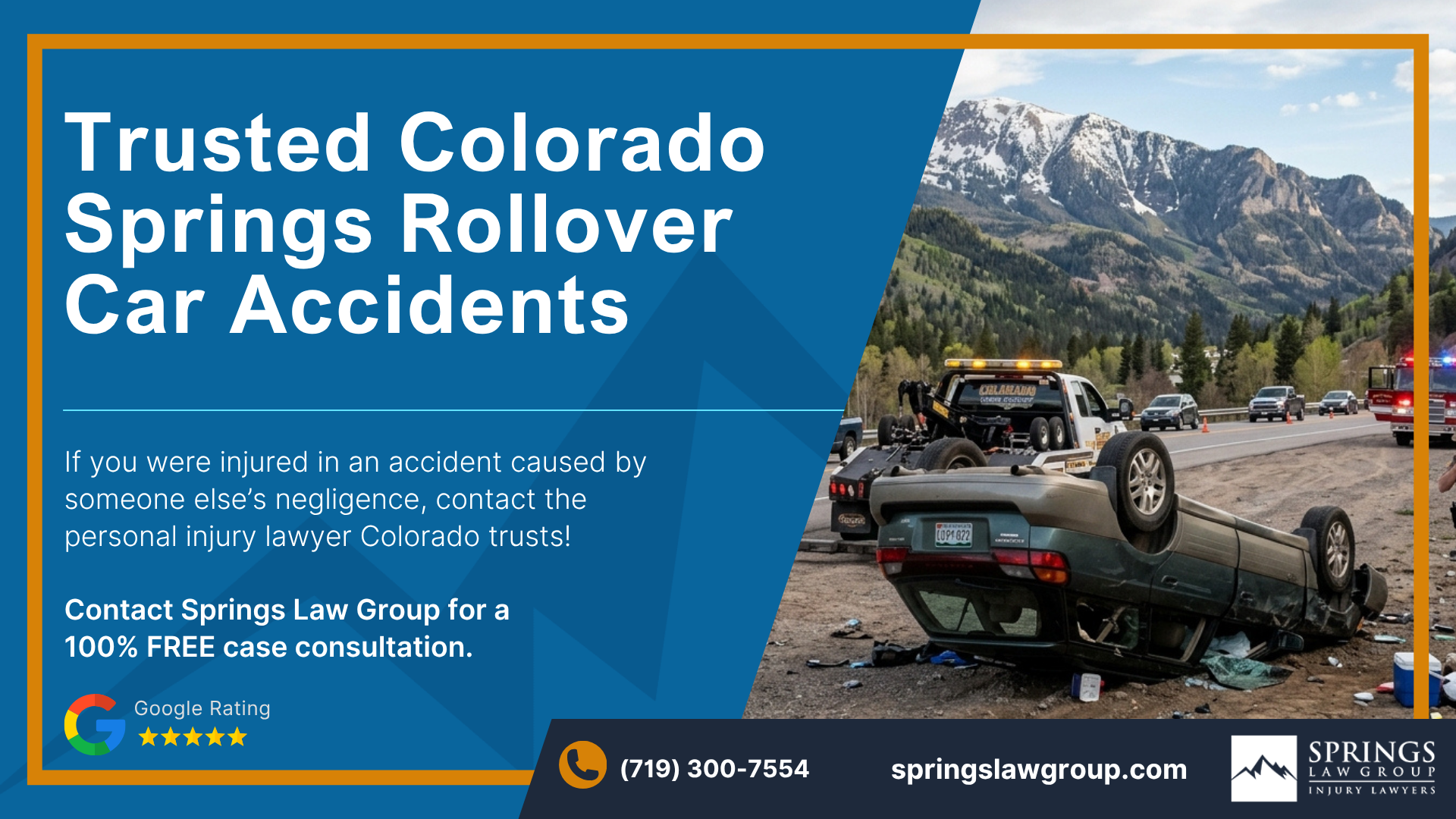
A rollover car accident occurs when a vehicle loses stability and tips onto its side, roof, or rolls over completely during a crash sequence.
Unlike many other collisions, a rollover is not defined by the point of impact but by the vehicle’s rotational movement around its longitudinal or lateral axis.
These crashes can involve passenger vehicles, pickup trucks, vans, commercial vehicles, and sports utility vehicles (SUVs), although rollover risk varies depending on vehicle design, operating conditions, and crash dynamics.
One of the most important factors in a rollover crash is a vehicle’s center of gravity.
Vehicles with a higher center of gravity generally have a greater tendency to tip when subjected to sudden steering inputs, abrupt lane changes, excessive speed, uneven terrain, or lateral forces generated during a collision.
This is one reason sports utility vehicles (SUVs), lifted trucks, and certain vans may face a greater rollover risk than lower-profile passenger vehicles under similar driving conditions.
Rollover accidents are commonly classified as either tripped or untripped rollovers.
A tripped rollover occurs when a moving vehicle strikes an external object or surface that causes it to overturn, such as a curb, guardrail, median, ditch, embankment, soft shoulder, or another vehicle.
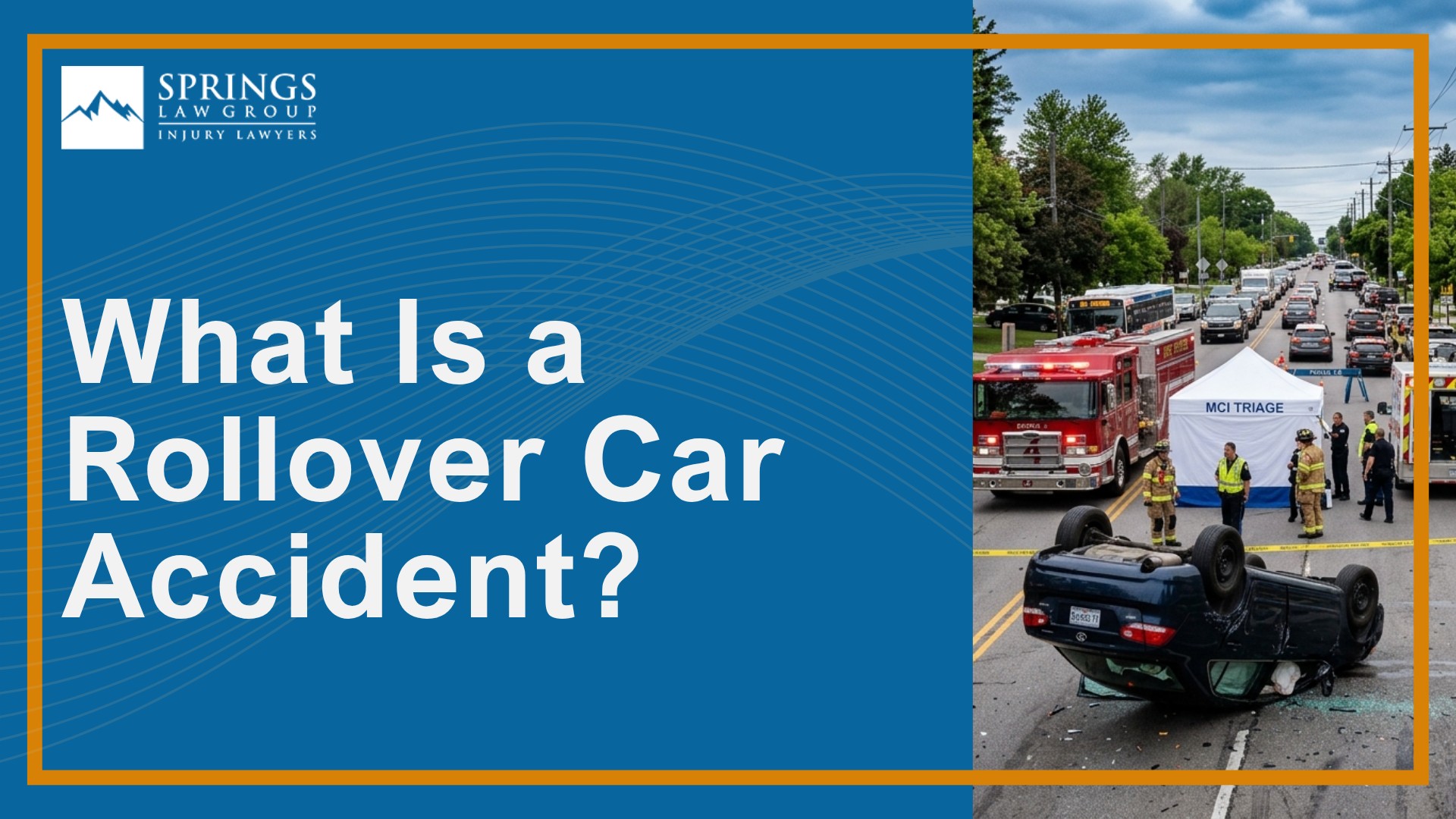
An untripped rollover occurs when a vehicle overturns without striking an object first, often because of excessive speed, abrupt steering maneuvers, overcorrection, cargo shifts, or stability loss.
Many rollover crashes involve multiple contributing factors rather than a single cause.
Driver behavior, vehicle design, tire condition, roadway geometry, weather, speed, cargo loading, and electronic stability systems can all influence whether a vehicle remains upright or overturns.
Because rollover accidents frequently involve complex questions of vehicle dynamics and crash causation, determining exactly why the vehicle rolled often requires a detailed review of the physical evidence, accident scene, vehicle condition, and available crash data.
Rollover accidents are often serious because occupants may be thrown against the roof, windows, doors, seat belt, airbags, or other parts of the vehicle.
In some crashes, the roof may deform, windows may break, or an occupant may be partially or fully ejected.
Rollover crashes account for a serious share of roadway deaths compared with many other crash types.
Fatal rollover crashes are especially concerning because rollovers can involve roof crush, high speeds, ejection risks, and multiple impacts as the vehicle rolls.
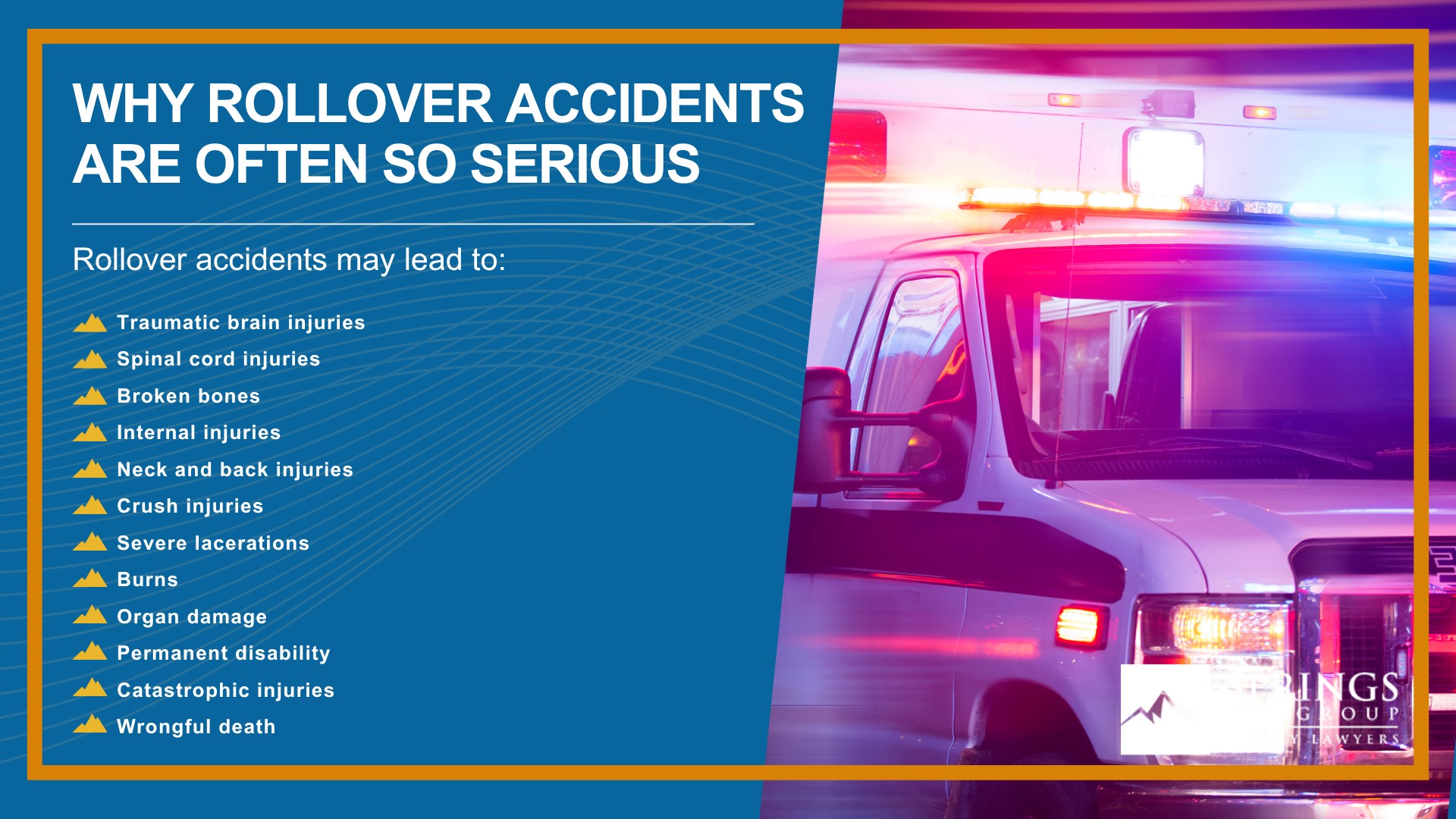
Rollover accidents may lead to:
Rollover fatalities can occur even in crashes involving only one vehicle.
Injury victims may need emergency medical treatment, surgery, hospitalization, physical therapy, and future care.
A rollover accident lawyer can help investigate the crash and determine whether another driver, vehicle manufacturer, repair shop, government entity, or other party may be held liable.
Rollover accidents occur for many reasons.
Some crashes are caused by driver behavior, while others involve road conditions, vehicle type, tire failure, defective safety features, or another vehicle forcing the rollover.
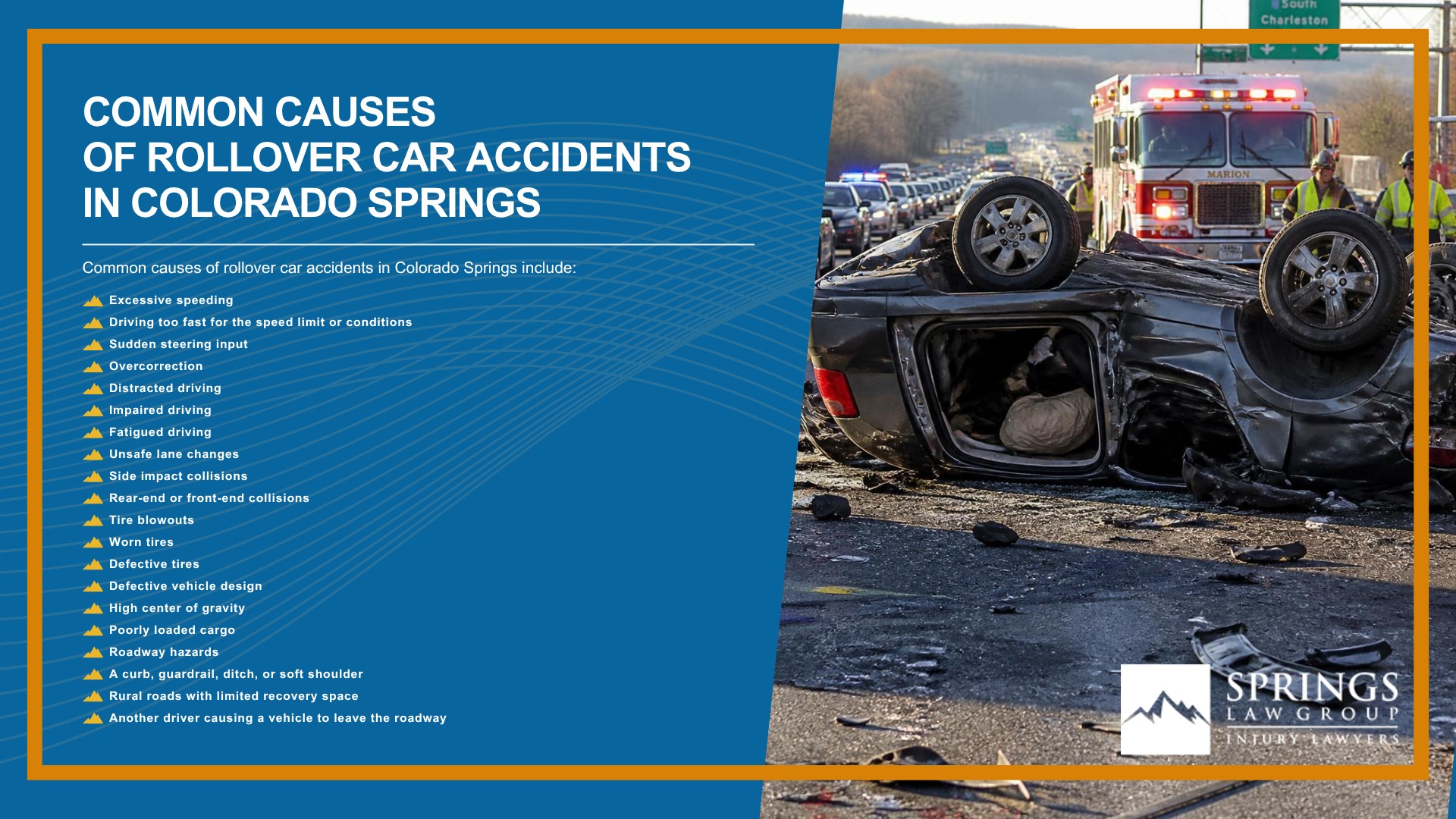
Common causes of rollover car accidents in Colorado Springs include:
Most rollovers involve some combination of speed, steering, road conditions, vehicle type, and driver behavior.
A pickup truck, SUV, van, or other high center vehicle may react differently than smaller passenger cars in a sudden maneuver.
Springs Law Group investigates the common causes of the crash and reviews whether negligence, a defective vehicle, poor road design, or unsafe conduct contributed to the rollover.
Rollover accidents involve different liability questions depending on whether one vehicle or multiple vehicles were involved.
A single vehicle rollover does not automatically mean the driver was the only person responsible.
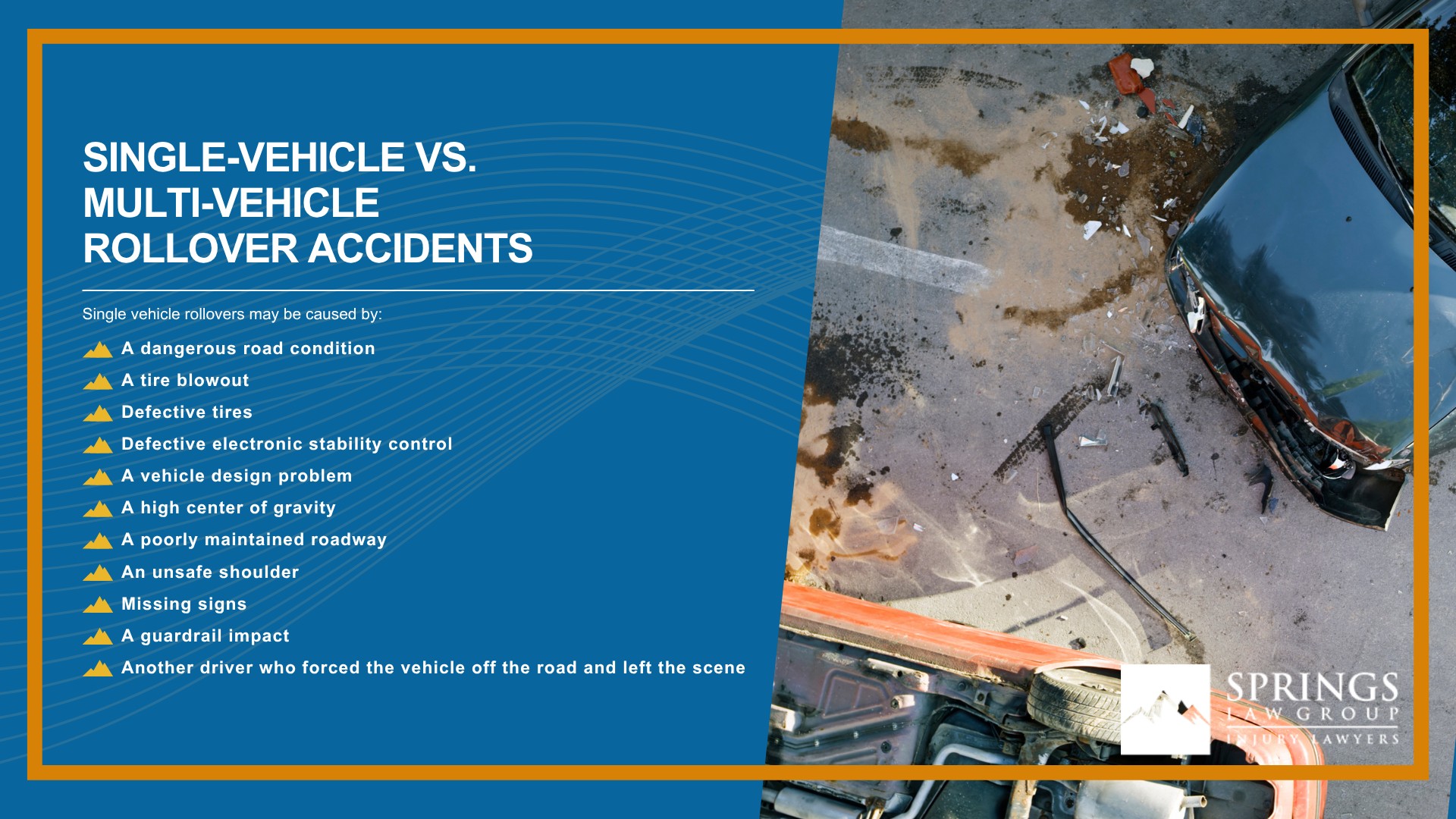
Single vehicle rollovers may be caused by:
Multi-vehicle rollover crashes may involve a side impact, unsafe lane change, distracted driver, speeding driver, or another vehicle that caused the rollover.
In some cases, the crash may involve multiple responsible parties.
Determining liability requires a thorough investigation.
Springs Law Group reviews the accident, the police report, the vehicle, the roadway, the drivers involved, and the available insurance coverage before deciding who may be liable.
Rollover crashes can happen throughout Colorado Springs and El Paso County.
These accidents may occur on I-25, Highway 24, Powers Boulevard, Academy Boulevard, Woodmen Road, rural roads, mountain roads, intersections, and local streets.
Rural roads can be especially dangerous because they may involve higher speeds, narrow shoulders, curves, ditches, uneven pavement, limited lighting, and fewer barriers.
Rollovers occur when a vehicle leaves the roadway, hits a slope or object, slides sideways, or loses stability during a sudden maneuver.
In Colorado Springs, road conditions such as snow, ice, rain, gravel, construction zones, curves, and traffic congestion may contribute to a rollover crash.
Springs Law Group reviews where the accident happened, whether speed was involved, whether the vehicle hit a curb or guardrail, and whether the road condition played a role.
Rollover accidents often produce some of the most severe injuries seen in motor vehicle crashes because occupants may be subjected to multiple impacts during a single event.
Unlike a typical collision where force is concentrated in one direction, a rollover can cause the body to strike the roof, doors, windows, dashboard, seatbelt system, airbags, and other interior structures as the vehicle overturns.
In some crashes, occupants may be partially or completely ejected, significantly increasing the risk of catastrophic injury or death.
The severity of the injuries often depends on factors such as vehicle speed, the number of rollovers, roof intrusion, seatbelt use, and whether the occupant remains inside the vehicle throughout the crash sequence.
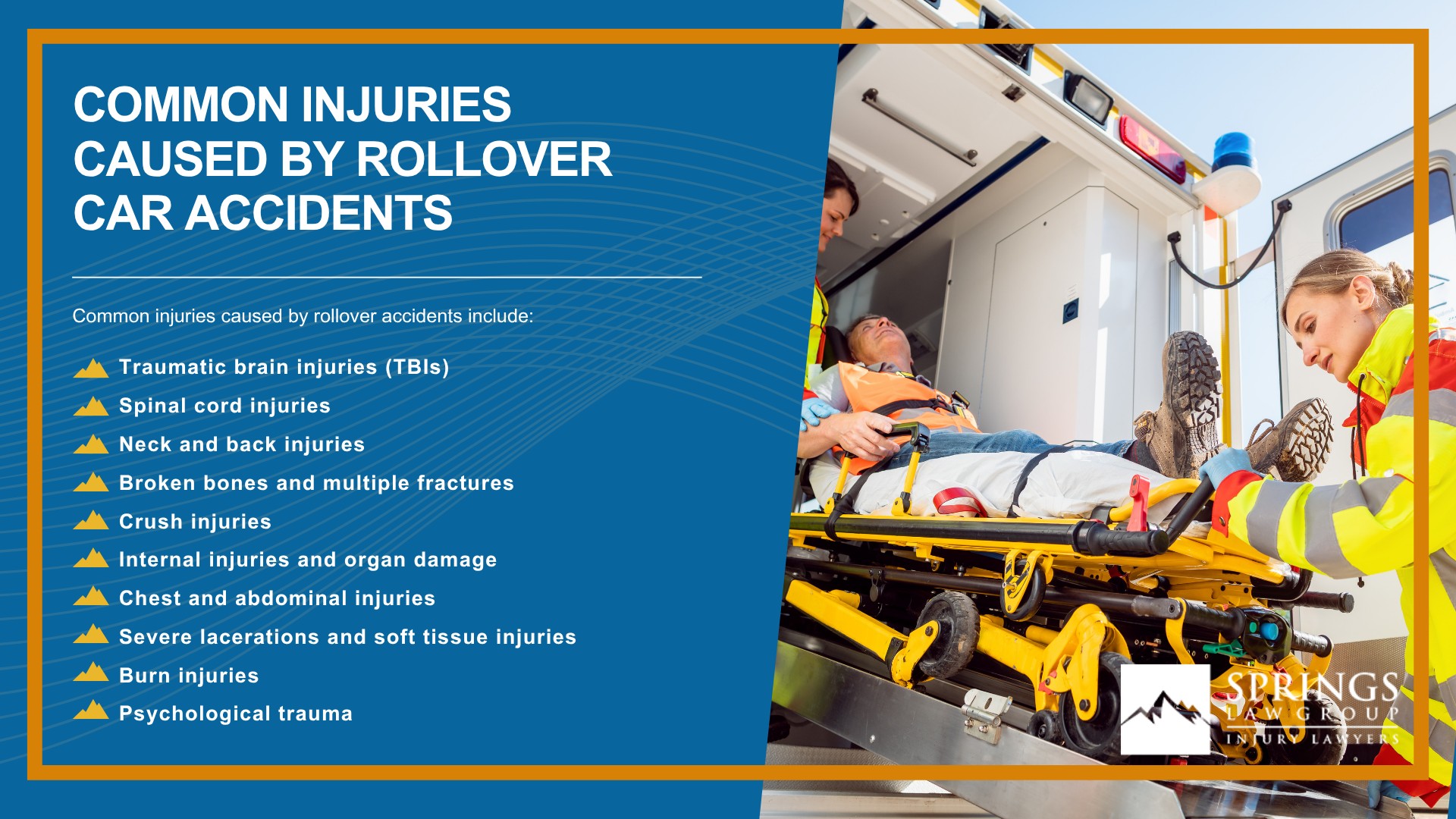
Common injuries caused by rollover accidents include:
Some injuries are immediately apparent at the scene, while others may not fully develop until hours or days later.
Because rollover crashes frequently involve traumatic brain injuries, spinal trauma, and internal injuries that may not be obvious right away, prompt medical evaluation is critical even when an occupant initially believes they escaped serious harm.
The liable party depends on how the rollover occurred.
In some cases, the driver who caused the accident may be responsible.
In other cases, a vehicle manufacturer, tire company, repair shop, trucking company, employer, government entity, or another party may be involved.
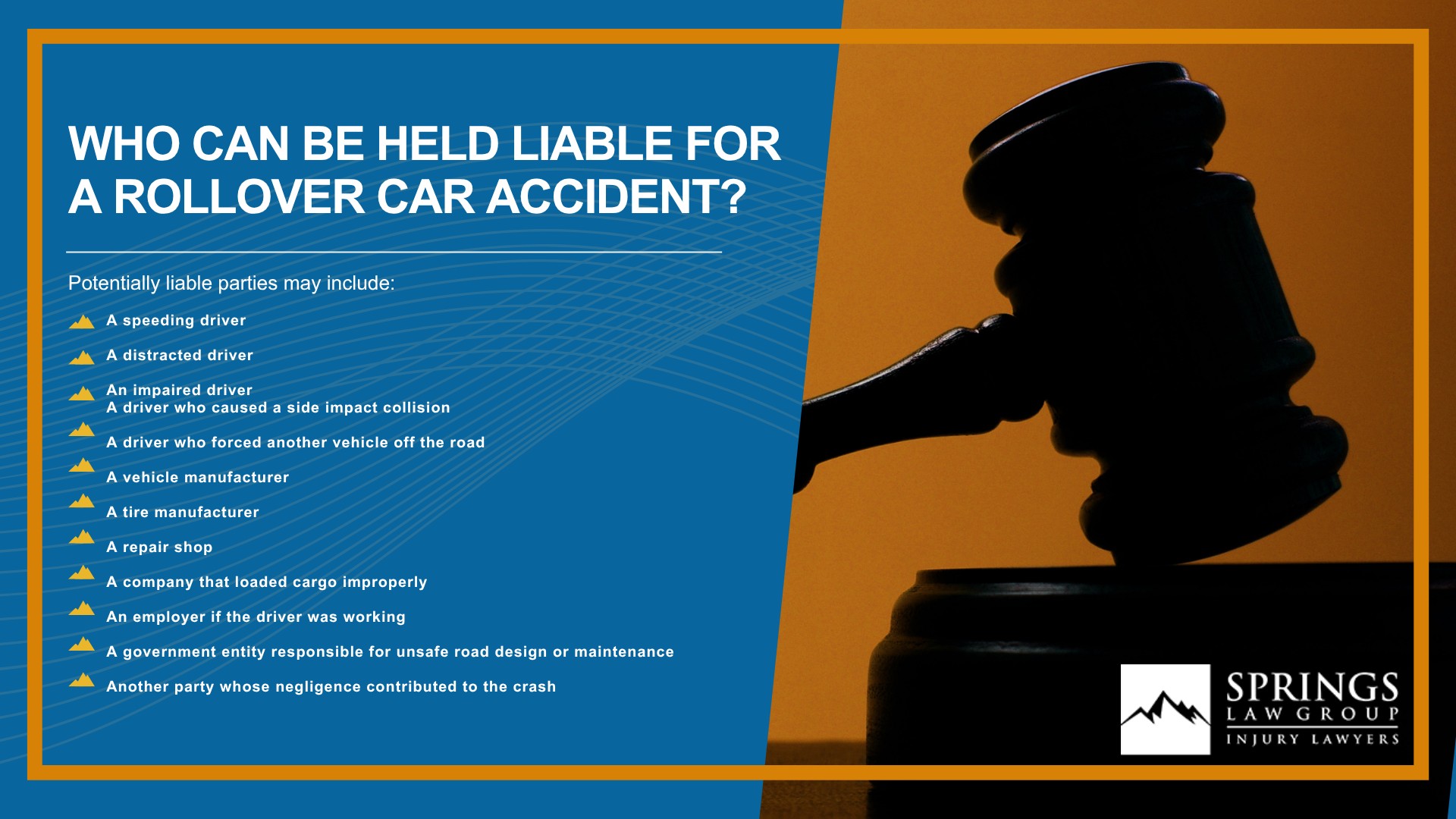
Potentially liable parties may include:
A vehicle manufacturer may be part of the claim if the vehicle’s design, roof strength, tires, electronic stability control, safety features, or center of gravity contributed to the rollover or the severity of the injuries.
A government entity may be involved if unsafe road conditions, missing signs, or a dangerous shoulder contributed to the crash.
Springs Law Group investigates all possible sources of liability so injury victims understand their legal options.
Rollover accident claims often require detailed investigation because the cause of the crash may not be obvious.
Springs Law Group reviews driver behavior, vehicle condition, road conditions, safety systems, and medical evidence.
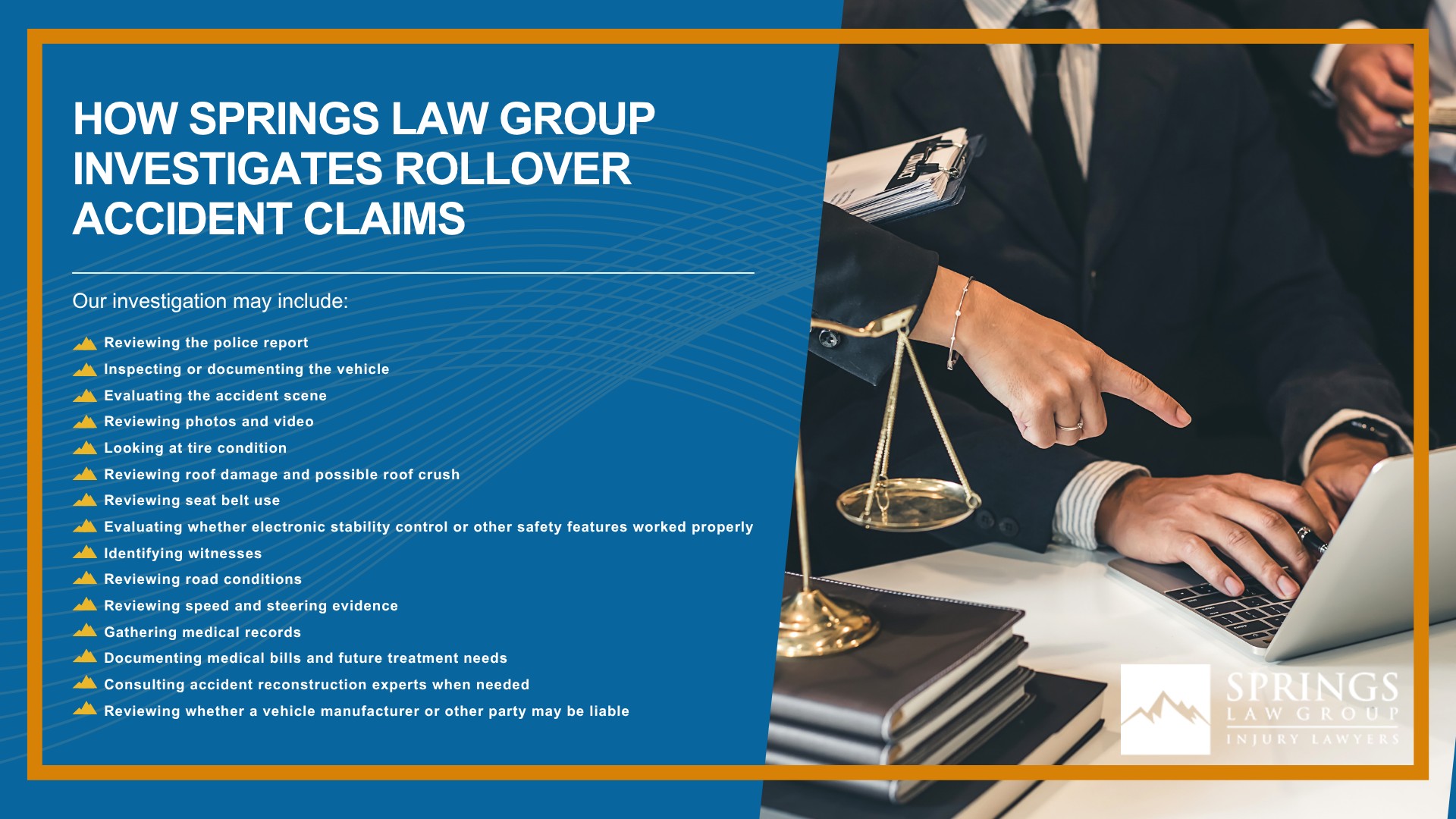
Our investigation may include:
A strong rollover claim should explain why the vehicle rolled, who caused the crash, what injuries resulted, and what compensation may be available.
Evidence can make a major difference in a rollover accident case.
Insurance companies may argue that the driver caused the crash alone, even when another driver, unsafe road condition, tire failure, or defective vehicle design contributed to the rollover.
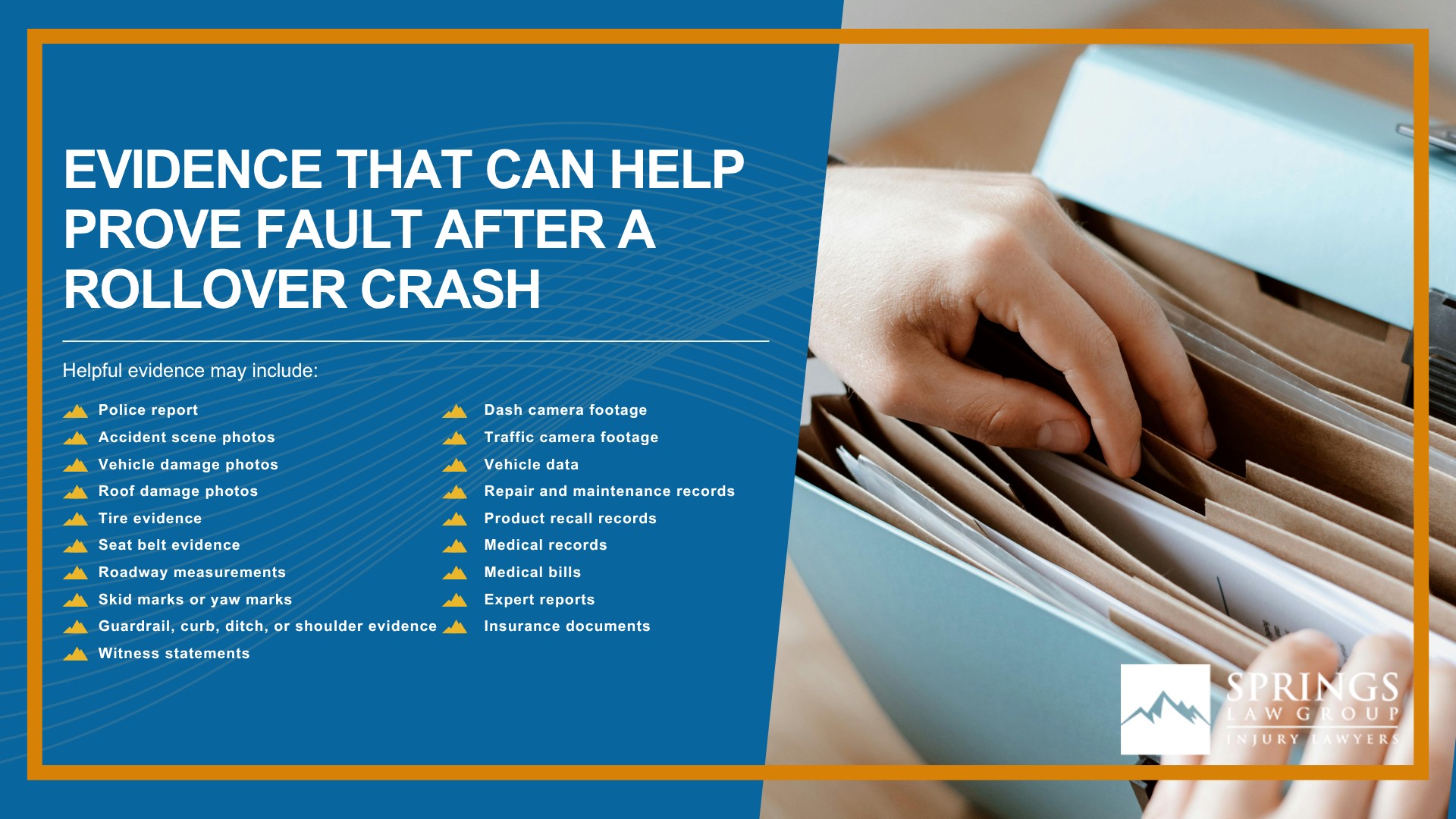
Helpful evidence may include:
A tripped rollover occurs because something initiates the roll, and evidence from the scene can help show what the vehicle hit and why it overturned.
Springs Law Group works to preserve evidence before the vehicle is repaired, destroyed, or released by an insurance company.
If another person or company caused your rollover accident, you may be able to recover compensation through a personal injury claim.
The value of the claim depends on the injuries, available insurance, fault, medical needs, property damage, and long-term impact of the crash.
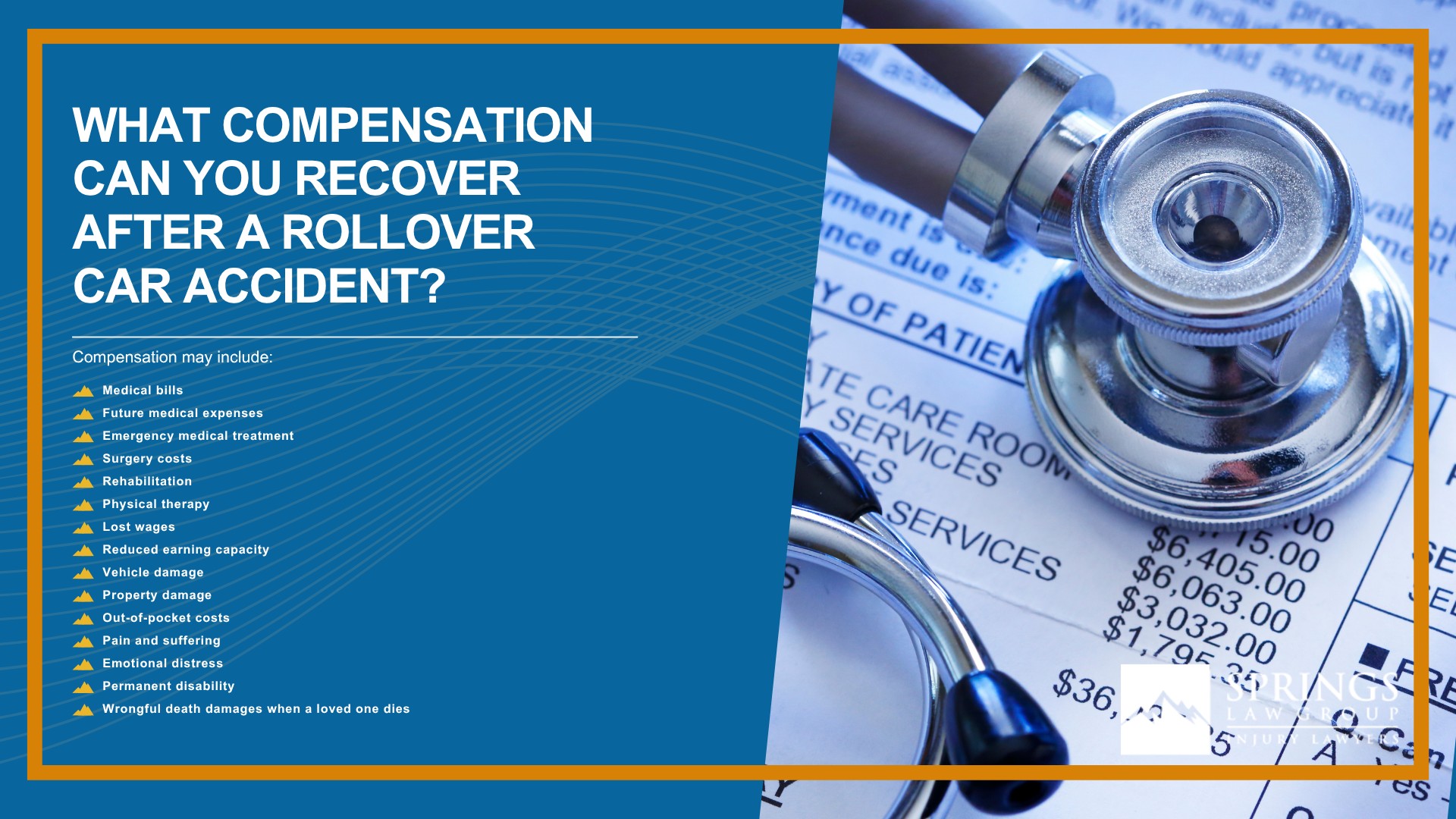
Compensation may include:
Rollover crashes may cause catastrophic injuries, so a fair claim should account for more than the first medical bill or vehicle repair estimate.
Springs Law Group works to pursue compensation based on the full effect of the crash.
Medical bills after a rollover crash can be significant.
Injury victims may need ambulance transport, emergency room care, surgery, hospitalization, imaging, medication, specialist visits, physical therapy, and long-term care.
Future treatment may be needed for:
The associated costs of a rollover accident can continue long after the vehicle is repaired.
Before accepting a settlement, it is important to understand the medical prognosis and whether future treatment may be needed.
Springs Law Group reviews medical records, treatment plans, and long-term care needs to help calculate the full value of the claim.
A rollover accident can keep an injured person out of work for weeks, months, or longer.
Severe injuries may prevent the person from returning to the same job or working at the same level.
Lost wage damages may include:
The impact depends on the injury, the person’s job duties, medical restrictions, age, training, and long-term prognosis.
Springs Law Group gathers employment records, tax records, medical restrictions, and other evidence to document these losses.
Insurance companies often scrutinize rollover accident claims because the cause of the crash is not always immediately obvious.
Unlike a rear-end collision or intersection crash, a rollover may involve multiple contributing factors, including driver behavior, vehicle design, tire failures, cargo shifts, roadway conditions, or another driver who never made physical contact with the vehicle.
Insurers frequently focus on the driver who lost control while minimizing evidence that points to other responsible parties.
Common insurance company tactics include:
Rollover claims can become especially complex when the evidence suggests that more than one factor contributed to the crash.
A tire failure, roof-strength issue, defective stability system, dangerous roadway condition, or another driver’s actions may all play a role in why the vehicle overturned or why the injuries were so severe.
Vehicle inspections, accident reconstruction, black box data, maintenance records, engineering analysis, and medical evidence are often critical to establishing what happened and identifying every potentially responsible party.
After a rollover car accident, safety and medical care come first.
These crashes can cause severe injuries, even when symptoms are not obvious immediately.
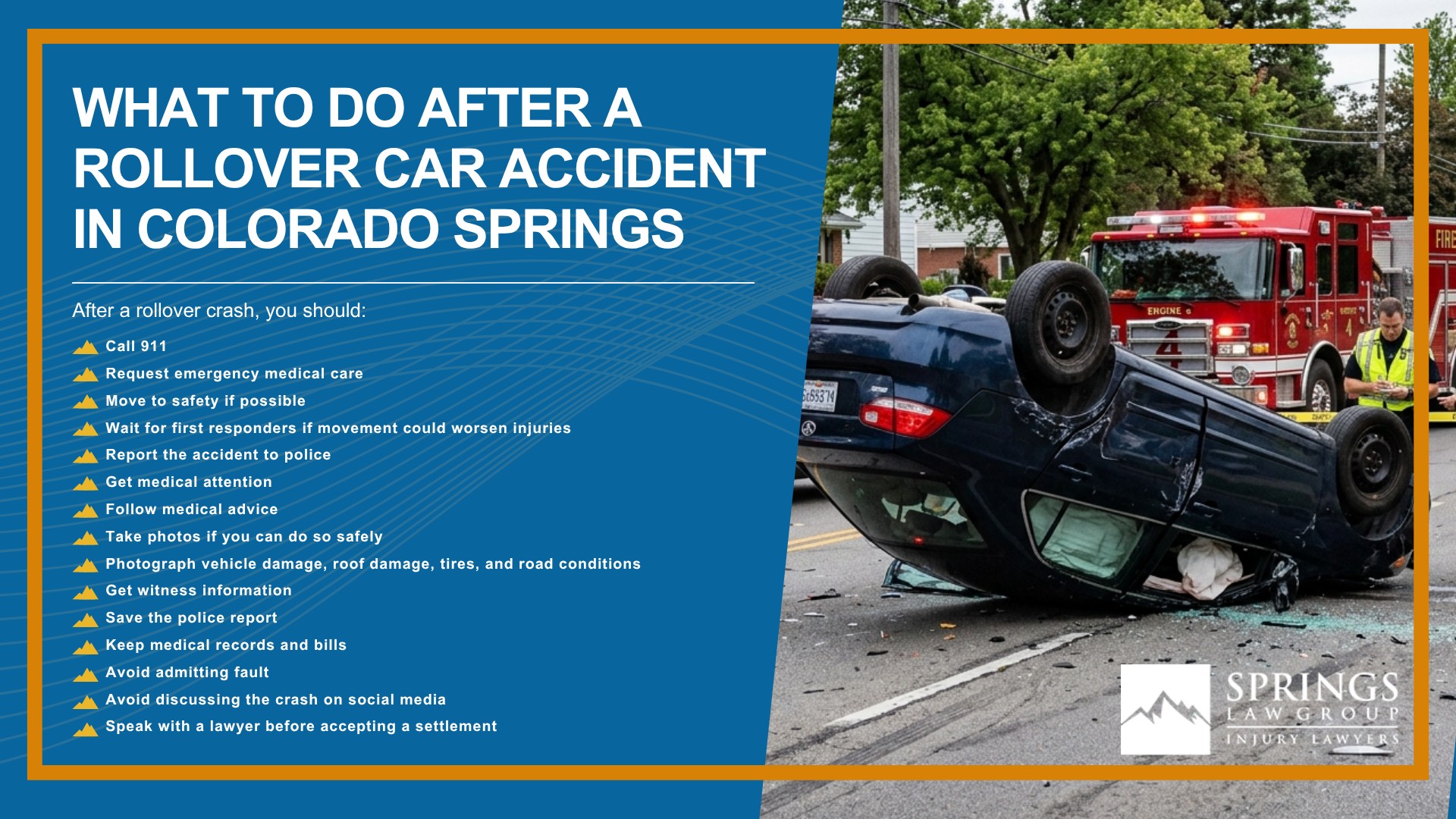
After a rollover crash, you should:
If you were injured, do not assume the crash was your fault just because only one vehicle was involved.
A rollover accident may involve road conditions, another driver, a tire defect, vehicle design, or other factors.
Colorado law affects rollover accident claims in several ways.
To recover compensation, the injured person generally must prove that another driver, company, manufacturer, government entity, or responsible party caused the crash or contributed to the injuries.
Colorado also follows modified comparative negligence.
Compensation may be reduced if the injured person is found partly at fault.
If the injured person’s share of fault is too high, recovery may be barred.
Rollover claims may involve:
Because rollover cases can involve driver conduct, vehicle type, road conditions, and product safety issues, legal representation can help identify all possible claims.
In many Colorado motor vehicle accident cases, the deadline to file a lawsuit is generally three years from the date of the crash.
Some cases may have shorter time limits, especially if a government entity may be involved or if notice requirements apply.
You should not wait until the deadline is close.
Rollover evidence can disappear quickly.
Vehicles may be repaired, sold, destroyed, or moved before experts can inspect them.
Important timing issues may include:
Springs Law Group can review the facts and explain the time limits that may apply to your rollover accident claim.
Rollover accidents often cause some of the most severe injuries seen in motor vehicle crashes.
The forces involved can lead to traumatic brain injuries, spinal cord damage, multiple fractures, internal injuries, and permanent disabilities that require extensive medical treatment and long-term care.
Questions about liability can also become more complicated when a rollover involves multiple vehicles, roadway defects, tire failures, roof-crush injuries, or allegations of defective vehicle design.
Preserving evidence early is often critical to determining exactly why the rollover occurred and who may be responsible.
Springs Law Group represents individuals and families injured in rollover accidents throughout Colorado Springs and the surrounding communities.
Our law firm investigates the cause of the crash, works with accident reconstruction experts when necessary, identifies all potentially liable parties, and pursues compensation for medical expenses, lost income, pain and suffering, future care needs, and other damages supported by the evidence.
Contact Springs Law Group today for a free consultation with a Colorado Springs rollover accident lawyer.
You can also use the chat feature on this page for a free case evaluation.