
Weather-related crashes occur in Colorado Springs because road conditions can shift quickly and drivers do not always adjust in time.
A clear road can become hazardous within a short stretch due to elevation changes, shade, wind, or temperature drops.
When traction decreases or visibility drops, drivers must reduce speed and increase following distance to maintain control.
Many collisions happen when one driver continues driving as if conditions are normal while other cars are already slowing down.
Hazardous conditions also raise the risk of chain-reaction rear-end crashes when drivers follow too closely and cannot stop.
Intersections, bridges, and shaded areas often become more dangerous first, which makes cautious driving essential even before conditions look severe.
The most common weather patterns in this area create predictable risks, and those risks tend to repeat across crash reports each season.
Colorado winter driving data shows how quickly icy roads turn routine commutes into high-crash conditions, even when drivers believe they can handle it.
In a recent Colorado State Patrol analysis, icy conditions produced the highest number of crashes, followed by wet roads and then snow, which tracks what often happens when the road surface freezes before it looks dangerous.
Colorado State Patrol also reported troopers responded to more than 11,000 crashes between November 2024 and March 2025, underscoring how often winter weather drives collision volume statewide.
Weather-related crashes occur because traction and stopping distance change first, while many drivers keep their speed and following distance as if it were clear weather.
In Colorado Springs, this often shows up during early-morning commutes and shaded stretches where drivers do not realize how slick the road surface is until the vehicle starts to slide, which is why drivers must drive cautiously the moment conditions begin to shift.
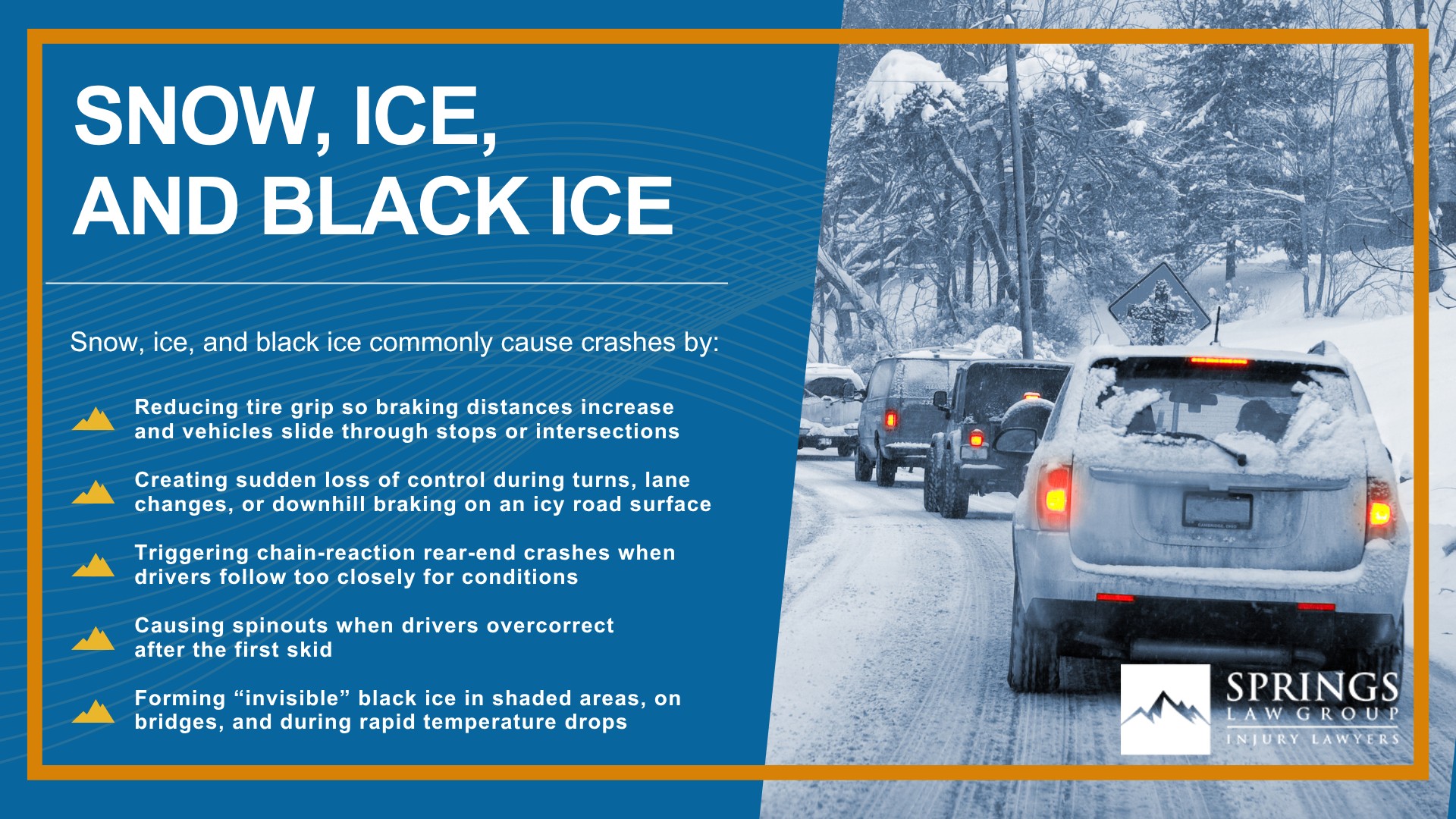
Snow, ice, and black ice commonly cause crashes by:
Because these hazards can appear before the pavement looks slick, safe driving often starts with slowing down earlier than you think you need to.
The drivers who adjust speed and following distance first are often the ones who avoid the crash when black ice appears without warning.
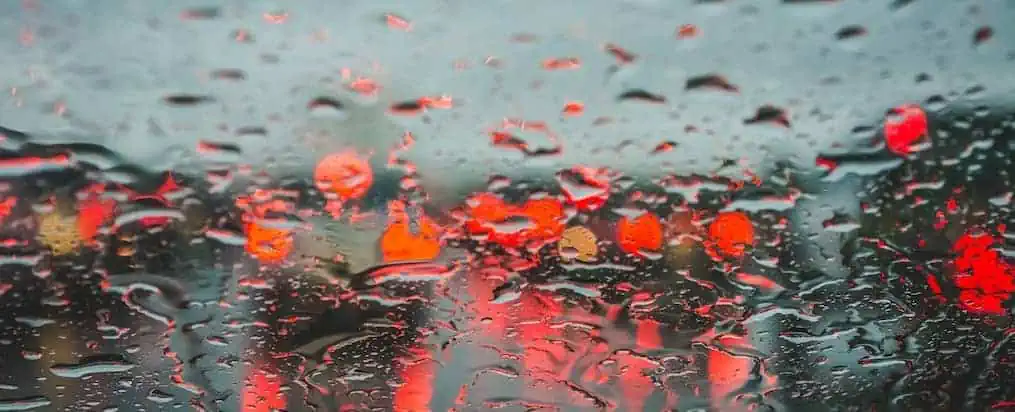
Rain-related crashes often start with a simple traction problem, because slippery roads reduce braking performance and make steering inputs less predictable.
The Federal Highway Administration reports that most weather-related crashes occur on wet pavement, with a smaller share during freezing precipitation and low-visibility events.
In rainy conditions, the risk increases when drivers keep pace with the posted speed limit even though the safe speed is lower for the amount of water on the roadway.
Hydroplaning can occur with as little as 1/12 inch of water on the road, and that even at about 35 mph new tires can lose some contact with the roadway.
Visibility also becomes a liability issue, because worn windshield wipers, glare, and spray can prevent drivers from seeing brake lights, lane lines, and stopped traffic until it is too late.
Rain, hydroplaning, and low visibility commonly cause crashes by:
Even light rain can create a thin film on the road surface that reduces friction, particularly at the start of a storm when oils and residue mix with water.
When visibility drops and traction changes at the same time, the drivers who slow down first and leave more space are often the ones who avoid the secondary collisions that follow an initial slide.
A weather event can make driving more difficult, but it does not erase the duty to operate a vehicle safely.
In a weather related car accident, fault often depends on whether the driver involved adjusted to the road and weather conditions in front of them.
Drivers are expected to reduce speed, increase a safe following distance, and avoid sudden maneuvers when traction or visibility is reduced.
Driving responsibly also means staying alert to stopped traffic, lane changes, and intersections that become more dangerous in poor conditions.
In many circumstances, the weather is the backdrop while negligence is the trigger, such as speeding, tailgating, or failing to maintain control.
A driver can still be held responsible for the crash and the resulting injuries even if snow, ice, or rain contributed to the risk.
In some cases, one party may be fully liable when the evidence shows they failed to adjust to conditions that other drivers were already responding to.
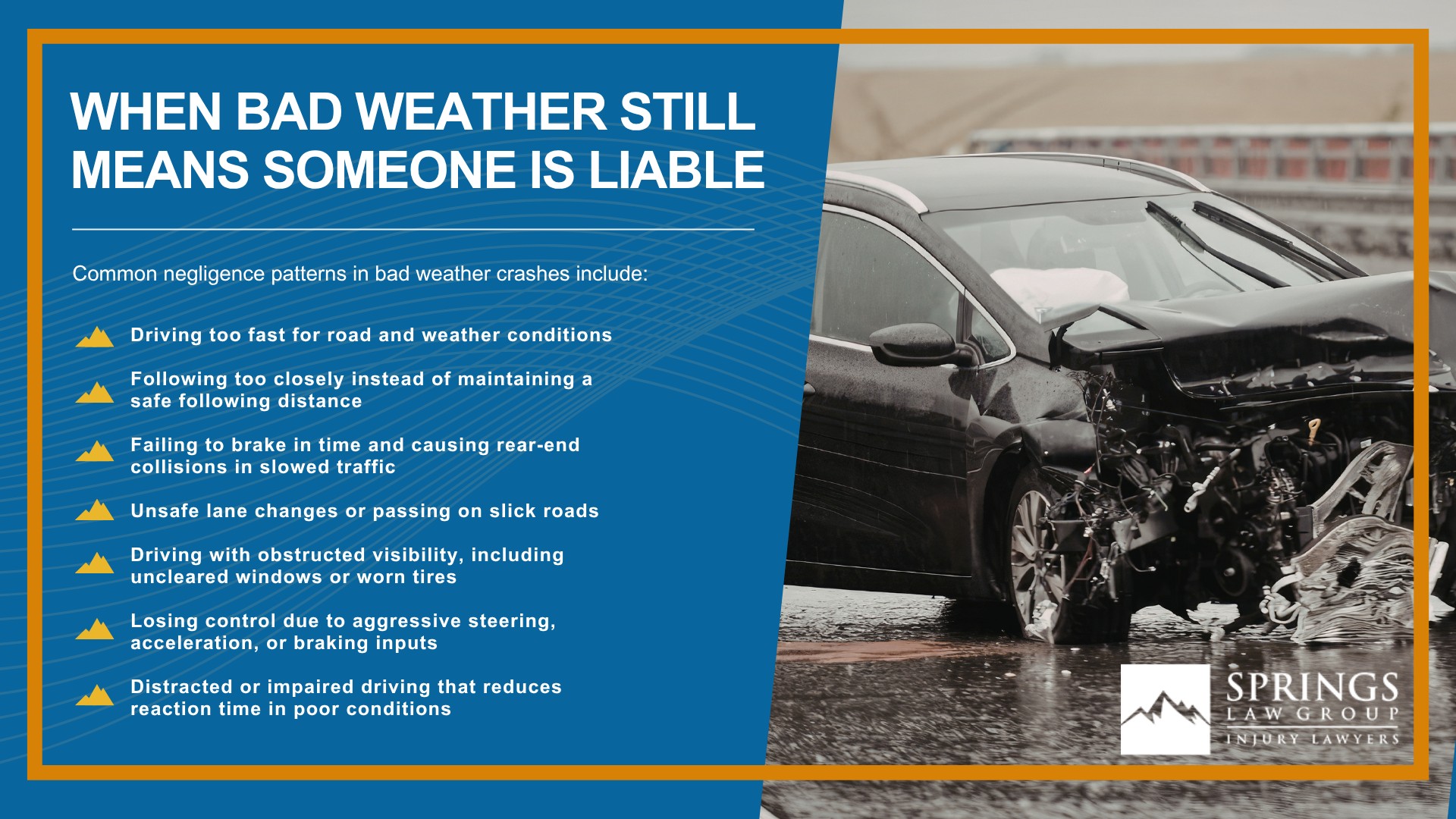
Common negligence patterns in bad weather crashes include:
Colorado law does not treat bad weather as a free pass, because drivers still have a duty to adjust their driving when inclement weather played a role in the collision.
Under C.R.S. § 42-4-1101, a driver cannot drive faster than is “reasonable and prudent under the conditions then existing,” which puts the focus on the actual weather and road conditions, not just the posted limit.
Colorado also requires drivers to avoid following too closely, with the statute specifically tying the safe following distance to the speed of traffic and the condition of the highway, including slick pavement and low visibility around other vehicles.
In such cases, liability often turns on whether the driver made predictable choices like speeding for conditions, tailgating, or making sudden lane changes that became unsafe once traction dropped.
Police reports often document these issues through citations, diagrams, estimated speeds, and officer observations about road surface and visibility, which helps connect negligence to the crash.
If the conduct was extreme, Colorado’s reckless and careless driving statutes also reflect the expectation that drivers account for surrounding circumstances, including road width, curves, traffic, and attendant conditions.
That is why “the roads were bad” is usually treated as context, while the legal question is whether the driver responded appropriately to the conditions they were facing.
After a weather-related crash, the first priority is safety, but the steps you take next can shape how insurers and investigators determine fault.
If you were involved in a car accident during snow, ice, or heavy rain, conditions may change quickly, which makes early documentation important.
Gathering evidence from the crash scene is crucial because it can show what the road looked like, how far visibility extended, and whether vehicles had space to stop.
Photos or videos can capture the road surface, tire tracks, slush accumulation, pooled water, and glare, all of which can support an argument that a driver failed to adjust speed or following distance.
Police reports often note weather conditions at the time of the accident, and that documentation can become a key reference point in the claim.
Witness statements confirming weather and visibility can also clarify the role conditions played, especially when drivers later dispute what happened.
Documenting everything helps show that, even with best efforts, the crash resulted from another driver’s choices rather than unavoidable weather.
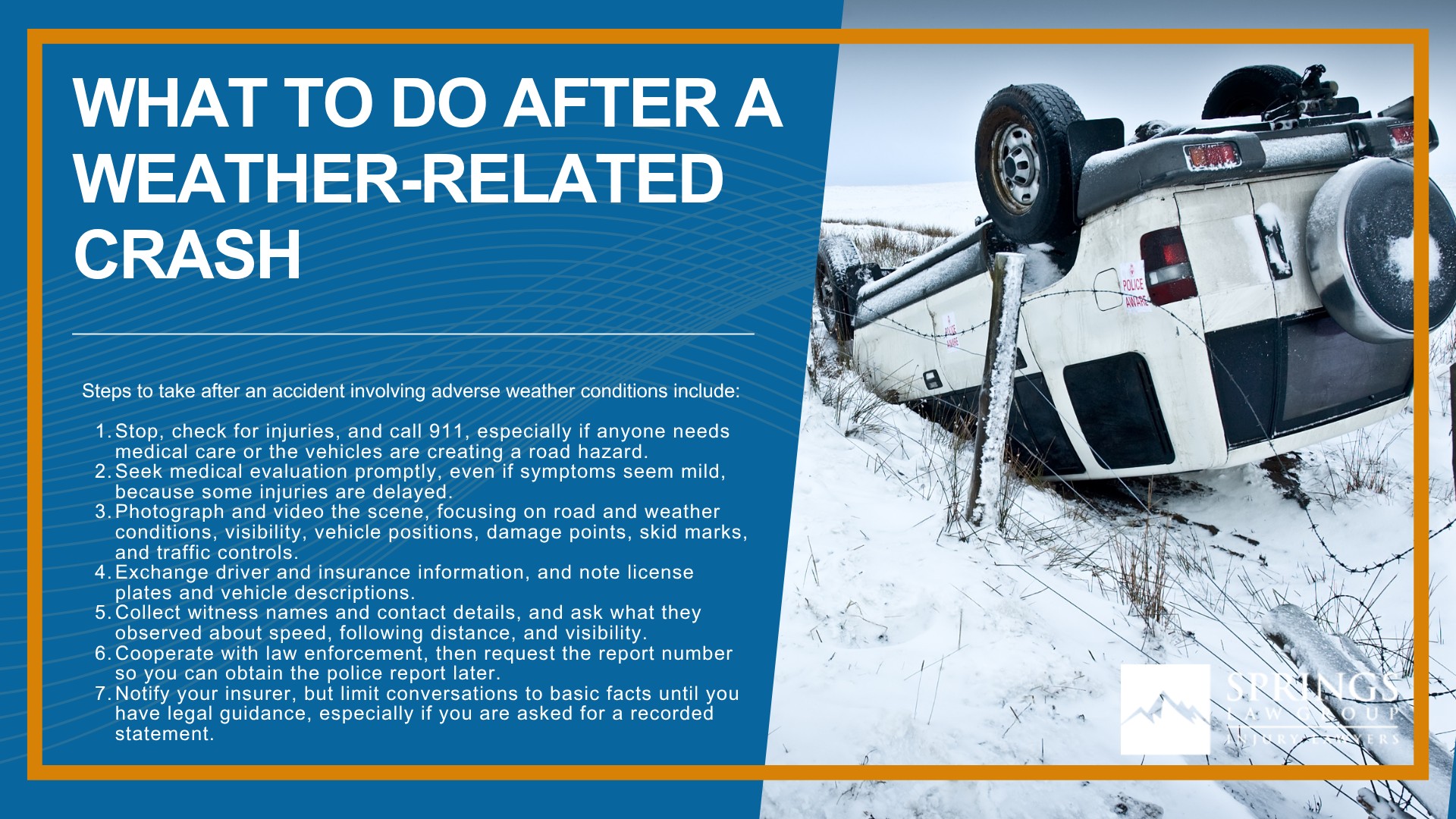
Steps to take after an accident involving adverse weather conditions include:
Because weather claims often involve competing explanations, an attorney can help preserve evidence, request video, and organize the records needed to support expert analysis.
Legal guidance can also help evaluate whether the circumstances point to negligent driving, roadway maintenance issues, or both.
Speaking with a knowledgeable personal injury attorney early can protect your position before the insurance narrative hardens and before key evidence disappears.
Bad weather can set the stage for a crash, but liability often comes down to whether a driver adjusted to conditions and drove with reasonable care.
These cases are frequently disputed, and the evidence can change quickly as roads clear, vehicles move, and memories fade.
A strong claim depends on early documentation, complete medical records, and a clear explanation of why the collision was preventable. Taking action early can protect both your recovery and your legal rights.
Springs Law Group represents people injured in Colorado car accidents, including crashes involving snow, ice, rain, and low visibility.
If you were hurt in a weather-related collision, the firm can review the facts, evaluate liability, and explain your options under Colorado law.

Springs Law Group can also handle insurer communications and build the evidence needed to pursue fair compensation.
Contact Springs Law Group to discuss your case and determine the next steps.