
Colorado Springs Traumatic Brain Injury Lawyer

Were You or A Loved One Injured in an Accident?
Get Free Answers In as Little as 3 Minutes
right-image
400

Injured by a Traumatic Brain Injury? Contact Springs Law Group Today

Traumatic brain injuries can create lasting cognitive, emotional, and physical challenges that are not always visible on medical imaging or immediately apparent after an accident.

Even a concussion that initially appears mild can lead to memory problems, difficulty concentrating, mood changes, headaches, sleep disruption, and limitations that affect work and daily life.

Brain injury claims often involve complex medical evidence, future treatment needs, and disputes over the full extent of a person’s impairments.

Springs Law Group represents individuals in Colorado Springs who have suffered traumatic brain injuries and need legal guidance while pursuing compensation for the long-term consequences of their injuries.

Colorado Springs Traumatic Brain Injury Lawyer

Our Law Firm Handles Traumatic Brain Injury Cases in Colorado Springs

When someone suffers a traumatic brain injury, the impact can extend far beyond the initial accident.

A brain injury may affect memory, concentration, balance, speech, mood, sleep, and the ability to work or complete daily tasks.

Many traumatic brain injury cases are not simple accidents.

They involve preventable conduct, unsafe decisions, or negligent actions that caused trauma to the head or brain.

These cases may involve car accidents, truck crashes, motorcycle accidents, pedestrian accidents, falls, unsafe properties, workplace accidents, assaults, sports injuries, or other serious incidents that result in a brain injury.

To bring a claim, you generally need to show that another person, business, property owner, driver, or responsible party acted negligently and that their actions caused your injury.

A traumatic brain injury attorney can investigate what happened, preserve evidence, review medical records, speak with witnesses, and build a personal injury claim based on the facts of your case.

If you or a loved one suffered a brain injury because of someone else’s negligence, Springs Law Group can help you pursue compensation for medical bills, lost wages, pain and suffering, future care needs, and other damages tied to your recovery.

When the evidence supports your claim, negligent drivers, businesses, property owners, employers, manufacturers, or other responsible parties may be held liable for the harm they caused.

Contact Springs Law Group today for a free consultation.

You can also use the chat feature on this page to get in touch with our experienced traumatic brain injury attorneys.

Table of Contents

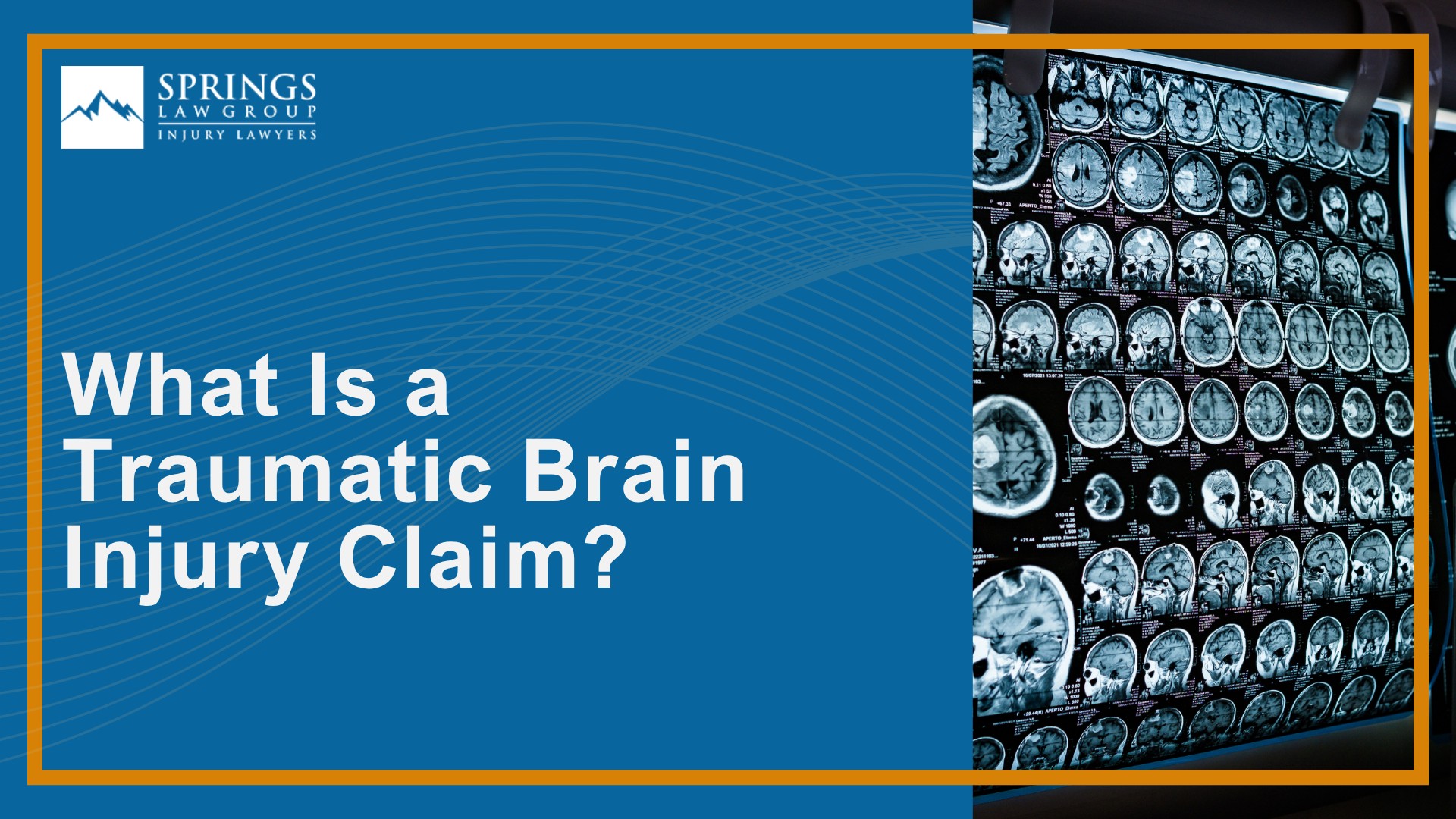
What Is a Traumatic Brain Injury Claim?

A traumatic brain injury claim is a type of personal injury claim brought by an injured person who suffered brain trauma because of someone else’s negligence, medical negligence, a dangerous product, or another preventable event.

A traumatic brain injury can occur when a blow, bump, jolt, penetrating injury, or violent movement disrupts normal brain function.

Medical sources describe TBIs as injuries that may range from a mild concussion or mild TBI to a severe TBI involving permanent brain damage, disability, or death.

A brain injury claim may involve a car accident, truck accident, fall, construction accident, workplace accidents, sports injuries, medical malpractice, motor vehicle defects, or another incident that causes head trauma.

In serious brain injury cases, the legal claim must show how the injury occurred, who may be responsible, and how the brain injuries affected the person’s health, work, family, and future.
A Colorado Springs traumatic brain injury lawyer can help brain injury victims understand their options, gather medical records, determine liability, and seek financial compensation through a claim or brain injury lawsuit.

Because these cases often involve medical treatment, expert opinions, and long-term recovery needs, legal representation from an experienced attorney can make the legal process easier to manage.

When Someone Else’s Negligence Causes a Brain Injury

A traumatic brain injury case may arise when another person, business, medical provider, property owner, manufacturer, or other responsible party fails to act with reasonable care.

When that failure causes a head injury, brain bleed, skull fracture, damage to brain tissue, or other serious harm, the injured person may have a right to pursue a personal injury lawsuit.
Negligence may be involved when:

  • A careless driver causes a motor vehicle crash
  • A trucking company or driver causes a truck accident
  • A property owner allows a dangerous fall hazard to remain
  • Medical professionals fail to diagnose or properly treat brain trauma
  • A defective vehicle part or other motor vehicle defect contributes to a crash
  • A workplace safety failure causes a construction accident or other workplace injury
  • A negligent person or company causes a severe injury through unsafe conduct

When someone else’s negligence causes a brain injury, the injured person and their family members may face medical bills, lost wages, emotional distress, and uncertainty about the future.

A personal injury attorney can review the facts, identify the parties involved, and help pursue full compensation from those who may be legally responsible.

Common Causes of Traumatic Brain Injuries

Traumatic brain injuries can happen in many ways.

According to the CDC, people most commonly get TBIs from falls, firearm-related injuries, motor vehicle crashes, and assaults; falls account for nearly half of TBI-related hospitalizations.
Common causes of brain injuries include:

  • Motor vehicle crashes
  • Car accident and truck accident injuries
  • Motorcycle, bicycle, and pedestrian accidents
  • Falls on unsafe properties
  • Construction accident and workplace accidents
  • Sports injuries and recreation accidents
  • Assaults and intentional misconduct
  • Medical malpractice or medical negligence
  • Defective products or motor vehicle defects
  • Dangerous conditions involving government property or public spaces

A brain injury can occur even if there is no obvious external wound.

The injury occurs when force affects the head or brain, which can happen from direct impact, rapid movement, or penetration of the skull.

Common Symptoms and Types of Traumatic Brain Injuries

The symptoms of a traumatic brain injury can appear immediately after the accident or develop later.

The CDC notes that mild TBI and concussion symptoms can affect how a person feels, thinks, acts, and sleeps, and symptoms may change during recovery.
Common symptoms may include:

  • Headache
  • Nausea or vomiting
  • Dizziness or balance problems
  • Sensitivity to light or noise
  • Confusion or disorientation
  • Memory problems
  • Trouble concentrating
  • Sleep changes
  • Mood changes, anxiety, or depression
  • Blurred vision or ringing in the ears
  • Slurred speech
  • Weakness, numbness, or loss of coordination

Types of traumatic brain injuries may include:

  • Mild TBI or mild concussion
  • Moderate traumatic brain injury
  • Severe TBI
  • Brain bleed
  • Skull fracture
  • Contusion or bruising of brain tissue
  • Diffuse axonal injury
  • Penetrating brain injury
  • Permanent brain damage

A mild traumatic brain injury can still require prompt medical treatment.

Mayo Clinic states that the terms mild, moderate, and severe describe the effect on brain function, and a mild injury is still a serious injury that requires accurate diagnosis and attention.

How Do You Prove a Traumatic Brain Injury Case?

To prove a traumatic brain injury case, the injured person must generally show that another party’s negligence caused the head injury and resulting damages.

The legal team must connect the accident, the medical diagnosis, and the long-term effects of the injury.
A strong TBI case may show:

  • The responsible party owed the injured person a legal duty
  • That party acted carelessly, recklessly, or wrongfully
  • The conduct caused the head trauma or brain injury
  • The injury caused medical expenses, lost income, pain, emotional distress, or permanent disability
  • There is a reasonable likelihood that the injury will affect the person’s future health, work, or daily life

Complex brain injury cases often require medical experts, accident reconstruction, neuropsychological testing, and careful review of medical records.

An experienced brain injury lawyer can help explain the legal complexities, organize the evidence, and prepare the claim for settlement negotiations or litigation.

Evidence That Can Help Support Your Claim

Evidence is critical in brain injury cases because symptoms are not always visible.

Insurance companies may question whether the brain injury is related to the accident, whether the symptoms are serious, or whether the injured person needs future care.
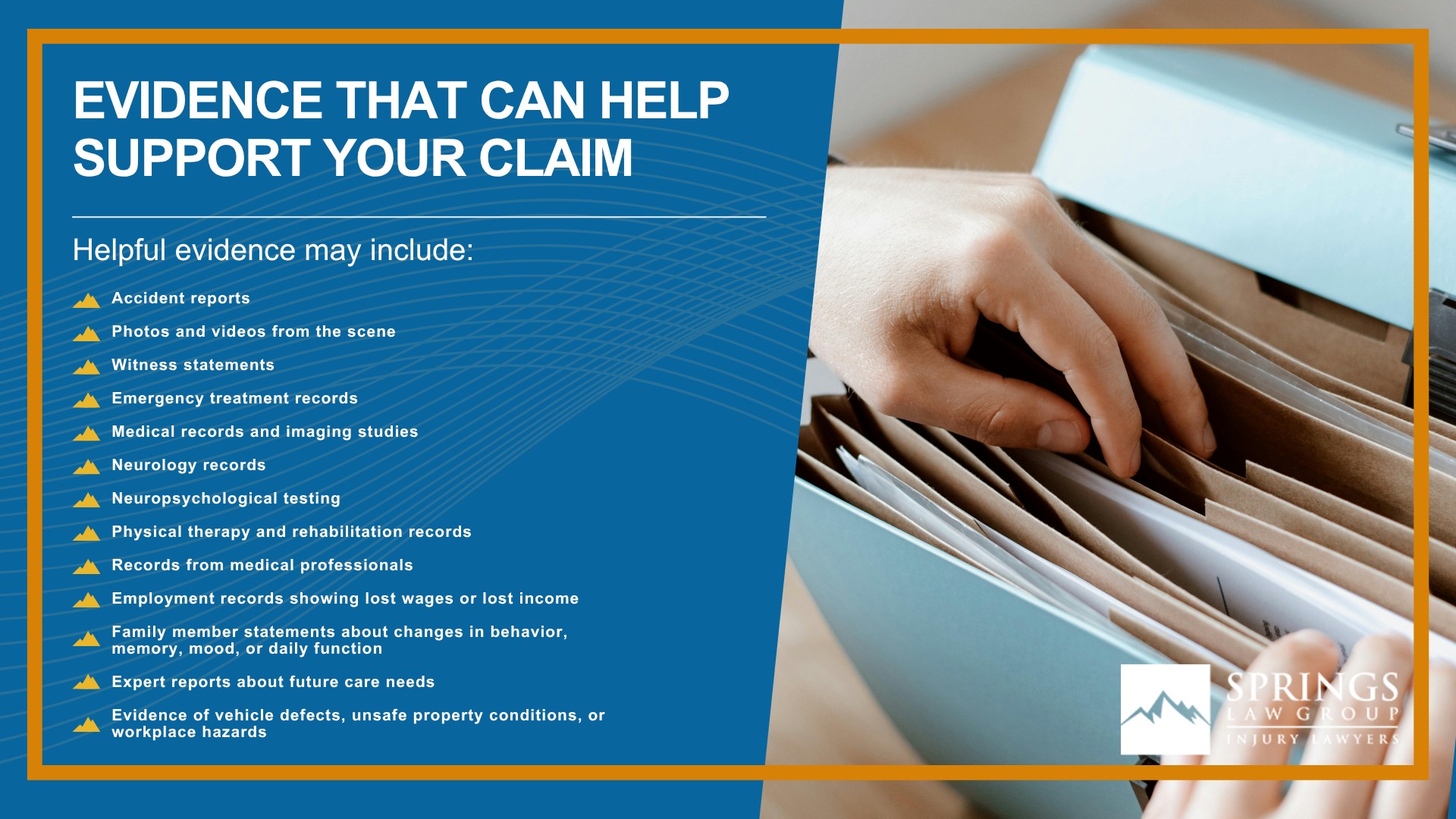
Helpful evidence may include:

  • Accident reports
  • Photos and videos from the scene
  • Witness statements
  • Emergency treatment records
  • Medical records and imaging studies
  • Neurology records
  • Neuropsychological testing
  • Physical therapy and rehabilitation records
  • Records from medical professionals
  • Employment records showing lost wages or lost income
  • Family member statements about changes in behavior, memory, mood, or daily function
  • Expert reports about future care needs
  • Evidence of vehicle defects, unsafe property conditions, or workplace hazards

A TBI lawyer can help preserve evidence before it disappears.

This is especially important in cases involving motor vehicle crashes, workplace accidents, premises liability claims, medical malpractice, and cases where multiple parties may dispute responsibility.

Compensation Available in a Traumatic Brain Injury Claim

The compensation available in a traumatic brain injury claim depends on the severity of the injury, the evidence, available insurance coverage, and the long-term impact on the injured person’s life.

Some brain injury survivors recover after medical treatment and therapy.

Others face permanent disability, ongoing symptoms, and years of medical expenses.

Compensation may include:

  • Medical bills
  • Future medical expenses
  • Emergency treatment
  • Hospitalization and surgery
  • Physical therapy, occupational therapy, and speech therapy
  • Mental health treatment
  • Lost wages
  • Lost income and reduced earning capacity
  • Pain and suffering
  • Emotional distress
  • Loss of enjoyment of life
  • Home modifications and assistive devices
  • Long-term care
  • Government benefits coordination, when needed
  • Wrongful death damages, including funeral expenses

In fatal cases, surviving family members may have the right to bring a wrongful death lawsuit.

A brain injury lawyer can evaluate the damages and work toward full compensation or maximum compensation supported by the facts and law.

While some serious brain injury lawsuits may result in significant settlements, no law firm can promise a specific outcome without reviewing the evidence.

What If You Were Partly at Fault?

Insurance companies may argue that the injured person was partly responsible for the accident.

They may claim the injured person was distracted, failed to avoid a hazard, ignored symptoms, or delayed medical treatment.

Colorado follows a comparative negligence rule.

Under C.R.S. § 13-21-111, an injured person’s damages may be reduced by their percentage of fault, and recovery is barred if their negligence is equal to or greater than the negligence of the party they are suing.

This rule can directly affect financial recovery.

A personal injury attorney can respond to blame-shifting arguments, gather evidence showing how the injury occurred, and protect the injured person’s ability to secure compensation.

How a Colorado Springs Traumatic Brain Injury Lawyer Can Help

A Colorado Springs traumatic brain injury lawyer helps brain injury victims and family members understand their rights after a serious head injury.

Brain injury law can involve medical evidence, insurance disputes, expert testimony, and legal procedures that are difficult to manage alone.
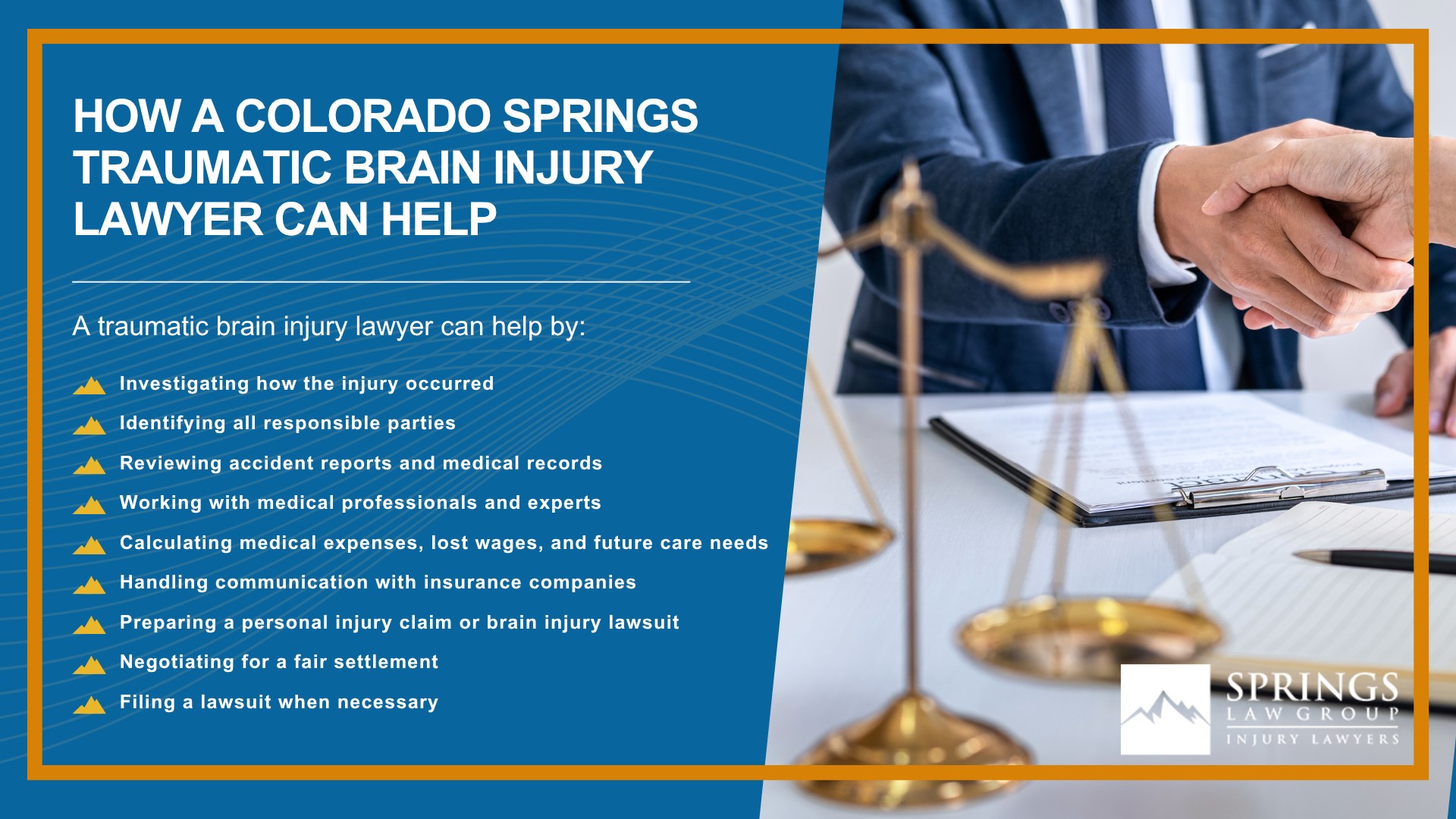
A traumatic brain injury lawyer can help by:

  • Investigating how the injury occurred
  • Identifying all responsible parties
  • Reviewing accident reports and medical records
  • Working with medical professionals and experts
  • Calculating medical expenses, lost wages, and future care needs
  • Handling communication with insurance companies
  • Preparing a personal injury claim or brain injury lawsuit
  • Negotiating for a fair settlement
  • Filing a lawsuit when necessary

Springs Law Group provides legal assistance for personal injury cases and helps clients understand each step of the legal process.

If your case involves a severe TBI, permanent brain damage, or a wrongful death claim, the legal team can build the case around the full impact of the injury.

Dealing With Insurance Companies

Insurance companies may try to reduce the value of brain injury claims.

They may argue that symptoms are unrelated, that a mild TBI is not serious, that the injured person had a preexisting condition, or that future medical treatment is unnecessary.

A brain injury attorney can handle these communications for you.

This may include organizing medical records, documenting medical expenses, proving lost wages, responding to insurance arguments, and pushing back when an insurer tries to minimize the financial burden of the injury.

Insurance companies often focus on limiting payouts.

A lawyer focuses on building a case for full compensation based on the medical evidence, the injuries sustained, and the long-term effect on the injured person’s life.

Do You Have a Traumatic Brain Injury Case?

You may have a traumatic brain injury case if you suffered a head injury or brain trauma because of another person’s negligence, medical malpractice, workplace accident, unsafe property, defective product, or motor vehicle crash.
You may have a claim if:

  • You were diagnosed with a traumatic brain injury
  • You suffered a concussion, brain bleed, skull fracture, or other head injury
  • Someone else caused or contributed to the accident
  • You needed emergency treatment or ongoing medical care
  • You have medical bills, lost wages, or lost income
  • Your symptoms affect your memory, mood, sleep, balance, work, or daily life
  • A loved one died because of a brain injury

Colorado generally has a two-year limitations period for many negligence-based personal injury claims under C.R.S. § 13-80-102, but different deadlines can apply to motor vehicle accidents, medical malpractice claims, claims involving government entities, workers compensation issues, and wrongful death cases.

Springs Law Group: Experienced Colorado Springs Traumatic Brain Injury Lawyers

Springs Law Group helps brain injury victims and families after serious accidents in Colorado Springs and throughout Colorado.

Our law firm understands the medical, financial, and emotional challenges that can follow a traumatic brain injury.

A Colorado Springs traumatic brain injury lawyer from Springs Law Group can investigate your case, explain your legal options, communicate with insurance companies, and help you seek compensation for medical bills, lost wages, pain and suffering, future care needs, and long-term losses.

Whether your case involves a car accident, truck accident, construction accident, workplace injury, medical malpractice, sports injuries, or another event that caused brain trauma, our legal team is ready to help.

Some people search for the Brain Injury Association, national resources, or general brain injury lawyers after a severe injury.

Those resources may help with education and support, but legal representation from a local injury lawyer can help you address Colorado-specific claims, insurance coverage, legal deadlines, and the practical steps needed to pursue financial recovery.

Contact Springs Law Group today for a free consultation.

You can also use the chatbot on this page to see if you qualify today.

Frequently Asked Questions

  • What are the signs of a traumatic brain injury?

    Signs of a traumatic brain injury may include headaches, dizziness, confusion, memory problems, sleep changes, nausea, sensitivity to light, mood changes, or trouble concentrating.

    A person may also experience balance problems, blurred vision, ringing in the ears, slurred speech, or weakness in part of the body.

    Falls, motor vehicle crashes, assaults, and other serious incidents are a leading cause of brain injuries, so it is important to seek medical attention after any head injury.

  • How do I know if I have a traumatic brain injury claim?

    You may have a traumatic brain injury claim if you suffered brain trauma because of someone else’s negligence, medical negligence, an unsafe property condition, a defective product, or a motor vehicle crash.

    A claim may be available if the injury caused medical bills, lost wages, pain and suffering, emotional distress, or long-term changes to your daily life.

    A Colorado Springs traumatic brain injury lawyer can review the facts, determine liability, and explain whether you may be able to pursue compensation.

  • How much is a traumatic brain injury case worth?

    The value of a traumatic brain injury case depends on the severity of the injury, available insurance coverage, medical expenses, lost income, and the long-term impact on the injured person’s life.

    Cases involving permanent brain damage, ongoing medical treatment, reduced earning capacity, or permanent disability may require a detailed review of future care needs.

    No lawyer can promise a specific outcome, but an experienced brain injury attorney can evaluate the evidence and pursue full compensation supported by the facts of your case.

  • What compensation can I recover after a traumatic brain injury?

    After a traumatic brain injury, you may be able to recover compensation for medical bills, emergency treatment, future medical expenses, physical therapy, lost wages, lost income, pain and suffering, emotional distress, and reduced earning capacity.

    Compensation may also include long-term care, home modifications, assistive devices, and loss of enjoyment of life when the injury affects daily independence.

    In fatal cases, surviving family members may be able to pursue a wrongful death lawsuit.

  • Do I need a lawyer for a traumatic brain injury claim?

    You should strongly consider speaking with a lawyer if you suffered a traumatic brain injury because these cases often involve medical evidence, insurance disputes, expert opinions, and long-term damages.

    Insurance companies may argue that symptoms are unrelated, that a mild TBI is not serious, or that future medical treatment is unnecessary.

    A Colorado Springs traumatic brain injury lawyer can gather evidence, deal with insurance companies, protect your claim, and help you seek compensation while you focus on recovery.

Written By:
Christopher Nicolaysen

Member of the Colorado Bar Association since 2014. Attorney, Christopher M. Nicolaysen focuses primarily on helping those injured in Colorado car accidents, other auto accidents, and Colorado personal injury incidents.

This article has been written and reviewed for legal accuracy and clarity by the team of writers and attorneys at Springs Law Group and is as accurate as possible. This content should not be taken as legal advice from an attorney. If you would like to learn more about our owner and experienced Colorado personal injury lawyer, Christopher Nicolaysen, you can do so here.

Springs Law Group does everything possible to make sure the information in this article is up to date and accurate. If you need specific legal advice about your case, contact us. This article should not be taken as advice from an attorney.

Do You
Have A Case?
No out of pocket costs.
We only collect a fee AFTER you win your case and receive full compensation.
Contact our team today to discuss your case for free & Get answers in as little as 3 minutes.
Would you like our help?
right-image
400
About Springs Law Group
The lawyers at Springs Law Group have experience handling diverse personal injury cases with empathy and understanding.
We recognize the delicate nature of these claims and tailor strategies to meet your unique requirements, focusing on smart — not emotional — strategies.
Our team is committed to building long-lasting, trust-based client relationships.
We believe this approach helps ensure that choosing us means partnering with a firm that genuinely values you as a person — not just another client.
Recent Posts
Do You
Have A Case?
No out of pocket costs.
We only collect a fee AFTER you win your case and receive full compensation.
Contact our team today to discuss your case for free & Get answers in as little as 3 minutes.
Would you like our help?
right-image
400

The #1 Personal Injury Lawyers in Colorado

Local Resources

Education
Emergency Services
Courthouses
Department of Motor Vehicles
Community & History

Leave Us A Review

We use reviews to help show more people like you why we do what we do!

Estudio especializado en lesiones personales de primera categoría al servicio de Colorado Springs y más allá

Personal injury victims represented by a lawyer recover up to 3x more.

Our Process

Reproducir vídeo
1
Investigation
Gather evidence. Get police reports. Obtain insurance policies.
2
Treatment
You focus on healing. We help guide you through the process.
3
Medical Records
Get the records we need to make sure you have a strong case.
4
Demand Prep
Prepare and send our demands to the insurance company.
5
Negotiation
Negotiate with the insurance company for max compensation.
6
Settlement
Reach a settlement offer you agree with or we file a lawsuit.
7
Litigation
If we have to go to court, our trial lawyers get ready to win.

Videos

Our Team

The #1 Personal Injury Lawyers in Colorado Springs, CO