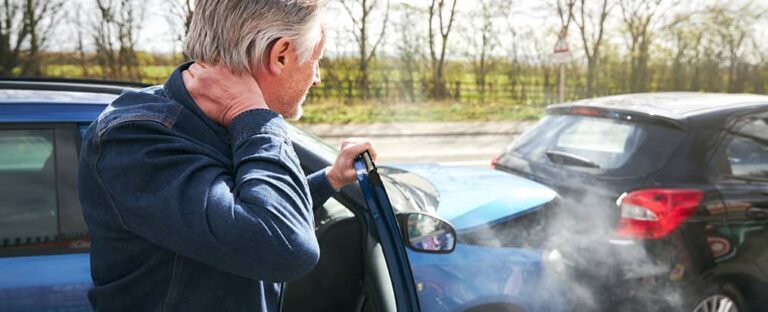

Careless driving, failure to yield, and following too closely are among the leading reported driver actions in car crashes across Colorado Springs.
Distracted drivers, impaired motorists, speeding, and unsafe road conditions also contribute to serious auto accidents in the city.
Many collisions involve human error, although mechanical failures and hazardous weather can increase crash risk.
Traffic on I-25, Powers Boulevard, and Academy Boulevard brings together highway merges, crowded intersections, and frequent changes in speed.
A driver who looks away from traffic, makes an improper turn, or leaves too little room between vehicles can cause a collision in seconds.
Snow, ice, rain, and changing visibility create additional hazards when motorists fail to adjust their speed or allow adequate space to stop.
Even people who drive safely can be injured by other motorists who make dangerous decisions behind the wheel.
A collision may result from one dangerous maneuver or several combined factors, including actions by other drivers and changing road conditions.

If you or a loved one were injured in a Colorado Springs car accident through no fault of your own, you may be eligible to take legal action and seek compensation.
Springs Law Group represents car accident victims on a contingency fee basis.
Contact us today for a free consultation, or use the chat feature on this page to get in touch with our Colorado Springs car accident lawyers.
Careless driving is the most common recorded cause of car crashes in Colorado Springs when a cause is identified, including in fatal crashes.
Careless driving is a broad classification that can encompass several forms of inattention, unsafe vehicle operation, and poor judgment.
From 2019 through 2023, careless driving, failure to yield, and following too closely were the three most frequently reported driver actions in crashes across the Pikes Peak region and Colorado, excluding records categorized as having no contributing driver action.
Beginning in 2021, aggressive driving and drivers who looked but failed to see another road user were among the leading reported contributing factors.
On Colorado Springs roads, these driving errors can combine with sudden traffic backups, crowded intersections, and changing weather conditions.
Car accidents in Colorado Springs can result from the following behaviors and conditions:
Distracted driving includes several forms of inattention, from looking at a cell phone to adjusting navigation controls, eating, or talking to passengers.
A distraction can take a driver’s eyes off the road, hands off the wheel, or attention away from traffic, making it easier to miss a changing light or another car braking ahead.
Reading or sending a text can take a driver’s eyes off the road for five seconds, enough time to travel roughly the length of a football field at 55 mph.
Distracted drivers may drift into the wrong lane, overlook pedestrians, or react too late when other cars stop unexpectedly.
In 2024, 3,208 people were killed nationwide in crashes involving distracted drivers.
A Colorado Springs distracted driving accident can happen on a residential street, at a busy intersection, or in fast-moving highway traffic.
Alcohol can impair coordination, judgment, attention, and driving ability even at relatively low blood alcohol concentrations.
At a blood alcohol concentration of 0.02%, drivers may already experience reduced visual function and difficulty performing two tasks at once.
A driver under the influence may misjudge the speed of oncoming cars, make a wide turn, enter the wrong lane, travel the wrong way on a highway ramp, or fail to recognize stopped traffic.
Prescription medications, illegal drugs, and combinations of substances may also interfere with concentration and reaction time.
In 2024, 11,904 people died nationwide in crashes involving alcohol-impaired drivers.
Colorado Springs DUI accidents can involve impaired motorists traveling through intersections, crossing centerlines, or losing control at highway speeds.
Failure to yield is a frequent cause of intersection car accidents, particularly when drivers turn left across traffic, enter a roadway from a parking lot, or merge without enough clearance.
A driver may look toward approaching traffic but fail to see another vehicle, or make an improper turn after misjudging how quickly an oncoming car is traveling.
These mistakes can cause side-impact crashes, particularly when other motorists have little time to brake or change direction.
Failure to yield was one of the leading reported driver actions in the Pikes Peak region’s 2019–2023 crash records.
Failure-to-yield accidents in Colorado Springs often involve left turns, stop signs, traffic signals, and disputes about which vehicle entered an intersection first.
Colorado Springs drivers encounter snow, ice, rain, fog, and strong winds that can make otherwise familiar roads difficult to travel.
The city receives approximately 42 inches of snow annually, and elevation and wind can cause conditions to vary across neighborhoods.
Rain reduces visibility and leaves less friction between tires and wet pavement, increasing the distance a vehicle needs to stop.
Snow and black ice can reduce traction even further, especially on shaded streets, bridges, and roads that have not fully cleared.
A driver who maintains a normal following distance on an icy road may not have enough space to stop when traffic slows.
Bad-weather car accidents in Colorado Springs commonly involve both difficult conditions and driver choices such as speeding, abrupt braking, or following too closely.
Speeding increases crash risk by reducing the time available to recognize hazards and increasing the distance traveled before a driver can stop.
Higher impact speeds also increase the potential injury severity for drivers and passengers, including those wearing a seat belt.
Driving too fast for conditions can be dangerous even when a vehicle is traveling below the posted speed limit.
For example, a speed that is reasonable on dry pavement may be unsafe when snow begins accumulating or traffic suddenly backs up on I-25.
Speeding contributed to 29% of U.S. traffic fatalities in 2024.
Aggressive behaviors include weaving around slower traffic, passing unsafely, tailgating, making abrupt lane changes, and accelerating to block another vehicle from merging.
Road rage can escalate these dangerous behaviors when an angry driver follows, threatens, or deliberately confronts another motorist.
Street racing creates additional danger because drivers may reach extreme speeds, ignore traffic signals, and put people in other cars at risk.
A driver engaging in reckless behavior can force surrounding motorists to brake suddenly or swerve, leading to secondary collisions.
Aggressive driving was among the most frequently reported contributing factors in the Pikes Peak region beginning in 2021.
Tailgating leaves too little time and space to respond when the vehicle ahead brakes suddenly, making it a common cause of rear-end collisions.
Even when a driver’s eyes remain on the road, an inadequate following gap can leave too little time to stop safely.
Maintaining a safe distance gives motorists more room to react to unexpected braking, traffic backups, and road hazards.
A gap that seems sufficient on dry pavement may become unsafe in heavy rain or snow, when stopping distances increase.
Following too closely was one of the three most frequently reported driver actions in the Pikes Peak region during 2019–2023.
Changing lanes without checking blind spots or judging the speed of approaching traffic can cause sideswipe collisions and sudden evasive maneuvers.
A driver may begin merging onto I-25 before there is adequate space, or cross multiple lanes on Powers Boulevard without noticing another vehicle nearby.
An unsafe lane change can also force another motorist into the wrong lane or off the roadway.
Distraction, speeding, and poor visibility make these mistakes more likely, especially where several lanes of traffic converge.
Drivers who enter an intersection against a red light or fail to stop at a stop sign can travel directly into the path of crossing vehicles.
Some drivers do not see the signal because they are distracted, while others accelerate to get through before a light changes.
Rolling through a stop sign or turning without checking for approaching cars can also lead to a serious auto accident.
Colorado Springs uses red-light safety cameras at selected intersections, including North Academy Boulevard at Dublin Boulevard and Barnes Road at Tutt Boulevard.
The cameras are one part of the city’s road safety efforts to reduce dangerous intersection driving.
Drowsy driving slows reaction times, reduces attention, and makes it harder to maintain speed or lane position.
A tired driver may miss a traffic signal, overlook another car braking, or briefly fall asleep and drift across the centerline.
Fatigue can impair performance much like alcohol: remaining awake for 17 consecutive hours can produce impairment comparable to a blood alcohol concentration of 0.05%.
Night shifts, long-distance travel, inadequate sleep, and certain medications can all contribute to fatigue.
Drowsy driving becomes particularly dangerous when combined with speeding or driving at night.
Driving after dark makes it harder to judge distances, identify pedestrians, and see vehicles entering from side streets.
Reduced visibility and depth perception can delay a driver’s response to turns, road debris, and stopped traffic.
High beams from oncoming vehicles can create glare, while poorly lit intersections may conceal hazards until a driver is close to them.
Nighttime motorists may also be tired or alcohol-impaired, although darkness itself does not mean a driver is impaired.
About half of fatal U.S. traffic crashes in 2024 occurred in darkness, including on lighted roads.
The U.S. traffic fatality rate per mile traveled at night is approximately three times the daytime rate.
Younger drivers and newly licensed motorists may have difficulty recognizing developing hazards, choosing a safe speed, and judging the distance of approaching vehicles.
A driver who has limited experience in snow may brake too sharply or steer abruptly after losing traction.
Passengers, cell phone notifications, and unfamiliar roads can also distract inexperienced drivers.
In 2024, 6% of drivers ages 15 to 20 involved in fatal crashes were reported as distracted, the same proportion reported for drivers ages 21 to 24, 25 to 34, and 35 to 44.
Experience can improve hazard recognition, but drivers of any age can make dangerous mistakes.
Car accidents can also occur when a vehicle malfunctions or a roadway presents an unexpected hazard.
Mechanical failures involving brakes, steering components, or tires can interfere with a driver’s ability to control or stop a vehicle.
Potholes, debris, obstructed sightlines, uneven pavement, and unexpected construction changes can also contribute to a crash.
A tire failure at highway speed or an abrupt maneuver around road debris may lead to loss of control, especially if surrounding traffic leaves little room to react.
Some collisions involve a combination of vehicle problems, road hazards, and unsafe driving decisions.
Car accidents in Colorado Springs can happen when a driver runs a stop sign, fails to yield, follows too closely, or loses control on a dangerous road.
Even careful motorists cannot always prevent accidents caused by another person’s reckless behavior or poor judgment.
Springs Law Group represents injured drivers and passengers in Colorado Springs and throughout El Paso County, including cases involving disputed fault, uninsured drivers, and serious injuries.
If you were injured in a car crash, contact Springs Law Group for a free consultation or use our website’s chat feature to discuss your situation.
We represent qualifying personal injury clients on a contingency fee basis, with attorney fees and case expenses explained in a written agreement.
Careless driving is the most common recorded cause of crashes when a cause is identified in Colorado Springs Police Department crash records.
The category includes a range of unsafe driving actions rather than one specific mistake.
Failure to yield and following too closely are also among the leading reported driver actions across the Pikes Peak region.
Speeding, alcohol impairment, reckless driving, and dangerous intersection maneuvers can contribute to severe crashes and traffic fatalities.
Injury severity also depends on factors such as the impact speed, vehicle size, direction of impact, and seat belt use.
No single cause accounts for all serious crashes, and the most common recorded cause of any collision is not necessarily the leading cause of fatal accidents.
Failure to yield, running red lights or stop signs, distracted driving, and making an improper turn are common causes of intersection accidents.
Drivers may misjudge the speed of approaching traffic or overlook vehicles, cyclists, and pedestrians crossing their path.
Distracted driving takes attention away from traffic and reduces the time available to respond to hazards.
Reading a cell phone message, adjusting navigation, or turning toward a passenger can cause a driver to miss stopped traffic or a changing signal.
Distractions can also lead to unsafe lane changes and failure-to-yield collisions.
Snow and ice reduce tire traction and can lengthen stopping distances, making it harder to control a vehicle during braking or turning.
Poor visibility and sudden changes in road conditions add to the danger.
Drivers can reduce some of the risk by slowing down and leaving more space between vehicles, but changing weather can still create hazardous conditions.
Yes, several causes can contribute to one collision.
A motorist may be distracted while following another car too closely, or drive too fast on an icy road before losing control during a lane change.
The actions of other motorists, roadway conditions, and mechanical problems can also combine to cause an accident.
Wrong-way crashes happen when a motorist enters the opposing lane or travels against traffic on a highway, bringing their vehicle directly into the path of oncoming traffic.
Alcohol impaired driving crashes can involve wrong-way travel because intoxicated drivers may misread signs, enter an exit ramp, or lose awareness of their surroundings.
Collisions with other vehicles at high speed can cause severe injuries, including traumatic brain injuries, spinal cord damage, fractures, and other injuries that require extensive medical treatment.
Many drivers become less attentive on familiar routes, particularly when traffic is light or they have traveled the same road for years.
Complacency can be a critical reason crashes happen, as motorists may overlook changing traffic conditions, approaching vehicles, or unexpected hazards.
Human error is often the primary cause, with distraction, excessive speed, and poor judgment contributing to otherwise preventable collisions.

Member of the Colorado Bar Association since 2014. Attorney, Christopher M. Nicolaysen focuses primarily on helping those injured in Colorado car accidents, other auto accidents, and Colorado personal injury incidents.
This article has been written and reviewed for legal accuracy and clarity by the team of writers and attorneys at Springs Law Group and is as accurate as possible. This content should not be taken as legal advice from an attorney. If you would like to learn more about our owner and experienced Colorado personal injury lawyer, Christopher Nicolaysen, you can do so here.
Springs Law Group does everything possible to make sure the information in this article is up to date and accurate. If you need specific legal advice about your case, contact us. This article should not be taken as advice from an attorney.
We use reviews to help show more people like you why we do what we do!

I was uneasy about reaching out to a law firm after being in an accident that left me injured and my vehicle totaled. I don’t care for the idea of suing for what was very clearly an accident. However, after learning more about the overall process of working with a professional team to navigate the murky waters of the insurance world, I was pleasantly surprised to find that the experience wasn’t as gross as I’d originally felt about it.

Springs Law is very friendly and professional. I always felt that they were on my side and cared about my injury and what I was going through. I highly recommend them.

Springs Law Group is an amazing group to work with! I got into a rough accident, and they never ceased to let me know they were there working hard to help me in my hour of need. It was always very easy to reach out to someone if I had any questions, and they were always happy to answer any questions I had.
I never have a problem with getting a response when I need them – which is not the case with most other firms. They really truly care about each client. As a plus, they always have positive attitudes, which matters tremendously when you are in a stressful legal situation.
Big thanks to Mr. Jake Kimbell and his team for their assistance with my case. He helped me through an incredibly challenging part of my life, and most importantly helped navigate through the convoluted legal channels of my case. I cannot thank him and his team enough for their support.

The entire team at Springs Law group has been nothing but amazing. Jake and the rest of the staff were great to work with and extremely professional. They were very attentive and answered any questions and concerns I had. I was always able to contact them and they were very responsive and communicated with me.

Springs Law Group is an amazing group to work with! I got into a rough accident, and they never ceased to let me know they were there working hard to help me in my hour of need. It was always very easy to reach out to someone if I had any questions, and they were always happy to answer any questions I had.