

Colorado Springs Spinal Cord Injury Lawyer

Were You or A Loved One Injured in an Accident?
Get Free Answers In as Little as 3 Minutes
right-image
400

Injured by a Spinal Cord Injury? Contact Springs Law Group Today

Spinal cord injuries can cause permanent changes to mobility, sensation, independence, and quality of life in a matter of seconds.

Many survivors face extensive medical treatment, rehabilitation, assistive devices, home modifications, and future care needs that may continue for years or even a lifetime.

Spinal cord injury claims often involve complex medical evidence, long-term disability, lost earning capacity, and disputes over the full cost of future care.

Springs Law Group represents individuals in Colorado Springs who have suffered spinal cord injuries and need legal guidance while pursuing compensation for the long-term consequences of their injuries.

Colorado Springs Spinal Cord Injury Lawyer

Our Law Firm Handles Spinal Cord Injury Cases in Colorado Springs

When someone suffers a spinal cord injury, the effects can extend far beyond the initial accident.

These injuries may require emergency treatment, surgery, hospitalization, rehabilitation, home modifications, mobility equipment, and long-term medical care.

Many spinal cord injury cases are not simple accidents.

They involve preventable conduct, unsafe decisions, or negligent actions that caused serious damage to the spinal cord and changed the injured person’s future.

These cases may involve car accidents, truck accidents, motorcycle crashes, pedestrian accidents, falls, unsafe properties, workplace-related incidents, defective products, acts of violence, or other serious events that result in partial or complete loss of movement, sensation, or function.

To bring a claim, you generally need to show that another person, business, property owner, driver, manufacturer, or responsible party acted negligently and that their actions caused your injury.

A spinal cord injury attorney can investigate what happened, preserve evidence, review medical records, speak with witnesses, and build a personal injury claim based on the facts of your case.

If you or a loved one suffered a spinal cord injury because of someone else’s negligence, Springs Law Group can help you pursue compensation for medical bills, lost wages, pain and suffering, future care needs, and other damages tied to your recovery.

When the evidence supports your claim, negligent drivers, businesses, property owners, employers, manufacturers, or other responsible parties may be held liable for the harm they caused.

Contact Springs Law Group today for a free consultation.

You can also use the chat feature on this page to get in touch with our experienced spinal cord injury attorneys.

Table of Contents

What Is a Spinal Cord Injury Claim?

A spinal cord injury claim is a type of personal injury claim brought by an injured person who suffered damage to the spinal cord because of someone else’s negligence, medical negligence, a dangerous property condition, a defective product, or another preventable event.

A spinal cord injury can involve damage to the spinal cord itself or to the bones, discs, and tissue around it, including the spinal column.

The National Institute of Neurological Disorders and Stroke explains that spinal cord damage can cause temporary or permanent changes in movement, strength, sensation, and body functions below the injury site.

A spinal cord injury claim may involve a car accident, truck accidents, an auto accident, fall accidents, a traumatic accident, a workplace incident, sports injuries, medical malpractice, surgical errors, or intentional harm.

These cases are often serious because a cord injury can affect mobility, independence, earning ability, and long-term health.

A Colorado Springs spinal cord injury lawyer can help determine liability, gather medical records, deal with insurance companies, and pursue fair compensation through an insurance claim or spinal cord injury lawsuit.

Because spinal cord injury cases often involve long-term medical care, future medical expenses, and disputes over the full impact of the injury, legal support can be important from the beginning.

When Someone Else’s Negligence Causes a Spinal Cord Injury

A spinal cord injury case may arise when another person, business, property owner, medical provider, manufacturer, or other responsible party fails to act with reasonable care.

When someone else’s negligence causes spinal cord damage, the injured person may have the right to bring a personal injury case.

Negligence may be involved when:

  • A careless driver causes a serious car accident or truck accident
  • A property owner fails to fix a dangerous condition that causes a fall
  • A company sells a defective product that causes spinal injuries
  • A workplace safety failure harms injured workers
  • Medical professionals make a preventable error
  • Surgical errors or other medical negligence cause damage to the spinal cord
  • Intentional harm or unsafe conduct causes a severe spinal cord injury

A personal injury attorney can review the facts, identify the parties involved, and explain whether the injured person may be able to seek financial compensation.

In serious cases, personal injury attorneys work with medical experts, rehabilitation specialists, and financial professionals to understand the full cost of such an injury.

Common Causes of Spinal Cord Injuries

Spinal cord injuries occur in many different ways. Some happen because of sudden blunt force trauma.

Others result from compression, medical negligence, falls, workplace hazards, or unsafe products.
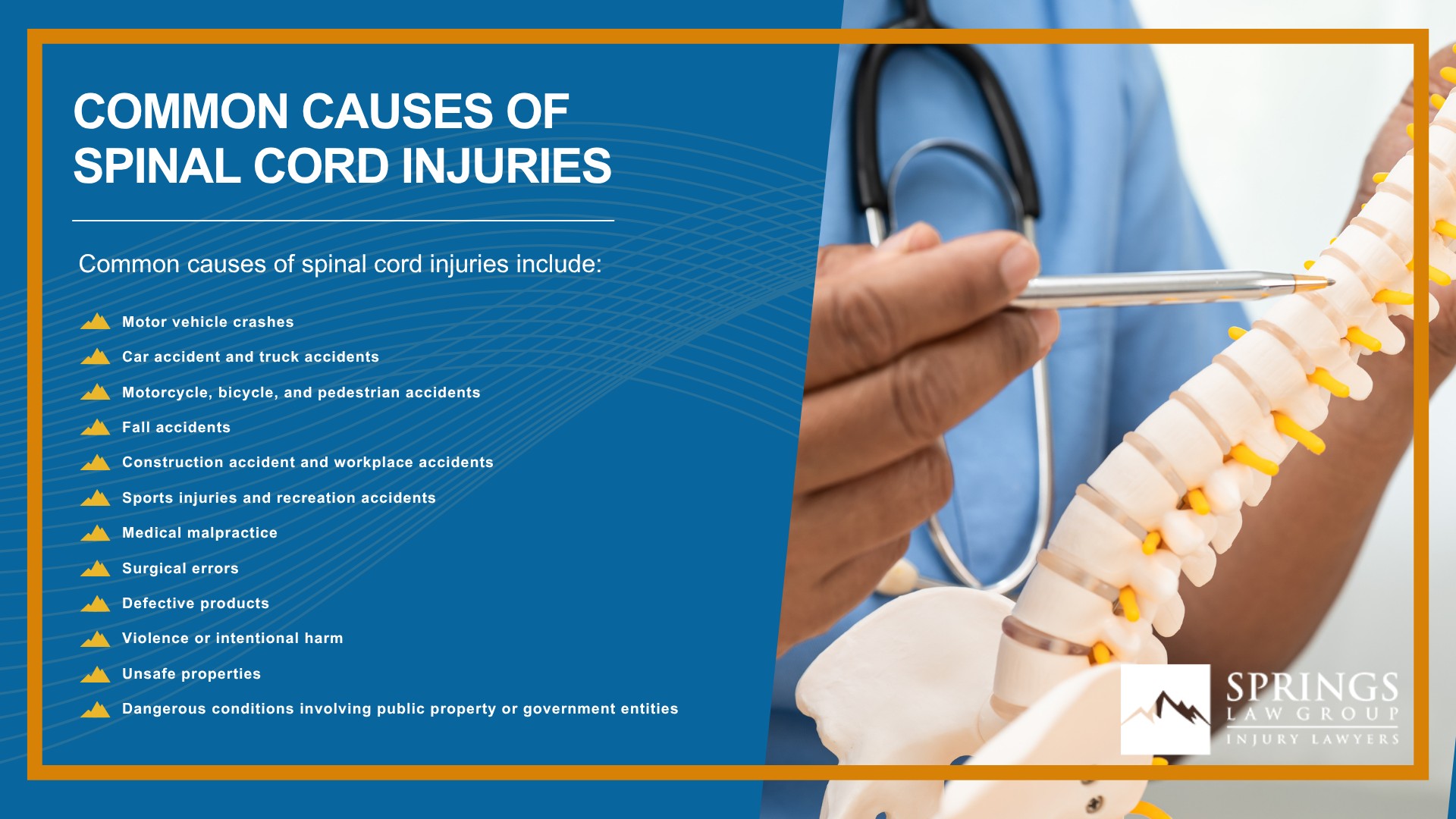
Common causes of spinal cord injuries include:

  • Motor vehicle crashes
  • Car accident and truck accidents
  • Motorcycle, bicycle, and pedestrian accidents
  • Fall accidents
  • Construction accident and workplace accidents
  • Sports injuries and recreation accidents
  • Medical malpractice
  • Surgical errors
  • Defective products
  • Violence or intentional harm
  • Unsafe properties
  • Dangerous conditions involving public property or government entities

A spine injury can happen when force damages the spinal cord, vertebrae, discs, nerves, or surrounding tissue.

Even when a person is not immediately paralyzed, prompt medical treatment is important because swelling, bleeding, and pressure around the spinal cord can worsen the injury.

Common Symptoms and Types of Spinal Cord Injuries

Symptoms of a spinal cord injury depend on where the injury happened and how severe the damage is.

The ability to control the arms or legs after a spinal cord injury depends on the location of the injury along the spinal cord and the severity of the injury.

Common symptoms may include:

  • Loss of movement or weakness
  • Loss of sensation
  • Numbness, tingling, or burning pain
  • Severe pain or pressure in the back, neck, or head
  • Difficulty walking
  • Loss of bladder or bowel control
  • Trouble breathing or coughing
  • Muscle spasms
  • Changes in sexual function
  • Pain caused by nerve damage
  • Loss of motor function below the injury site

Spinal cord injuries may affect the cervical spine, thoracic spine, lumbar spine, or sacral area near the pelvic organs.

A spinal cord injury depends heavily on the location and severity of the damage, which is why medical evaluation and imaging are critical after a serious accident.

Complete and Incomplete Spinal Cord Injuries

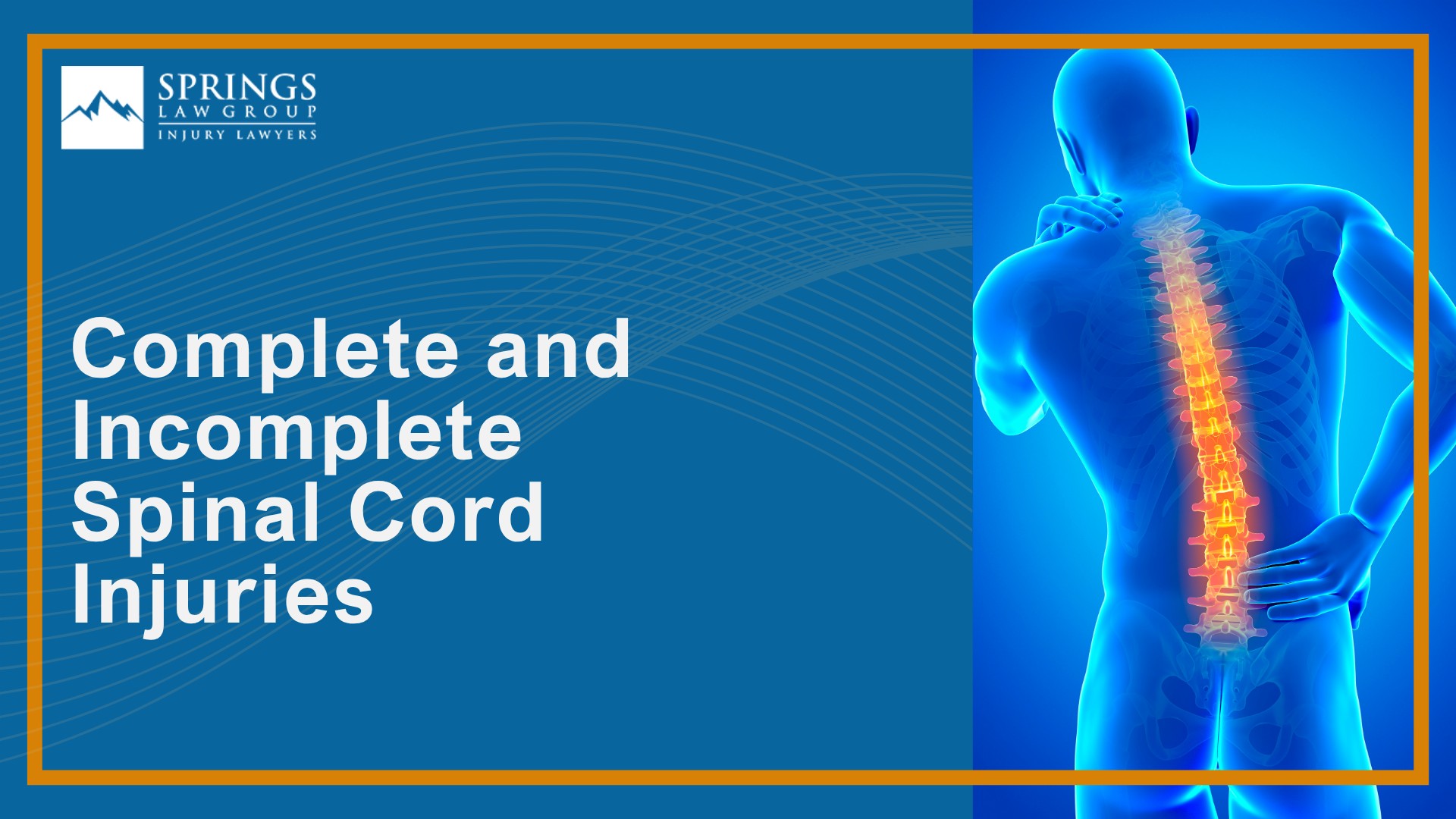
Spinal cord injuries are often described as complete or incomplete.

A complete spinal cord injury means the injured person loses all feeling and ability to control movement below the level of the injury.

An incomplete spinal cord injury means some feeling or movement remains below the injured area.

This distinction matters because it can affect treatment, rehabilitation, and long-term recovery planning.

A person with an incomplete spinal cord injury may retain some motor function or sensation, while a person with a complete injury may face more extensive permanent limitations.
The type of injury can also affect the value and structure of a spinal cord injury claim.

A spinal cord injury attorney may work with medical professionals to document the diagnosis, treatment needs, physical therapy, occupational therapy, assistive devices, and long-term complications tied to the injury.

Paralysis, Loss of Sensation, and Long-Term Complications

A severe spinal cord injury can cause paralysis, loss of sensation, and long-term medical complications.

Depending on the injury location, the injured person may lose movement in the legs, arms, trunk, or other parts of the body.
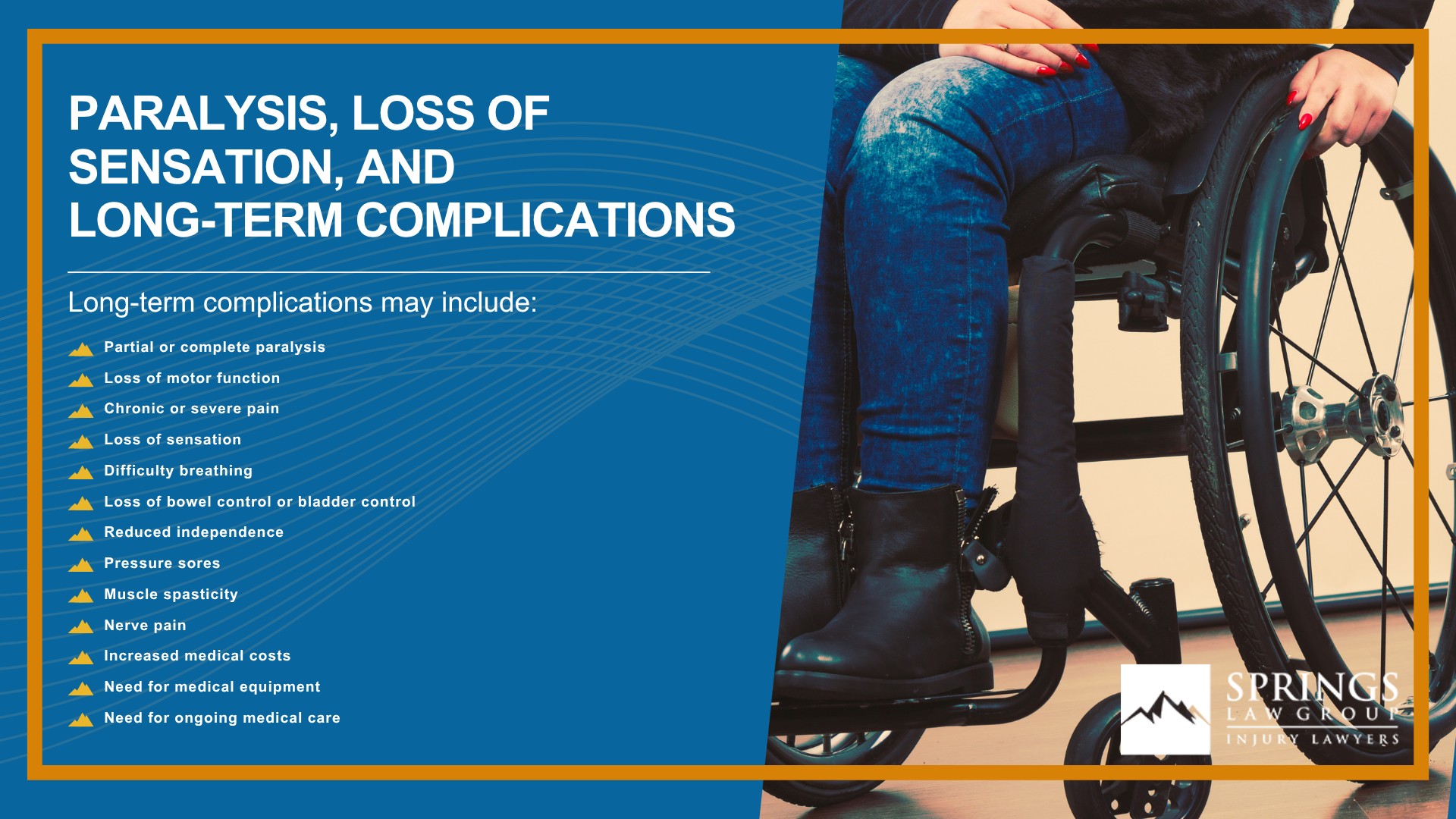
Long-term complications may include:

  • Partial or complete paralysis
  • Loss of motor function
  • Chronic or severe pain
  • Loss of sensation
  • Difficulty breathing
  • Loss of bowel control or bladder control
  • Reduced independence
  • Pressure sores
  • Muscle spasticity
  • Nerve pain
  • Increased medical costs
  • Need for medical equipment
  • Need for ongoing medical care

A spinal cord injury can also create a major financial and emotional burden for accident victims and their families.

The injured person may need mobility equipment, home modifications, long-term rehabilitation, physical therapy, occupational therapy, and help with daily activities.

How Do You Prove a Spinal Cord Injury Case?

To prove a spinal cord injury case, the injured person generally must show that another party’s negligence caused the injury and resulting damages.

The claim must connect the accident, the medical diagnosis, and the long-term effects of the spinal cord damage.

A strong claim may show:

  • The responsible party owed the injured person a legal duty
  • That party violated the duty through careless, unsafe, or wrongful conduct
  • The conduct caused the spinal cord injury
  • The injury caused medical expenses, lost wages, pain, disability, or other damages
  • The injury will likely require future care or long-term support

A spinal cord injury lawyer can help build the case by reviewing evidence, consulting experts, and preparing the claim for settlement negotiations or litigation.

In complex cases involving medical malpractice, defective products, workplace injuries, or multiple responsible parties, an experienced injury lawyer can help manage the legal process.

Evidence That Can Help Support Your Claim

Evidence is critical in spinal cord injury cases because insurance companies may dispute fault, question future care needs, or argue that the injury is not as severe as claimed.

Helpful evidence may include:

  • Police reports or accident reports
  • Photos and videos from the scene
  • Witness statements
  • Emergency medical records
  • Imaging studies, such as MRI or CT scans
  • Surgical records
  • Physical therapy and occupational therapy records
  • Records from medical professionals
  • Employment records showing lost wages
  • Documentation of reduced earning capacity
  • Medical bills and medical expenses
  • Records showing future medical expenses
  • Proof of medical equipment, home modifications, or ongoing care needs
  • Expert opinions about long-term recovery

A spinal cord injury lawyer can help preserve evidence before it disappears.

This is especially important after an auto accident, fall accident, construction accident, workplace injury, or any case where multiple parties and insurance companies may dispute responsibility.

Compensation Available in a Spinal Cord Injury Claim

The compensation available in a spinal cord injury claim depends on the facts of the case, the severity of the injury, available insurance coverage, and the long-term impact on the injured person’s life.

A severe spinal cord injury can create medical costs that continue for years or for the rest of a person’s life.

Compensation may include:

  • Medical bills
  • Future medical expenses
  • Emergency treatment
  • Hospitalization and surgery
  • Physical therapy
  • Occupational therapy
  • Medical equipment
  • Home and vehicle modifications
  • Ongoing medical care
  • Lost wages
  • Reduced earning capacity
  • Pain and suffering
  • Loss of enjoyment of life
  • Permanent disability
  • Emotional distress
  • Long-term personal care needs

A personal injury lawyer can evaluate current and future losses and pursue financial compensation supported by the evidence.

While some cases may justify a demand for maximum compensation, no law firm can promise a specific outcome before reviewing the facts, injuries, insurance coverage, and legal issues involved.

Life-Care Planning and Future Medical Needs After a Spinal Cord Injury

Severe spinal cord injury cases often require a detailed evaluation of future medical and personal care needs because the effects of the injury may continue for decades.

The cost of living with a spinal cord injury can reach millions of dollars over a lifetime, particularly when the injury results in permanent paralysis, loss of sensation, or impaired motor function.

Individuals with complete spinal cord injuries often face greater long-term limitations than those with incomplete injuries, though both types of injuries may require ongoing treatment, rehabilitation, and support services.

Life-care planning helps document the medical care, equipment, accommodations, and assistance an injured person may need in the future.

A comprehensive life-care plan may consider:

  • Future surgeries and medical treatment
  • Physical therapy and occupational therapy
  • Wheelchairs and other mobility equipment
  • Home and vehicle modifications
  • In-home nursing or attendant care
  • Medications and pain management
  • Vocational rehabilitation services
  • Assistive technology and adaptive devices
  • Transportation needs
  • Ongoing medical monitoring and specialist care

Many spinal cord injury survivors also experience complications such as respiratory problems, chronic pain, bladder dysfunction, bowel dysfunction, and other medical issues that require continuing care.

Medical experts, rehabilitation specialists, life-care planners, and economists are often used to evaluate these future needs and estimate their financial impact.

This evidence can help establish the full extent of damages and the long-term costs associated with a spinal cord injury.

What If You Were Partly at Fault?

Insurance companies may argue that the injured person was partly responsible for the accident.

They may claim the injured person failed to avoid a hazard, drove carelessly, ignored symptoms, or contributed to the injury in some other way.

Colorado follows a comparative negligence rule.

Under C.R.S. § 13-21-111, contributory negligence does not automatically bar recovery if the injured person’s negligence was not as great as the negligence of the person being sued, but damages are reduced in proportion to the injured person’s percentage of fault.

This rule can directly affect the value of a personal injury claim.

A spinal cord injury attorney can respond to blame-shifting arguments, gather evidence showing how the injury happened, and protect the injured person’s ability to recover compensation.

How a Colorado Springs Spinal Cord Injury Lawyer Can Help

A Colorado Springs spinal cord injury lawyer helps spinal cord injury victims and families understand their rights after a serious accident.

These cases can involve medical evidence, expert opinions, insurance claims, long-term care planning, and legal procedures that are difficult to manage while recovering.
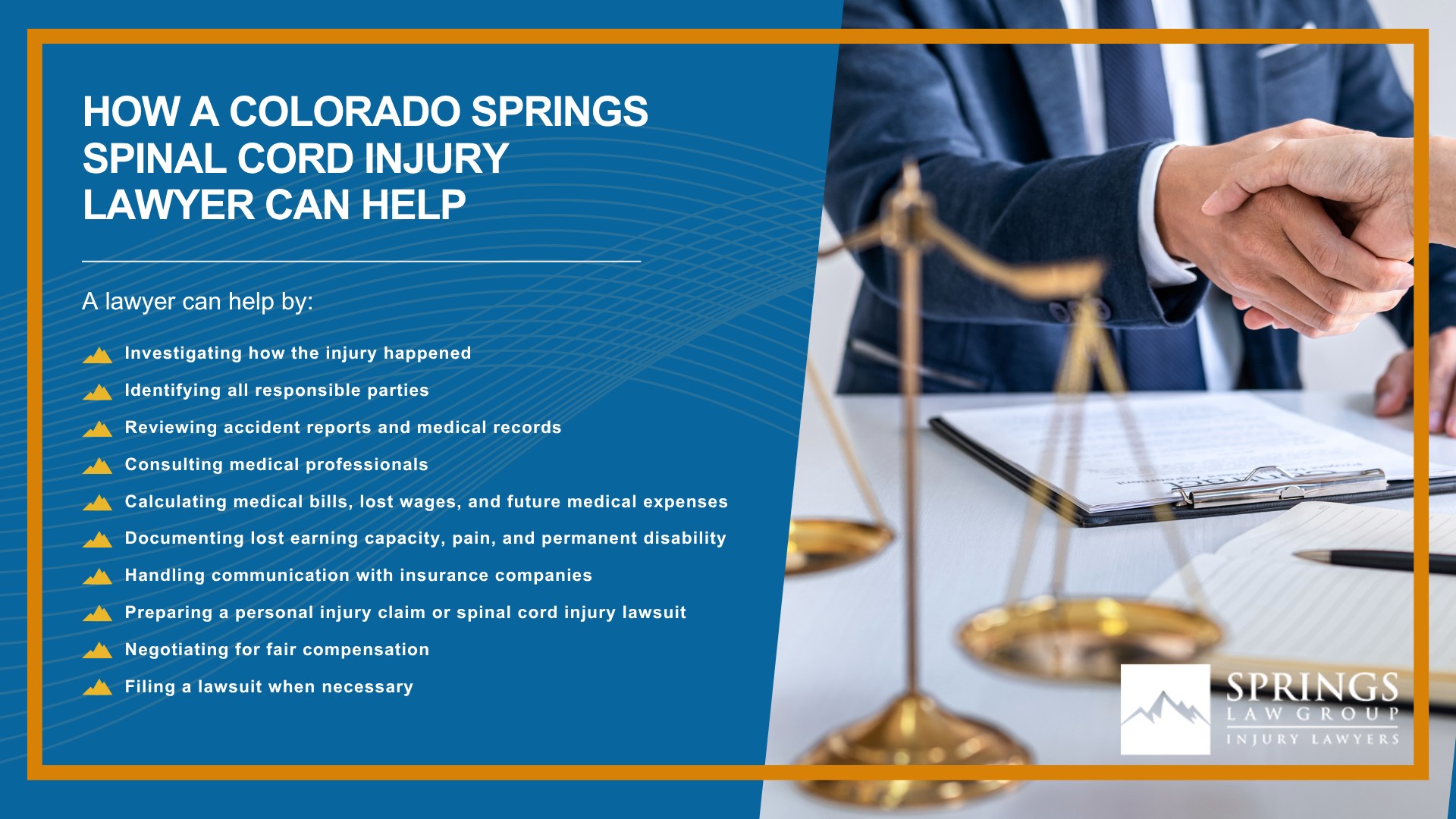
A lawyer can help by:

  • Investigating how the injury happened
  • Identifying all responsible parties
  • Reviewing accident reports and medical records
  • Consulting medical professionals
  • Calculating medical bills, lost wages, and future medical expenses
  • Documenting lost earning capacity, pain, and permanent disability
  • Handling communication with insurance companies
  • Preparing a personal injury claim or spinal cord injury lawsuit
  • Negotiating for fair compensation
  • Filing a lawsuit when necessary

Springs Law Group handles personal injury cases on a contingency fee basis, which means there are no out-of-pocket costs and no fee until you win.

Dealing With Insurance Companies

Insurance companies may try to reduce the value of spinal cord injury claims.

They may dispute liability, challenge the need for future medical care, minimize the impact of the injury, or argue that symptoms were caused by a prior condition.

A spinal cord injury lawyer can deal with insurance companies on your behalf.

This may include organizing medical records, documenting medical expenses, proving lost wages, responding to insurance arguments, and negotiating for a settlement that reflects the full impact of the injury.

Because spinal cord injury cases often involve high medical costs and long-term care needs, insurers may push for a quick settlement before the full future cost is known.

A lawyer can help make sure the claim accounts for medical treatment, physical therapy, occupational therapy, medical equipment, lost income, reduced earning capacity, pain, and future needs.

Do You Have a Spinal Cord Injury Case?

You may have a spinal cord injury case if you suffered a spinal cord injury because of another person’s negligence, medical malpractice, unsafe property, defective product, workplace accident, auto accident, or intentional harm.

You may have a claim if:

  • You suffered a spinal cord injury in an accident
  • Someone else caused or contributed to the injury
  • You needed emergency care, surgery, or ongoing medical treatment
  • You have medical bills, medical expenses, or future medical costs
  • You lost wages or your ability to work has changed
  • You need physical therapy, occupational therapy, or medical equipment
  • You are living with permanent disability, loss of sensation, or reduced motor function

Colorado generally has a two-year limitations period for many negligence-based personal injury claims, but different deadlines may apply to motor vehicle crashes, medical negligence, workers compensation matters for injured workers, claims involving government entities, and other case types.

Springs Law Group: Experienced Colorado Springs Spinal Cord Injury Lawyers

Springs Law Group helps spinal cord injury victims and families after serious accidents in Colorado Springs and throughout Colorado.

Our personal injury law firm understands the medical, financial, and personal challenges that can follow a severe spine injury.

A Colorado Springs spinal cord injury lawyer from Springs Law Group can investigate your case, explain your legal options, communicate with insurance companies, and help you seek compensation for medical bills, lost wages, pain and suffering, future medical expenses, ongoing medical care, and long-term losses.

Whether your case involves a car accident, truck accident, fall accident, workplace injury, medical malpractice, surgical errors, sports injuries, or another traumatic accident, our legal team is ready to help.

If you or a loved one suffered a spinal cord injury because of someone else’s negligence, contact Springs Law Group today for a free case evaluation.

You can also use the chat feature on this page to get in touch with an experienced spinal cord injury attorney.


Frequently Asked Questions

  • What are the signs of a spinal cord injury?

    Signs of a spinal cord injury may include loss of movement, weakness, numbness, tingling, severe neck or back pain, difficulty walking, loss of sensation, or loss of bladder or bowel control.

    Some people may also have trouble breathing, muscle spasms, or pain that travels into the arms, legs, or other parts of the body.

    Because the spinal cord is part of the central nervous system, any symptoms after a serious fall, car accident, truck accident, or traumatic accident should be evaluated by medical professionals as soon as possible.

  • Can a herniated disc be part of a spinal cord injury claim?

    A herniated disc may be part of a spinal cord injury claim if the accident caused or worsened damage to the spine, nerves, or surrounding tissue.

    Some herniated discs cause pain, numbness, weakness, or pressure on nearby nerves, while more serious spine injuries may involve damage to the spinal cord itself.

    A Colorado Springs spinal cord injury lawyer can review your medical records, imaging results, and accident history to determine how the injury relates to your claim.

  • How much is a spinal cord injury case worth?

    The value of a spinal cord injury case depends on the severity of the injury, available insurance coverage, medical bills, future medical expenses, lost wages, and the long-term impact on the injured person’s life.

    Cases involving permanent disability, paralysis, ongoing medical care, medical equipment, home modifications, or reduced earning capacity may require a detailed review of future needs.

    No lawyer can promise a specific outcome, but an experienced spinal cord injury attorney can evaluate the facts and pursue fair compensation supported by the evidence.

  • What compensation can I recover after a spinal cord injury?

    After a spinal cord injury, you may be able to recover compensation for medical treatment, emergency care, surgery, physical therapy, occupational therapy, future medical expenses, lost wages, reduced earning capacity, pain and suffering, and long-term care needs.

    Compensation may also include medical equipment, home modifications, loss of enjoyment of life, emotional distress, and support for permanent disability.

    Because spinal cord injuries are often catastrophic injuries, the claim should account for both current losses and the future cost of recovery.

  • Do I need a lawyer for a spinal cord injury claim?

    You should strongly consider speaking with a lawyer if you suffered a spinal cord injury because these cases often involve serious medical evidence, long-term damages, insurance disputes, and complex legal issues.

    A lawyer can investigate what happened, determine liability, preserve evidence, deal with insurance companies, and file a personal injury lawsuit when necessary.

    Springs Law Group handles personal injury cases on a contingency fee basis, which means there are no out-of-pocket costs and no fee until you win.

Written By:
Christopher Nicolaysen

Member of the Colorado Bar Association since 2014. Attorney, Christopher M. Nicolaysen focuses primarily on helping those injured in Colorado car accidents, other auto accidents, and Colorado personal injury incidents.

This article has been written and reviewed for legal accuracy and clarity by the team of writers and attorneys at Springs Law Group and is as accurate as possible. This content should not be taken as legal advice from an attorney. If you would like to learn more about our owner and experienced Colorado personal injury lawyer, Christopher Nicolaysen, you can do so here.

Springs Law Group does everything possible to make sure the information in this article is up to date and accurate. If you need specific legal advice about your case, contact us. This article should not be taken as advice from an attorney.

Do You
Have A Case?
No out of pocket costs.
We only collect a fee AFTER you win your case and receive full compensation.
Contact our team today to discuss your case for free & Get answers in as little as 3 minutes.
Would you like our help?
right-image
400
About Springs Law Group
The lawyers at Springs Law Group have experience handling diverse personal injury cases with empathy and understanding.
We recognize the delicate nature of these claims and tailor strategies to meet your unique requirements, focusing on smart — not emotional — strategies.
Our team is committed to building long-lasting, trust-based client relationships.
We believe this approach helps ensure that choosing us means partnering with a firm that genuinely values you as a person — not just another client.
Recent Posts
Do You
Have A Case?
No out of pocket costs.
We only collect a fee AFTER you win your case and receive full compensation.
Contact our team today to discuss your case for free & Get answers in as little as 3 minutes.
Would you like our help?
right-image
400

The #1 Personal Injury Lawyers in Colorado

Local Resources

Education
Emergency Services
Courthouses
Department of Motor Vehicles
Community & History

Leave Us A Review

We use reviews to help show more people like you why we do what we do!

Estudio especializado en lesiones personales de primera categoría al servicio de Colorado Springs y más allá

Personal injury victims represented by a lawyer recover up to 3x more.

Our Process

Reproducir vídeo
1
Investigation
Gather evidence. Get police reports. Obtain insurance policies.
2
Treatment
You focus on healing. We help guide you through the process.
3
Medical Records
Get the records we need to make sure you have a strong case.
4
Demand Prep
Prepare and send our demands to the insurance company.
5
Negotiation
Negotiate with the insurance company for max compensation.
6
Settlement
Reach a settlement offer you agree with or we file a lawsuit.
7
Litigation
If we have to go to court, our trial lawyers get ready to win.

Videos

Our Team

The #1 Personal Injury Lawyers in Colorado Springs, CO