
A Colorado Springs distracted driving lawyer can help prove what happened, protect key evidence, and push back when insurers try to minimize a crash caused by inattention behind the wheel.
Distracted driving cases often hinge on details that disappear quickly, including phone activity, witness observations, and video footage from nearby cameras.
Insurance companies frequently dispute distraction and shift blame to reduce what they pay, even when the facts point to preventable conduct by the driver who caused the wreck.
This page explains how distracted driving claims work in Colorado, what evidence matters most, and how Springs Law Group can help pursue compensation after a serious collision.
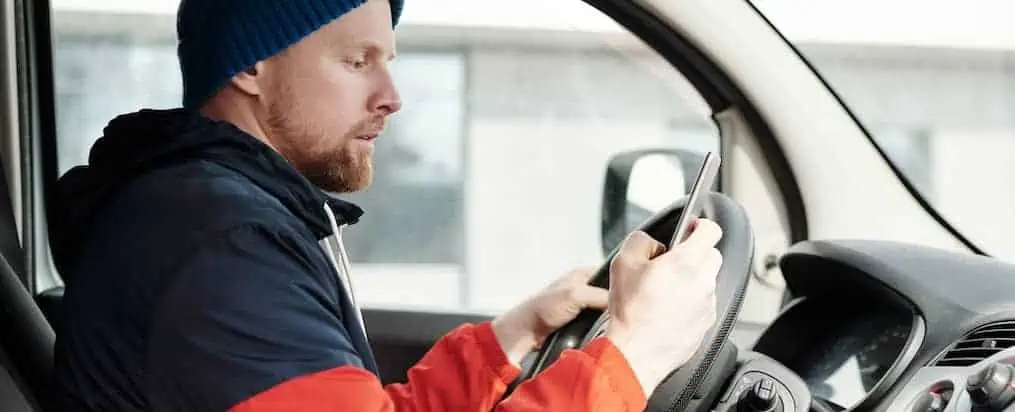
Distracted drivers cause car accidents in seconds, often without braking or reacting until impact. A cell phone is one of the most common triggers, because texting and driving forces a driver’s attention off the road and into a screen when the margin for error is already small.
Distracted driving accidents happen in many other ways too, including navigation use, eating, reaching for items, or turning to talk to passengers, all of which divert focus at the worst moment.
For accident victims, the injuries can be immediate and severe, because distracted crashes often involve high speeds, rear-end impacts, or missed right-of-way decisions.
Negligent drivers rarely admit distraction, and insurers often treat that denial as a reason to fight liability or lower the value of a claim.
A strong personal injury claim depends on proving how the distraction occurred and connecting it to the collision through objective evidence and credible timelines.
When that proof is handled correctly, accident victims may be able to recover compensation for medical treatment, lost income, pain, and long-term limitations.
The goal is to build a case that is grounded in facts, not assumptions, so the responsible driver and insurer cannot rewrite what happened.
If you or a loved one were injured in a distracted driving accident in Colorado Springs, Springs Law Group may be able to help you in seeking compensation and justice.
Contact us today for a free consultation.
Use the chat feature on this page to find out if you qualify for a distracted driving accident claim.
Distracted driving occurs when a driver’s attention shifts away from the task of operating a motor vehicle, even briefly, and that moment is often enough to cause a high-impact crash.
The CDC breaks distraction into three categories, visual distractions, manual distractions, and cognitive distractions, and many behaviors overlap all three at once.
Texting and driving is a clear example because it pulls a driver’s eyes off the road, hands off the steering wheel, and mind off traffic conditions at the same time.
NHTSA reports that in 2023, 3,275 people were killed and an estimated 324,819 people were injured in crashes involving distracted drivers, a distracted driving statistic that reflects how often “minor” inattention leads to serious injuries.
That same NHTSA research notes distraction-affected crashes accounted for an estimated 13% of injury crashes and 13% of all police-reported crashes in 2023.
Drivers generally underestimate how dangerous a glance can be, but NHTSA warns that sending or reading a text can take your eyes off the road for about five seconds, long enough to travel the length of a football field at highway speed.
Accidents caused by distraction often happen without meaningful braking or evasive steering because the driver’s attention is not on the roadway when hazards develop.
When distracted driving occurs in traffic, it increases the risk of rear-end collisions, missed red lights, failure-to-yield crashes, and roadway departures that produce the worst outcomes.
Common types of distracted driving include:
Colorado has specific distracted-driving laws that apply to car crashes caused by texting, handheld device use, and other forms of mobile device interaction behind the wheel.
The core statute is C.R.S. § 42-4-239, which addresses the use of a mobile electronic device while driving and sets penalties and exceptions.
Colorado also expanded its restrictions through SB24-065, creating the statewide hands-free framework that took effect January 1, 2025.
In a civil injury case, these rules matter because a violation can support the argument that the driver breached a duty of reasonable care, which helps establish negligence.
Colorado distracted-driving laws and rules include:
Comparative fault matters in any accident involving a distracted driver because insurers rarely accept full responsibility without pushing blame back onto the injured person.
Even when distraction seems obvious, the other side may argue the injured driver was speeding, following too closely, or failed to react in time, then use those claims to reduce financial compensation.
Colorado’s modified comparative negligence rule makes those arguments meaningful because percentage allocations can reduce an award or bar recovery at the cutoff.
A car accident lawyer addresses this by rebuilding the timeline with objective proof, including vehicle damage patterns, scene evidence, witness accounts, and any available video.
When distraction is disputed, the focus shifts to what the distracted driver did not do, such as braking, yielding, or maintaining lane position, and whether the evidence supports that failure.
The goal is to keep the fault analysis tied to provable facts so the case value reflects the conduct that actually caused the crash.
Distracted driving crashes often happen without a meaningful attempt to brake or steer away because the driver does not recognize the hazard until impact.
Rear-end collisions are common, especially in stop-and-go traffic, because a distracted driver fails to notice slowing vehicles ahead.
Intersection crashes are also frequent when a driver misses a red light, stop sign, or a vehicle with the right of way while looking down at a phone or screen.
Lane-departure and sideswipe collisions can occur when a driver drifts across lines, clips another vehicle, or leaves the roadway entirely.
Head-on impacts can result when a driver crosses the center line, and these collisions often produce catastrophic injuries because of the combined force.
Distracted driving can also lead to multi-vehicle pileups when a driver triggers a chain reaction and multiple impacts occur in seconds.
These crash patterns tend to cause high-energy trauma, which increases the risk of traumatic brain injuries, spinal cord injuries, and broken bones.
Common injuries in distracted driving crashes include:
A distracted driving claim is built to show that the crash happened because the driver chose an extremely dangerous distraction instead of watching the road.
Distracted driving attorneys start by preserving evidence from the crash scene and identifying what proof may exist beyond the police report.
Proving negligence often depends on showing what the driver was doing in the moments before impact and how that conduct caused the collision.
That can include investigating the driver’s cell phone use, locating video footage, and locking in witness accounts before memories fade.
The claim then moves into a structured demand and negotiation phase with the other driver’s insurance company, which often disputes distraction or tries to shift partial fault.
When a fair resolution is not offered, personal injury law provides a path to file suit and push the case forward so the at-fault driver can be held accountable.
A distracted driving claim typically follows these steps:
A strong claim stays focused on causation, what the distracted driver failed to see, and what a reasonably attentive driver would have done in the same situation.
Insurers often frame distraction as unprovable, so early evidence preservation and a clean timeline matter.
When litigation becomes necessary, formal discovery can expose facts that were not available during the claim phase.
The goal is to present a complete, evidence-driven case that supports full damages and a settlement position that reflects the true impact of the crash.
Proving driver distraction often comes down to building a record that shows what the driver was doing in the moments before impact, not just what they claim after the fact.
Accident reports can provide a starting point, but they rarely capture the full picture of what caused the crash.
The strongest cases pull objective proof that ties driver distraction to the collision, whether the at-fault driver was an adult driver commuting to work or a teen driver still developing safe habits behind the wheel.
That evidence is what allows a claim to move from suspicion to holding negligent drivers accountable.
Evidence in a distracted driving accident case often includes:
Damages are the monetary amounts a person seeks to recover for losses caused by a distracted driving crash, based on proof and how the injury affects daily life.
Medical expenses like hospital bills, follow-up care, and physical therapy often form the baseline, but the claim should also account for income loss and the personal impact of the injury.
A law firm helps assess and calculate damages by organizing records, verifying costs, projecting future needs when supported by medical opinion, and presenting a clear narrative that connects each loss to the crash.
That work supports fair compensation and allows the claim to reflect both financial losses and the real disruption the injury caused.
Damages in distracted driving claims often include:
Distracted driving crashes often leave injured people facing medical bills, lost income, and an insurance process that feels stacked against them.
Springs Law Group focuses on building evidence-driven cases that hold distracted drivers responsible and present damages in a way the legal system recognizes and respects.
That approach allows the firm to challenge blame-shifting tactics and push claims forward based on facts, not assumptions.
If you were injured by a distracted driver and want clear guidance on your options, contact Springs Law Group to schedule a free legal consultation and discuss the next steps available under Colorado law.
Under Colorado law, the clearest “distracted driving” violations involve using a mobile electronic device while driving in ways the statute prohibits, especially holding or manually using the device.
Colorado’s hands-free framework (implemented through updates to C.R.S. § 42-4-239 and SB24-065, effective January 1, 2025) generally requires drivers to use a hands-free accessory if they are going to use a mobile electronic device while operating a motor vehicle.
The statute defines a “mobile electronic device” broadly as a handheld or portable device capable of voice communication, amusement, or wireless data transfer, and it defines “hands-free accessory” as an accessory that allows use without using either hand except for a single touch/swipe to activate a feature.
Colorado law also recognizes limited exceptions, including use to contact a public safety entity or during an “emergency” as defined by the statute.
In civil injury cases, “distracted driving” can also include non-phone behaviors (like eating, reaching, or adjusting controls), but those are usually proven under general negligence principles rather than a specific device-use citation.
Yes, you can still recover compensation even if the other driver denies they were distracted, because liability is proven with evidence, not admissions.
In many distracted driving cases, the proof comes from a combination of crash dynamics, witness observations, and objective records that show what the driver was doing in the moments before impact.
Video, vehicle damage patterns, and the absence of braking or evasive action can support the argument that the driver was not paying attention.
In the legal process, phone data may also be obtainable through formal requests, which can expose activity that contradicts the denial.
Insurers often use denial as leverage to dispute fault or reduce the claim’s value, so building a clean timeline matters.
A lawyer can pull the evidence together, challenge the denial, and keep the claim focused on what the facts show rather than what the driver says after the crash.
In Colorado, most distracted driving injury claims that arise from a motor vehicle crash fall under the three-year statute of limitations in C.R.S. § 13-80-101(1)(n)(I).
That means you generally have three years from the date of the crash to file a lawsuit, even if you are already working through an insurance claim.
The insurance claim timeline can be shorter because policies often require prompt notice, and delays can make evidence harder to obtain.
If you miss the three-year deadline, the court can dismiss the case even if the distracted driving evidence is strong.
Some situations can change the analysis, but most crash-based injury claims follow the three-year rule.
The safest approach is to treat the insurance claim as time-sensitive and treat the lawsuit deadline as a hard cutoff, not a target date.
Yes, the at-fault driver’s phone data can matter because it may show whether the driver was actively using a device at the time of the crash.
That kind of proof can strengthen causation by connecting distraction to missed braking, drifting lanes, or a failure to yield.
It can also help counter denial tactics when a driver claims they were paying attention or when the insurer tries to shift blame.
Phone data is not always easy to obtain, but it can become available through the legal process when it is relevant and properly requested.
Phone data that may matter in a distracted driving case includes:
If you were partially distracted too, that does not automatically prevent you from pursuing a claim, but it can affect how much you can recover.
Colorado uses modified comparative negligence, which means your compensation can be reduced by your percentage of fault.
If the evidence shows you share some responsibility, the insurer may argue for a higher fault percentage to reduce what it pays, even if the other driver’s distraction was the primary cause of the crash.
The key question becomes how the facts support fault allocation, including speed, right of way, reaction time, and what each driver was doing just before impact.
A distracted driving attorney can help gather objective evidence and build a clean timeline to keep the fault analysis grounded in proof instead of assumptions.
If your share of fault reaches the legal cutoff under Colorado’s rule, recovery can be barred, so early case evaluation and evidence preservation matter.
If you have been in an accident caused by a distracted driver, you deserve an experienced law firm on your side, especially because insurance companies often try to minimize payouts, leaving victims with mounting medical bills and lost wages.
A specialized distracted driving lawyer focuses on establishing that the distracted driver breached their duty of care and that the breach directly caused injuries, then proves negligence by gathering evidence like phone records and surveillance.
A lawyer also handles all communications with insurance adjusters who may use lowball settlement tactics, which is why you should not accept a settlement offer from an insurance company without consulting a distracted driving accident attorney first.
Many lawyers work on a contingency basis, meaning clients do not pay upfront and only pay if they win the case, which makes it easier to pursue a claim without taking on new financial strain.
It is important for a distracted driving lawyer to have resources for experts like crash reconstructionists and phone tech specialists, since these cases often turn on technical proof.
Choosing an attorney who explains complex legal terms clearly fosters better communication and understanding, so you know what is happening and why each step matters.
Checking client testimonials and peer reviews is also important for assessing the reputation of a distracted driving lawyer and how they treat clients during stressful cases.
Having an experienced accident attorney on your side significantly increases your chance of recovering compensation for damages resulting from the accident, including financial compensation for lost wages, pain and suffering, medical expenses, and funeral costs in fatal cases.
Negligence occurs when someone fails to act reasonably under the circumstances, which can include texting while driving or other distractions that take attention off the road.
The injured party must prove that the distracted driver’s inattention breached their duty and caused the car accident victim’s injuries or damages, then tie those losses to the crash with records and credible proof.
In distracted driving cases, damages may include lost wages, pain and suffering, medical expenses, and even funeral costs when a crash is fatal.
Non-economic damages can compensate you for pain and suffering, emotional distress, loss of earning ability, psychological harm, and temporary or permanent disabilities resulting from your injuries.
Insurance companies often try to minimize payouts, leaving victims with mounting medical bills, lost wages, and emotional distress, which is why strong documentation and negotiation matter.
Lawyers negotiate with insurance companies to maximize compensation for medical costs, lost income, and pain and suffering, and they work to ensure all losses, including future medical care and emotional trauma, are included in the compensation claim.
In cases where a distracted driver’s behavior was particularly reckless, punitive damages may also be awarded to punish wrongdoing and deter similar actions in the future.

Member of the Colorado Bar Association since 2014. Attorney, Christopher M. Nicolaysen focuses primarily on helping those injured in Colorado car accidents, other auto accidents, and Colorado personal injury incidents.
This article has been written and reviewed for legal accuracy and clarity by the team of writers and attorneys at Springs Law Group and is as accurate as possible. This content should not be taken as legal advice from an attorney. If you would like to learn more about our owner and experienced Colorado personal injury lawyer, Christopher Nicolaysen, you can do so here.
Springs Law Group does everything possible to make sure the information in this article is up to date and accurate. If you need specific legal advice about your case, contact us. This article should not be taken as advice from an attorney.
We use reviews to help show more people like you why we do what we do!

I was uneasy about reaching out to a law firm after being in an accident that left me injured and my vehicle totaled. I don’t care for the idea of suing for what was very clearly an accident. However, after learning more about the overall process of working with a professional team to navigate the murky waters of the insurance world, I was pleasantly surprised to find that the experience wasn’t as gross as I’d originally felt about it.

Springs Law is very friendly and professional. I always felt that they were on my side and cared about my injury and what I was going through. I highly recommend them.

Springs Law Group is an amazing group to work with! I got into a rough accident, and they never ceased to let me know they were there working hard to help me in my hour of need. It was always very easy to reach out to someone if I had any questions, and they were always happy to answer any questions I had.
I never have a problem with getting a response when I need them – which is not the case with most other firms. They really truly care about each client. As a plus, they always have positive attitudes, which matters tremendously when you are in a stressful legal situation.

Big thanks to Mr. Jake Kimbell and his team for their assistance with my case. He helped me through an incredibly challenging part of my life, and most importantly helped navigate through the convoluted legal channels of my case. I cannot thank him and his team enough for their support.

The entire team at Springs Law group has been nothing but amazing. Jake and the rest of the staff were great to work with and extremely professional. They were very attentive and answered any questions and concerns I had. I was always able to contact them and they were very responsive and communicated with me.

Springs Law Group is an amazing group to work with! I got into a rough accident, and they never ceased to let me know they were there working hard to help me in my hour of need. It was always very easy to reach out to someone if I had any questions, and they were always happy to answer any questions I had.