
A Colorado Springs drunk driving accident lawyer helps investigate what happened, preserve critical evidence, and pursue accountability when an impaired driver causes a preventable crash.
DUI wrecks often lead to severe injuries because alcohol or drug impairment slows reaction time, distorts judgment, and increases risky driving behavior.
Insurance companies may still dispute fault, downplay injuries, or push comparative negligence arguments to reduce what they pay.
This page explains how Springs Law Group approaches drunk driving accident claims and what compensation may be available under Colorado law.
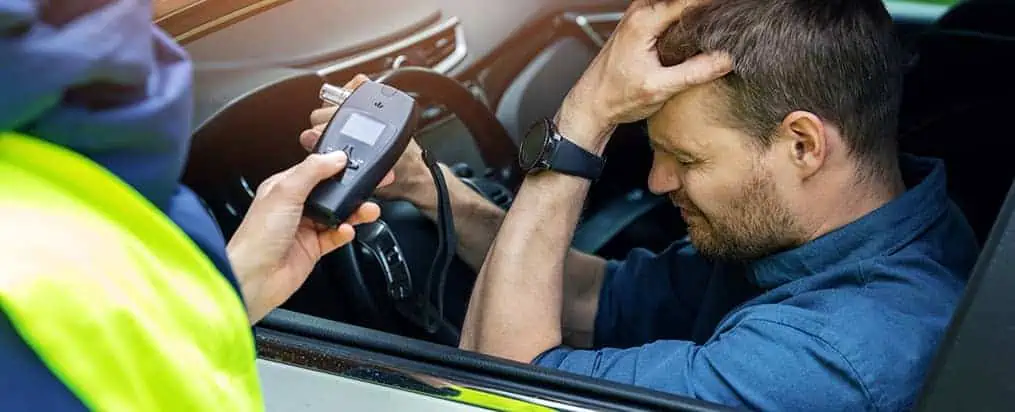
Drunk driving crashes often leave families dealing with consequences that do not fade after the tow truck leaves, they show up in surgeries, months of rehab, and the fear that comes with a sudden loss of safety.
For drunk driving accident victims, the harm can range from serious injuries that change work and mobility to wrongful death cases that force families to grieve while bills and paperwork keep moving.
Criminal charges may follow, but they do not pay medical bills or resolve disputes with the other driver’s insurance company.
Insurance carriers still evaluate the claim through a financial lens and often try to narrow what they pay by challenging treatment, causation, or the scope of loss.
When a crash stems from reckless behavior, the civil claim should reflect the full impact of the injury or death, including the long-term costs that follow life-altering consequences.
Springs Law Group can help pursue financial compensation by building the evidence, documenting losses, and challenging insurer tactics at every stage.
If you or a loved one were harmed in a drunk driving crash, contact Springs Law Group to discuss your options and next steps.
Call today or use the chat feature on this page to get in touch with our drunk driving accident lawyers.
The aftermath of a DUI crash can feel chaotic, especially when you are hurt, shaken up, or trying to account for everyone involved.
Many people cannot take every recommended step in the moment, and that is normal, serious injuries, pain, and shock change what is realistic right after impact.
What matters is getting to safety, creating a record of what happened, and avoiding decisions that insurers can use later to reduce a claim.
A DUI accident lawyer can step in quickly to protect your rights, preserve evidence, and handle the communication and paperwork you should not be dealing with while recovering.
The steps to take after a DUI accident include:
Even if you could not complete every step at the scene, a claim can still be built with the right documentation and follow-up.
Medical records created early often carry significant weight because they connect symptoms to the crash before other explanations get introduced.
Police reports and witness statements can also support the timeline, especially when impaired driving is disputed later.
An attorney can request records, identify video sources, and manage insurer communications so the claim stays grounded in facts.
Consulting experienced attorneys soon after a DUI crash makes it easier to protect evidence, value damages accurately, and move forward with a clear plan.
Drunk driving statistics show that accidents involving alcohol use remain a persistent safety issue in Colorado Springs and across Colorado.
Statewide data from CDOT shows impaired driving is still a leading cause of fatal wrecks.
In 2024, Colorado recorded 214 impaired driving-related fatalities, and CDOT reports that impaired driving was involved in over 30% of all traffic deaths that year.
Colorado Springs has also been flagged nationally for risk, with the Colorado State Patrol citing a study that ranked Colorado Springs 25th among the 300 largest U.S. cities for the rate of drunk driving fatalities per 100,000 people, using 2018–2022 data.
Colorado’s primary impaired-driving statute is C.R.S. § 42-4-1301, which covers driving under the influence (DUI), DUI per se, and driving while ability impaired (DWAI).
The legal limit for DUI per se is a blood alcohol concentration (BAC) of 0.08% or higher, while DWAI generally involves impairment and is commonly associated with a BAC over 0.05% but under 0.08%.
Colorado also enforces an “expressed consent” rule, meaning drivers are deemed to have agreed to chemical testing under C.R.S. § 42-4-1301.1 when a police officers have probable cause.
After an accident occurs, the same impaired-driving incident can trigger both criminal and civil proceedings, and they move on separate tracks.
The criminal case happens in criminal court and focuses on the driver’s legal consequences, while the civil claim focuses on compensating the injured person for losses.
These actions can overlap in timing, but a civil case does not have to wait for the criminal case to finish, and many injury claims move forward while charges are pending.
In practice, evidence from the criminal investigation can be helpful, but civil deadlines still apply, and waiting too long can weaken proof even if the criminal case is still active.
If the intoxicated person is jailed, the civil legal process can still continue, because liability is typically addressed through insurance and formal service and litigation procedures still apply.
Differences between criminal and civil proceedings include:
Alcohol-related car crashes remain a major cause of roadway death in the United States, and the patterns are consistent from year to year.
NHTSA reports that 12,429 people died in alcohol-impaired driving traffic deaths in 2023, which works out to about 34 deaths per day nationwide.
Those alcohol-impaired crash fatalities accounted for about 30% of all crash fatalities that year, which shows how often an intoxicated driver turns an otherwise survivable situation into a fatal one.
IIHS data also highlights who gets hurt most often in these incidents, including occupants of other vehicles and passengers riding with an alcohol-impaired driver, not just the impaired driver themselves.
Impairment frequently leads to reckless driving behaviors like speeding, drifting across lanes, delayed braking, and blowing through intersections, which increases impact speed and the chance of severe vehicle damage.
DUI collisions also tend to happen at night and on weekends, which can delay emergency response and increase the risk of secondary impacts.
Even when the intoxicated driver survives, the people in the other vehicle often absorb the worst forces because they have no warning and little time to react.
Common types of DUI collisions include:
DUI fatalities represent about 30% of all crash deaths in the U.S.
Nonfatal harm is just as widespread, NHTSA reports that 360,441 people were injured in 2023 in drunk driving crashes.
When a DUI collision causes long-term impairment, the medical and financial consequences often include chronic pain, permanent disability, and ongoing trauma symptoms that follow a person well after the physical injuries heal.
Common injuries in drunk driving accidents include:
You may qualify for a drunk driving accident claim if you were injured or suffered a financial loss in a crash caused by an impaired driver.
Drunk driving victims do not need a criminal conviction to pursue a civil case, but the claim still has to prove that the driver’s impairment contributed to the collision and the resulting harm.
Qualification usually starts with basic facts: the crash occurred, you sustained injuries or measurable losses, and there is evidence linking those losses to the wreck.
Insurance coverage matters too, because recovering compensation often depends on available liability limits, UM/UIM coverage, and whether other responsible parties may exist in limited circumstances.
Comparative fault can affect the claim’s value, so early evaluation focuses on whether the insurer may argue you contributed to the crash and how the evidence addresses that.
The goal is holding drunk drivers accountable through a claim that is built on documentation and causation, not assumptions.
Evidence determines whether a drunk driving claim succeeds or stalls, especially when insurers challenge causation or the extent of harm.
DUI cases rely on objective documentation that ties impaired driving to the crash and the injuries that followed.
Records created close in time to the collision often carry the most weight because they capture conditions before stories change.
Missing or incomplete documentation gives insurers room to dispute what happened and how the injuries developed.
Evidence in drunk driving accident cases often includes:
Damages are the monetary amounts a person seeks to recover for losses caused by car accidents, including injuries and financial disruption tied to the crash.
The damages picture often expands quickly because medical expenses, time away from work, and long-term limitations tend to be more severe.
A drunk driving accident attorney helps assess and calculate damages by organizing records, verifying costs, projecting future needs when supported by treatment plans, and presenting a claim that is grounded in documentation.
That preparation supports a fair settlement by giving the insurer a clear, defensible basis for what the claim is worth and why.
Damages in drunk driving cases often include:
A serious accident caused by an impaired driver can leave people facing medical treatment, financial strain, and unanswered questions about what comes next.
When you have suffered injuries in a DUI crash, the civil claim is the tool for holding the liable drunk driver and any other liable parties responsible for the harm caused.
Springs Law Group approaches these cases by focusing on evidence, damages, and accountability, not assumptions or shortcuts.
If you want to understand your legal options after a serious accident, contact Springs Law Group to schedule a free consultation and discuss the next steps available under Colorado law.
In Colorado, you generally have three years from the accident date to file a lawsuit for injuries or property damage arising from the use or operation of a motor vehicle, under C.R.S. § 13-80-101(1)(n)(I).
That three-year window usually applies to drunk driving crash injury claims against the impaired driver, even if a criminal DUI case is happening at the same time.
If you are considering a claim against a bar or restaurant for serving alcohol in a way that triggers Colorado’s dram shop liability, the timeline can be much shorter, Colorado’s liquor liability statute requires that the civil action be commenced within one year after the sale or service, under C.R.S. § 44-3-801.
Insurance claims can also have notice requirements that operate on faster deadlines than the statute of limitations, so waiting can create coverage and evidence problems even before the three-year mark.
Missing the applicable filing deadline can result in dismissal, even if liability is strong.
Drunk driving accidents can result in a wide range of injuries, including traumatic brain injuries, spinal cord injuries, and broken bones.
Traumatic brain injuries from drunk driving accidents can cause long-term cognitive impairment and memory loss, even when the initial symptoms seem mild.
Spinal cord injuries from drunk driving accidents can lead to partial or complete paralysis, requiring lifelong medical treatment and ongoing support.
Victims of drunk driving accidents often experience psychological trauma, including post-traumatic stress disorder (PTSD) and anxiety, especially after high-impact crashes.
Other common injuries from drunk driving accidents include whiplash, soft tissue injuries, and internal injuries that may not be obvious at the scene.
Common injuries from drunk driving accidents include:
Yes, you can file a personal injury lawsuit even if the drunk driver was not convicted.
A criminal case and a civil case use different standards of proof, and the civil claim does not require a criminal guilty verdict to succeed.
The civil case focuses on whether the driver’s conduct more likely than not caused the crash and your damages, based on the evidence available.
Prosecutors can dismiss charges or lose a case for reasons that do not change what happened on the road, such as evidentiary issues or procedural problems.
A DUI accident attorney can use police documentation, witness accounts, crash reconstruction, and other proof to build the personal injury lawsuit even without a conviction.
If you were partially at fault, you may still be able to recover compensation under Colorado comparative negligence laws, but the amount can be reduced.
Colorado follows a modified comparative negligence rule that reduces your damages by your percentage of fault.
If you are found to be less than 50% at fault, you can still recover damages, but your award is reduced accordingly.
If you are found to be 50% or more at fault, Colorado law bars recovery.
A DUI accident attorney can evaluate the evidence, challenge inflated fault allegations, and work to keep the fault allocation tied to what the facts actually show.
Yes, some DUI cases can qualify for punitive damages in Colorado, but they are not automatic.
Colorado calls these exemplary damages, and they are generally available only when the facts support willful and wanton conduct, meaning the defendant’s behavior showed a reckless disregard for the safety of others, not just ordinary negligence.
In a DUI crash, evidence of impairment, extreme speeding, or other aggravated driving behavior may support that argument, depending on what the proof shows about the driver’s conduct at the time of the collision.
Colorado also imposes specific procedural and proof requirements for exemplary damages, so the claim has to be developed carefully rather than asserted as a default add-on.
Strong legal representation matters here because punitive damages often become a contested issue, and the outcome depends on how the evidence is preserved, presented, and tied to the statutory standard.
If the drunk driver has no insurance or not enough coverage, the claim often shifts to other sources of recovery rather than ending.
Your own uninsured and underinsured motorist coverage (UM/UIM) may apply, and it is designed for situations where the at-fault driver cannot fully pay for the harm they caused.
MedPay coverage can also help with medical expenses early, regardless of fault, depending on the policy.
In some cases, additional liable parties or policies may exist, such as an employer policy if the driver was working, or other coverage tied to a vehicle owner.
A lawyer can review all available policies, confirm coverage limits, and build the claim so you are not forced to accept a shortfall simply because the drunk driver was underinsured.
Under Colorado law, a bar, restaurant, or other licensed establishment that serves alcohol can be held liable for injuries caused by an intoxicated driver, but only in limited circumstances.
Colorado’s dram shop statute (C.R.S. § 44-3-801) allows a personal injury claim against an alcohol vendor if it can be proven that the business willfully and knowingly sold or served alcohol to a person who was visibly intoxicated or under the age of 21, and that person then caused the accident and resulting harm.
Social hosts have a much narrower footing under Colorado law.
A private host generally is not liable for injuries caused by an intoxicated adult they served at a party, even if the adult became drunk and later caused a crash, because the statute treats alcohol-related accidents as caused by the drinking, not the furnishing of alcohol.
The primary exception for social hosts is when they knowingly serve alcohol to someone under 21 or knowingly provide a place for a minor to drink, and that minor subsequently causes harm; in that situation, the host can potentially be held accountable under the same statutory framework.
Because Colorado’s dram shop and social host liability rules are complex, working with an experienced attorney can help determine whether you may have a viable claim against a business or host in addition to pursuing compensation from the impaired driver and their insurer.
The timeline for a DUI accident claim varies, but most car accidents resolve faster when injuries stabilize quickly and liability is clear.
Claims often take longer when medical treatment is ongoing, because the final value depends on the full scope of injury, future care needs, and work limitations.
Even in DUI cases, insurers may dispute causation, argue comparative fault, or minimize damages, which can slow negotiations.
Coverage issues can also extend the process, especially if the drunk driver has low limits or the claim involves UM/UIM coverage.
If the case requires a lawsuit, the timeline typically expands because the claim must move through discovery, depositions, and court scheduling.
A lawyer can shorten avoidable delays by preserving evidence early, keeping records organized, and presenting a complete demand package that pushes the claim toward resolution.
A DUI accident lawyer strengthens a claim by proving liability, documenting losses, and forcing the insurer to evaluate the case based on evidence rather than assumptions.
Victims with legal representation often secure higher settlements than those acting alone because insurers take represented claims more seriously and negotiations are anchored to documented damages.
A lawyer calculates damages including current and future medical bills, lost wages, and pain and suffering, then supports those numbers with records, testimony, and expert input when needed.
Lawyers also negotiate with insurers to ensure compensation covers full damages, including medical bills and pain, instead of letting the carrier narrow the claim to the cheapest version of the injury.
In many jurisdictions, lawyers can pursue punitive damages in addition to standard compensatory damages when the facts support it, which can matter in DUI cases involving especially reckless conduct.
A DUI accident claim may include:

Member of the Colorado Bar Association since 2014. Attorney, Christopher M. Nicolaysen focuses primarily on helping those injured in Colorado car accidents, other auto accidents, and Colorado personal injury incidents.
This article has been written and reviewed for legal accuracy and clarity by the team of writers and attorneys at Springs Law Group and is as accurate as possible. This content should not be taken as legal advice from an attorney. If you would like to learn more about our owner and experienced Colorado personal injury lawyer, Christopher Nicolaysen, you can do so here.
Springs Law Group does everything possible to make sure the information in this article is up to date and accurate. If you need specific legal advice about your case, contact us. This article should not be taken as advice from an attorney.
We use reviews to help show more people like you why we do what we do!

I was uneasy about reaching out to a law firm after being in an accident that left me injured and my vehicle totaled. I don’t care for the idea of suing for what was very clearly an accident. However, after learning more about the overall process of working with a professional team to navigate the murky waters of the insurance world, I was pleasantly surprised to find that the experience wasn’t as gross as I’d originally felt about it.

Springs Law is very friendly and professional. I always felt that they were on my side and cared about my injury and what I was going through. I highly recommend them.

Springs Law Group is an amazing group to work with! I got into a rough accident, and they never ceased to let me know they were there working hard to help me in my hour of need. It was always very easy to reach out to someone if I had any questions, and they were always happy to answer any questions I had.
I never have a problem with getting a response when I need them – which is not the case with most other firms. They really truly care about each client. As a plus, they always have positive attitudes, which matters tremendously when you are in a stressful legal situation.

Big thanks to Mr. Jake Kimbell and his team for their assistance with my case. He helped me through an incredibly challenging part of my life, and most importantly helped navigate through the convoluted legal channels of my case. I cannot thank him and his team enough for their support.

The entire team at Springs Law group has been nothing but amazing. Jake and the rest of the staff were great to work with and extremely professional. They were very attentive and answered any questions and concerns I had. I was always able to contact them and they were very responsive and communicated with me.

Springs Law Group is an amazing group to work with! I got into a rough accident, and they never ceased to let me know they were there working hard to help me in my hour of need. It was always very easy to reach out to someone if I had any questions, and they were always happy to answer any questions I had.