
What Are the Signs of Shock After a Car Accident?
After an auto accident, the body and mind often react in ways that are not always immediately recognizable, especially in the minutes and hours following a traumatic event.
Shock occurs when the body struggles to respond to sudden injury or stress, and it can affect both physical systems and mental health.
Some people experience obvious warning signs, such as a rapid pulse, shallow breathing, or dizziness, while others develop delayed shock symptoms that appear hours or even days later.
Shock is not limited to visible physical injuries.
Emotional and psychological responses (such as confusion, fear, detachment, or symptoms associated with post traumatic stress disorder) can also signal that the body and brain are overwhelmed.
Left untreated, these reactions can worsen, interfere with recovery, and complicate long-term health outcomes.
Because shock can mask pain, serious internal injuries or neurological damage, it is critical to seek medical attention even if symptoms seem mild at first.
From a legal standpoint, early medical evaluation also plays a key role in protecting a personal injury claim.
Medical records help establish a clear connection between the accident, the onset of shock-related symptoms, and the resulting harm.
Understanding the signs of shock, both immediate and delayed, can protect your health, support proper treatment, and preserve your rights after a serious car accident.
What Is Shock After a Car Accident?
Shock is a medical emergency that can occur after a serious injury or high-stress event like a car crash.
Medically, shock refers to a critical condition in which the body fails to deliver enough blood flow to vital organs, leading to dangerously low blood pressure, impaired oxygen delivery, and potential organ dysfunction.
According to authorities like the Mayo Clinic and the Cleveland Clinic, shock can result from physical trauma, such as significant blood loss or internal injury, but it also encompasses the body’s response to severe stress and emotional trauma.
In this context, shock is not limited to circulatory failure but can involve a complex interaction between the nervous system, cardiovascular function, and the body’s stress responses.
There are different medically recognized types of shock (e.g., hypovolemic shock from blood loss, cardiogenic shock from heart failure, neurogenic shock from nervous system injury), but in the immediate aftermath of a collision, the body’s overall reaction to trauma can produce a constellation of physical and mental health changes.
Some individuals may experience traumatic shock, a term often used to describe the combination of circulatory distress and the body’s acute stress response following significant injury.
At the same time, psychological injuries, such as acute stress reactions or early signs of post-traumatic stress disorder (PTSD), may develop, compounding the body’s response to the trauma.
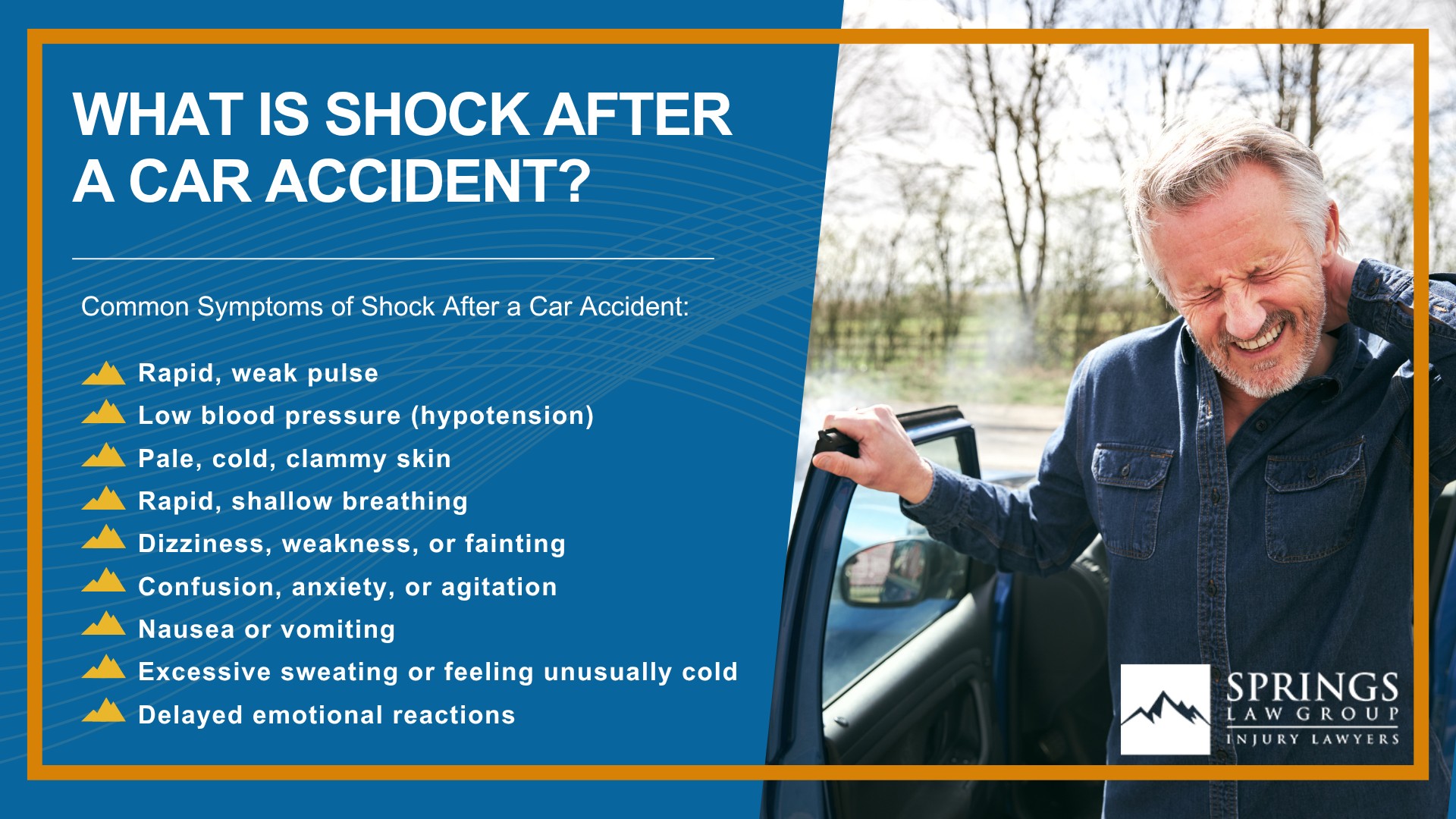
Common Symptoms of Shock After a Car Accident:
- Rapid, weak pulse: The heart tries to compensate for low blood flow.
- Low blood pressure (hypotension): Reducing oxygen delivery to organs.
- Pale, cold, clammy skin: A sign of poor peripheral circulation.
- Rapid, shallow breathing: The body struggles to oxygenate tissues.
- Dizziness, weakness, or fainting: Due to inadequate blood flow to the brain.
- Confusion, anxiety, or agitation: Early signs of neurological or psychological stress.
- Nausea or vomiting: A stress response and sign of shock progression.
- Excessive sweating or feeling unusually cold: Sympathetic nervous system activation.
- Delayed emotional reactions: Tearfulness, detachment, or numbness that may relate to a stress response.
These symptoms may appear immediately after the crash or evolve over time, especially as adrenaline fades and the body’s compensatory mechanisms weaken.
Recognizing shock early, before it leads to irreversible harm, is one of the most important steps in addressing injuries from serious accidents.
Because shock can present with both physical symptoms and signs that overlap with emotional distress, it requires a thorough medical assessment to distinguish it from pain alone and to initiate appropriate treatment.
Early evaluation helps identify hidden injuries such as internal bleeding, organ damage, or traumatic brain injury that might otherwise go unnoticed.
Why Shock Is Dangerous if Left Untreated
Shock is dangerous because it interferes with the body’s ability to circulate oxygen and nutrients to vital organs, which can cause rapid deterioration if not addressed promptly.
People may appear stable at first but then experience worsening symptoms within a few hours, especially after adrenaline fades and the body can no longer compensate.
Symptoms such as rapid breathing, confusion, or weakness may signal that the condition is progressing and requires immediate medical assistance.
Many individuals who later report they experienced delayed shock symptoms did not initially realize the seriousness of their condition.
Unlike septic shock, which develops from infection, physical shock and emotional shock after a car accident often stem from sudden injury, blood loss, or overwhelming psychological trauma.
Both forms can mask injuries, making internal bleeding, head trauma, or spinal damage harder to detect without proper evaluation.
Seeking medical help early is one of the most important factors influencing recovery time and long-term outcomes.
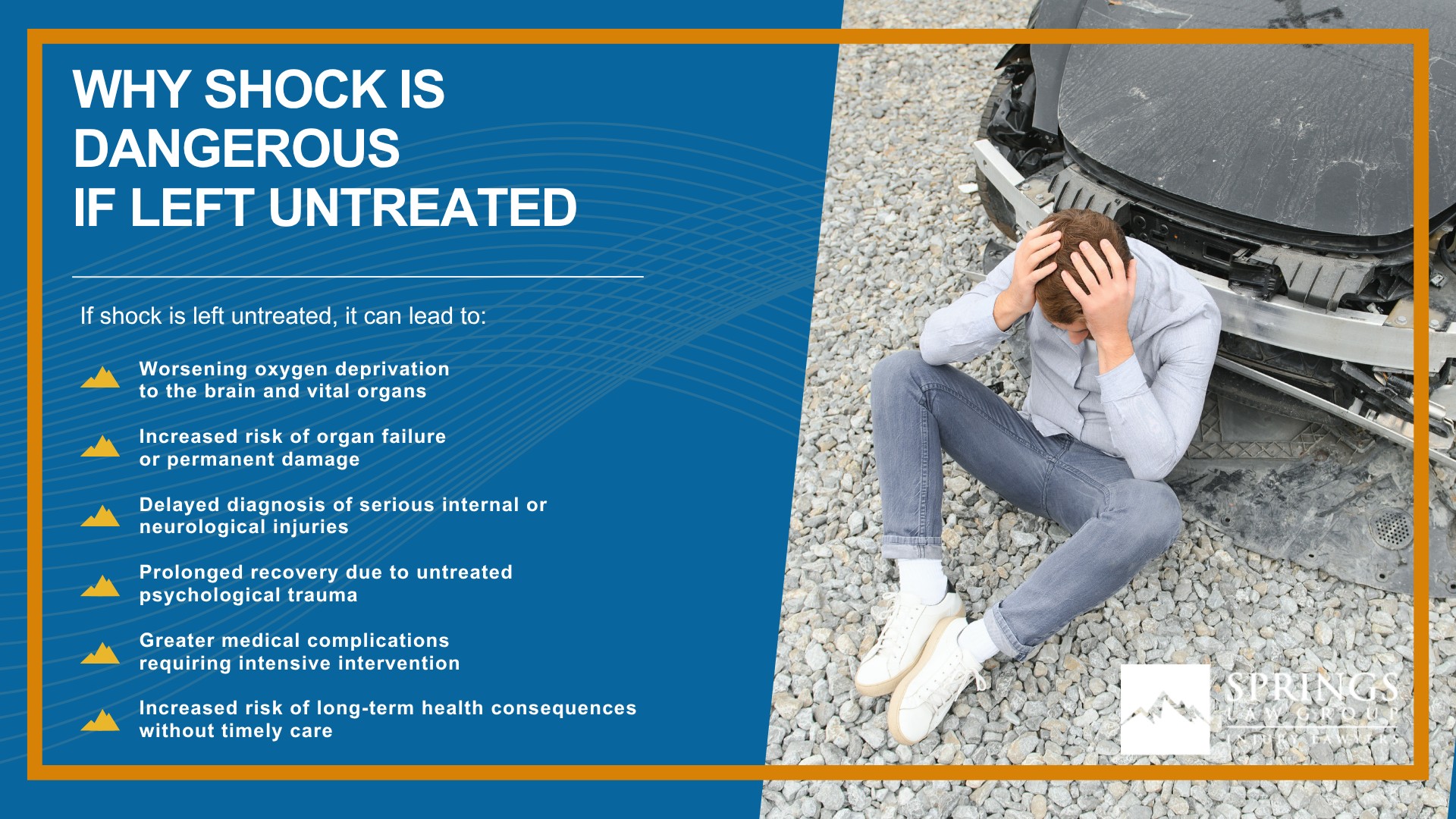
If shock is left untreated, it can lead to:
- Worsening oxygen deprivation to the brain and vital organs
- Increased risk of organ failure or permanent damage
- Delayed diagnosis of serious internal or neurological injuries
- Prolonged recovery due to untreated psychological trauma
- Greater medical complications requiring intensive intervention
- Increased risk of long-term health consequences without timely care
Physical Signs of Shock to Watch For
Shock can develop quickly after a serious accident and may become life-threatening if the warning signs are ignored.
Some symptoms are subtle at first, while others signal a rapidly worsening condition that requires urgent care.
Physical shock may occur after internal injuries, significant blood loss, or trauma such as severe burns.
Because these signs can worsen without warning, it is critical to seek immediate medical attention if any symptoms appear.
Prompt medical treatment allows healthcare providers to stabilize circulation, identify hidden injuries, and prevent serious complications.
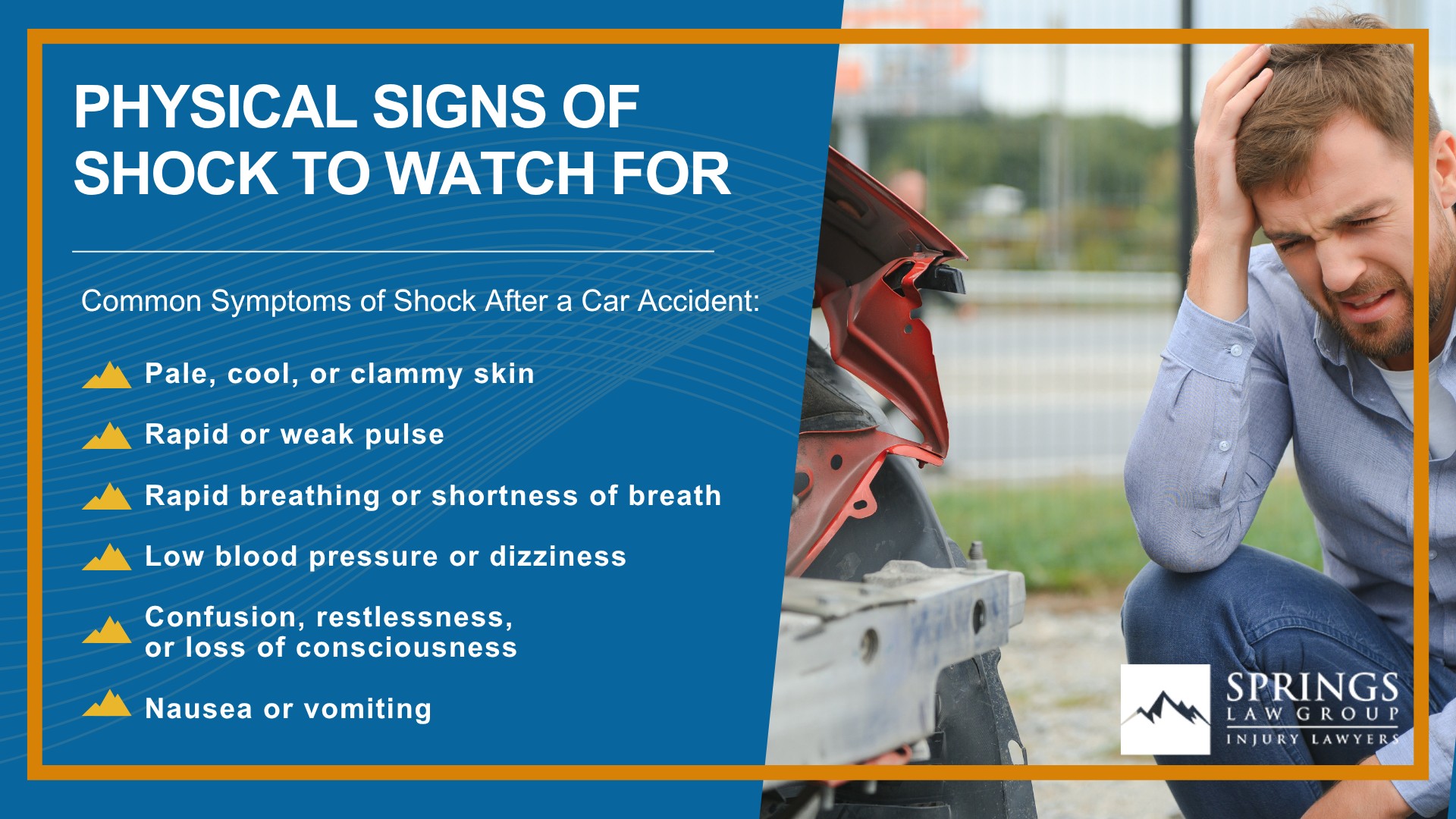
Common physical signs of shock include:
- Pale, cool, or clammy skin
- Rapid or weak pulse
- Rapid breathing or shortness of breath
- Low blood pressure or dizziness
- Confusion, restlessness, or loss of consciousness
- Nausea or vomiting
These symptoms should never be dismissed after an accident, even if pain seems manageable or injuries are not immediately visible.
Psychological Shock After a Collision
Psychological shock can occur after a serious collision even when physical injuries appear minor or are fully treated.
A car accident is a sudden, overwhelming event, and the brain may struggle to process what happened, leading to ongoing emotional suffering.
Many people report feeling detached, disoriented, or unusually alert in the hours or days after the crash, while others may feel anxious or fearful without understanding why.
Triggers such as loud noises, sudden movements, or getting back into a vehicle can intensify these reactions and interfere with daily functioning.
For some individuals, psychological shock resolves within a short time as the nervous system recalibrates.
For others, symptoms persist for an extended period, affecting sleep, concentration, mood, and relationships.

This can include panic episodes, intrusive thoughts, or heightened sensitivity to stress.
When these symptoms linger, professional care may be necessary to support recovery and prevent long-term mental health complications.
Treatment options often focus on stabilizing the nervous system and helping the brain reprocess the traumatic experience.
A mental health professional may recommend therapy approaches such as eye movement desensitization and reprocessing (EMDR), cognitive therapy, or trauma-focused counseling.
Some individuals benefit from support groups, which provide shared understanding and social support during recovery.
At home, techniques like deep breathing and learning to practice relaxation techniques can help regulate stress responses, but persistent symptoms should always be evaluated by a qualified provider.
Why Getting Medical Care Immediately Matters
Getting medical care immediately after a car accident protects both your health and your legal rights.
Some injuries are not obvious at the scene and may worsen hours or days later, especially when shock or adrenaline initially masks symptoms.
Early evaluation allows doctors to identify internal injuries, head trauma, or circulation problems before they become more serious or life-threatening.
Prompt care also creates medical records that clearly connect your injuries to the crash, which is critical when injuries result from someone else’s negligence.
Delays in treatment often give an insurance company an opportunity to argue that injuries were unrelated or exaggerated, complicating the legal process.
Timely care helps document the full scope of harm and supports a stronger personal injury claim, including recovery for medical bills and ongoing treatment.
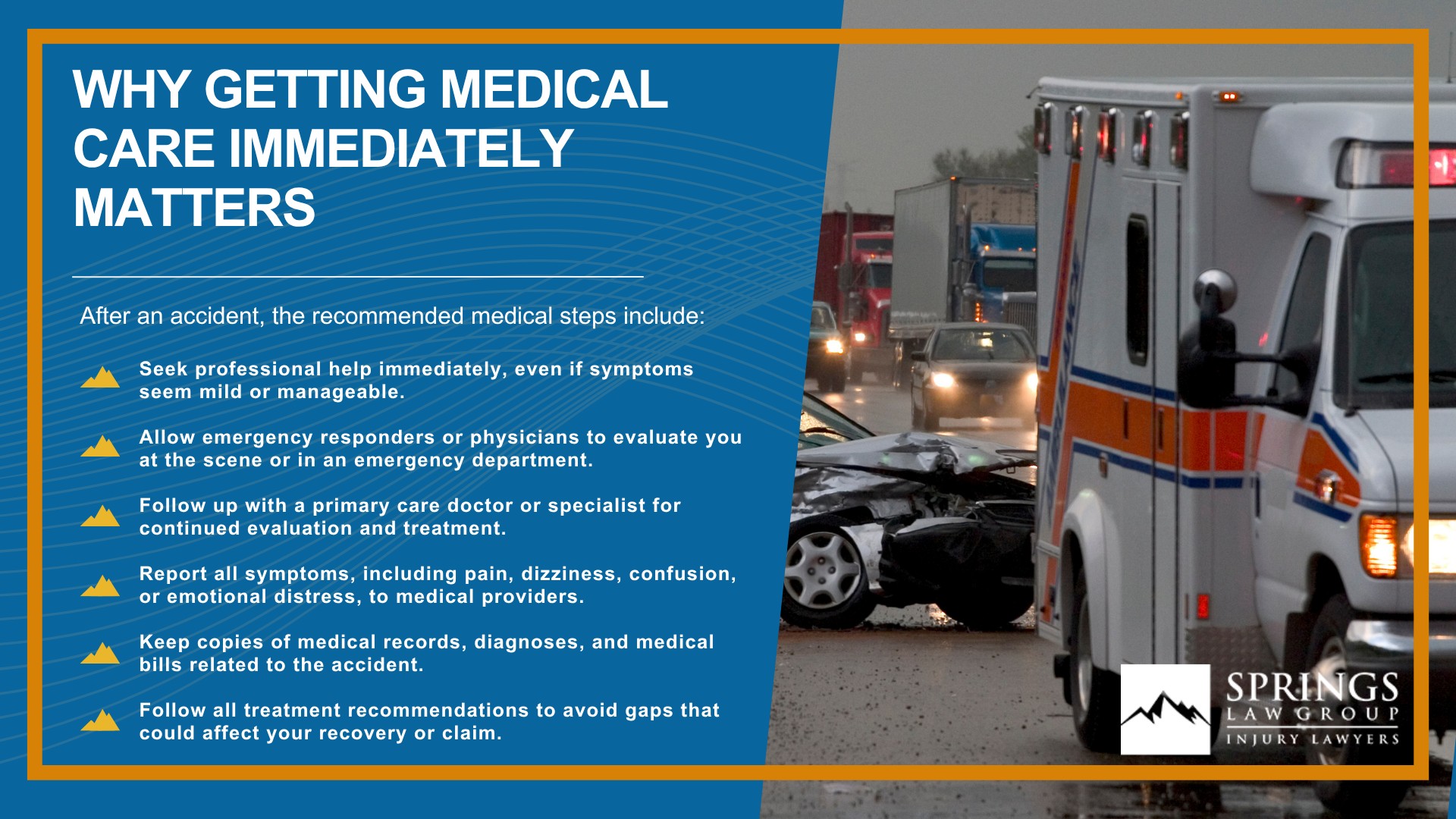
After an accident, the recommended medical steps include:
- Seek professional help immediately, even if symptoms seem mild or manageable.
- Allow emergency responders or physicians to evaluate you at the scene or in an emergency department.
- Follow up with a primary care doctor or specialist for continued evaluation and treatment.
- Report all symptoms, including pain, dizziness, confusion, or emotional distress, to medical providers.
- Keep copies of medical records, diagnoses, and medical bills related to the accident.
- Follow all treatment recommendations to avoid gaps that could affect your recovery or claim.
How Shock Affects Your Car Accident Injury Claim
Shock can significantly influence the outcome of a car accident injury claim, especially when symptoms are delayed or not immediately documented.
Insurance companies often question injuries that are not reported right away, even when shock or adrenaline masked the initial symptoms.
Medical records showing shock-related symptoms help establish a clear timeline between the accident and the resulting injuries.
When shock affects memory, awareness, or pain perception, victims may unintentionally underreport injuries at the scene, which insurers may later exploit.
An experienced attorney understands how shock presents medically and how to explain delayed symptoms within the legal context of a claim.
Proper documentation and legal guidance help ensure shock-related injuries are treated as legitimate and compensable.
Addressing shock appropriately strengthens your ability to pursue maximum compensation for both physical and emotional harm.
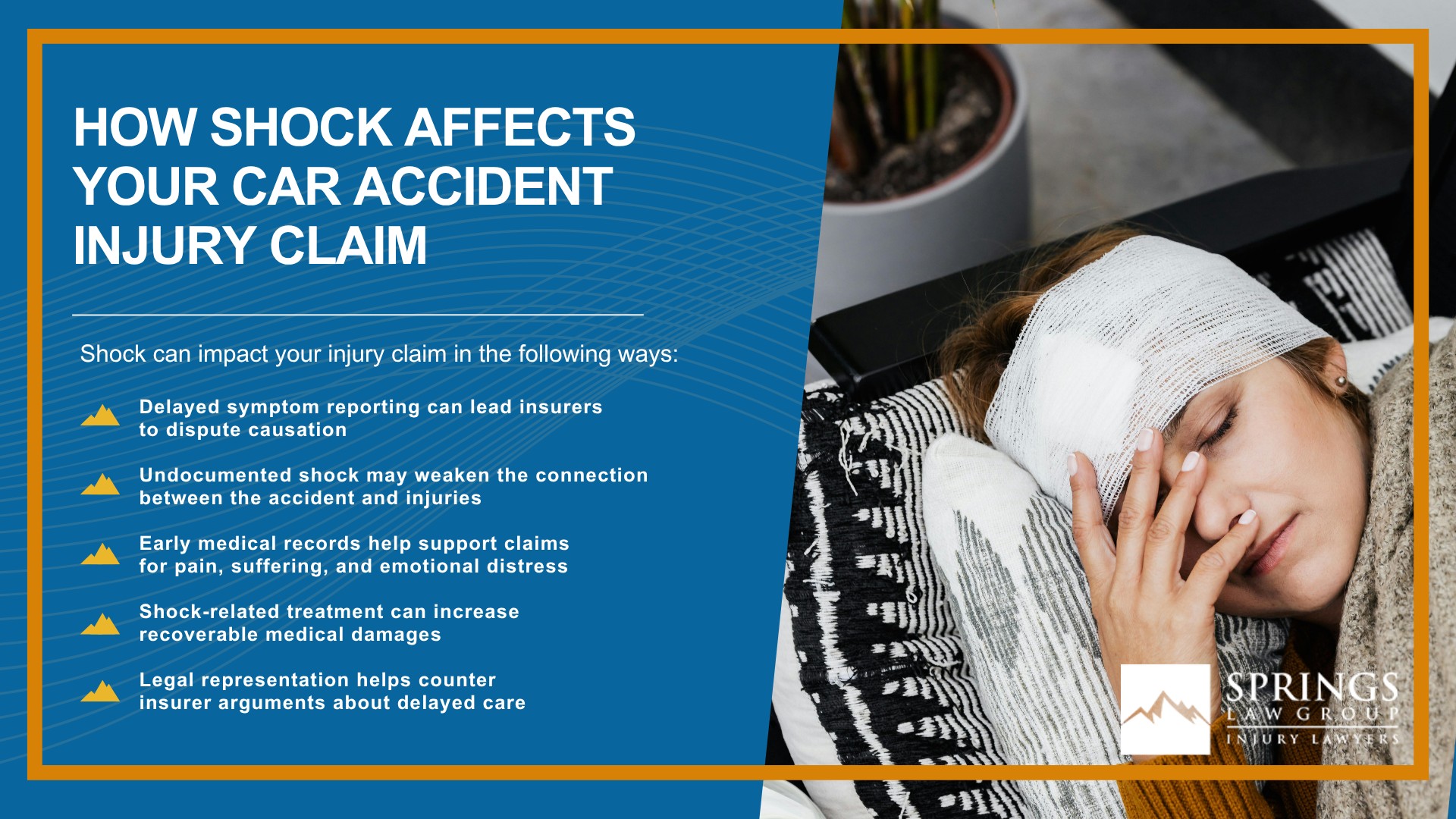
Shock can impact your injury claim in the following ways:
- Delayed symptom reporting can lead insurers to dispute causation
- Undocumented shock may weaken the connection between the accident and injuries
- Early medical records help support claims for pain, suffering, and emotional distress
- Shock-related treatment can increase recoverable medical damages
- Legal representation helps counter insurer arguments about delayed care
What to Do If You or a Loved One May Be in Shock
Recognizing the signs of shock and acting quickly can protect health and prevent serious complications.
Shock may develop immediately after an accident or appear gradually as the body’s stress response changes.
Some people minimize symptoms because pain feels manageable or injuries are not visible.
Others may display confusion, disorientation, or sudden mood swings that signal the nervous system is overwhelmed.
When shock is suspected, waiting to see if symptoms improve can be dangerous.
Immediate action improves medical outcomes and reduces the risk of long-term harm.

Family members and bystanders play an important role in recognizing symptoms the injured person may not notice themselves.
Quick intervention often makes the difference between a smooth recovery and serious complications.
Even after emergency care, follow-up medical evaluation is essential.
Shock can evolve over time, and symptoms may return or worsen hours or days later.
Emotional reactions such as anxiety, irritability, or lingering mood swings should also be discussed with medical providers.
Prompt and continued care helps address both physical and psychological effects of shock.
Contact Springs Law Group Today
Shock after a car accident is a serious medical and legal issue that should never be ignored.
Whether symptoms appear immediately or develop over time, prompt medical care and proper documentation are critical to protecting your health and your rights.
When shock is caused by another driver’s negligence, you should not be left to manage the consequences alone.
If you or a loved one experienced shock after a car accident in Colorado, contact Springs Law Group today for a free and confidential consultation.
Our experienced team can review your situation, explain your legal options, and help you pursue the compensation needed for medical care, recovery, and long-term well-being.
Frequently Asked Questions
What are the most common signs of shock after a car accident?
Shock can affect people differently, and symptoms may appear immediately or develop hours later as adrenaline wears off.
Some warning signs are physical, while others involve emotional or cognitive changes that are easy to overlook.
Recognizing these signs early can prompt faster medical care and reduce the risk of complications.
Common signs of shock after a car accident include:
- Rapid or weak pulse
- Pale, cold, or clammy skin
- Rapid or shallow breathing
- Dizziness, weakness, or fainting
- Confusion, disorientation, or difficulty concentrating
- Anxiety, fear, or sudden mood changes
- Nausea or vomiting
If any of these symptoms appear after a collision, it is important to seek medical evaluation right away, even if injuries initially seem minor.
Can shock symptoms appear hours or day after a car accident?
Yes, shock symptoms can appear hours or even days after a car accident, particularly once adrenaline levels drop and the body can no longer compensate for injury or stress.
This is known as delayed shock and is common after traumatic events.
People may begin to notice dizziness, confusion, rapid heartbeat, emotional distress, or fatigue well after leaving the accident scene.
Delayed symptoms do not mean the injury is minor and should always be evaluated by a medical professional.
Prompt medical attention helps identify hidden injuries and creates important documentation if a legal claim becomes necessary.
How is shock treated after a car accident?
Shock is treated as a life-threatening condition and requires immediate medical evaluation and intervention.
Treatment focuses on stabilizing vital functions, restoring circulation, and identifying the underlying cause of the shock.
Medical professionals tailor treatment based on the type and severity of shock involved.
Early intervention greatly improves outcomes and reduces the risk of permanent complications.
Common treatments for shock after a car accident include:
- Administering oxygen and intravenous fluids to restore blood flow and blood pressure
- Treating underlying injuries such as internal bleeding, fractures, or organ damage
- Monitoring heart rate, breathing, and neurological status in a medical setting
- Addressing psychological shock through calming techniques, including progressive muscle relaxation, once the patient is medically stable
How long can psychological shock last after a car accident?
The duration of psychological shock can vary significantly from person to person, lasting from a few hours to several weeks or even months.
Some individuals may feel better within days as acute symptoms subside, while others struggle with lingering effects for weeks or months after the accident.
Research shows that approximately 9% of motor vehicle accident survivors develop post-traumatic stress disorder (PTSD), highlighting how common lasting psychological effects can be.
Psychological shock may involve feelings of numbness or disconnection, intense fear or terror, or a sense of losing control or “going crazy.”
Adrenaline from the fight-or-flight response can initially mask pain and emotional symptoms, which is why delayed shock symptoms may appear hours or even days later.
While the most acute physical reactions may fade within a few days, the psychological impact can persist for months or even years and may lead to ongoing anxiety that disrupts daily life.
Because of these risks, seeking professional help is recommended for anyone experiencing psychological trauma after a car accident.
Can psychological shock be included in a car accident injury claim?
Yes.
Psychological trauma from a car accident can be grounds for compensation in a personal injury claim, just like physical injuries.
Victims of car accidents may be able to receive compensation for both physical and emotional shock when those conditions are linked to the crash.
Because delayed shock symptoms can appear hours or even days after a car accident, early medical evaluation is important to document the connection.
If treatment for shock is not administered quickly, it can become more difficult to tie later medical records and symptoms back to the accident, which may affect the strength of the claim.